Every fall, the same story plays out. The days get shorter, the light fades and you feel yourself slowly slipping. Fatigue that won't lift, no desire to do anything, an irresistible craving for sugar and endless sleep. You wonder whether this is "normal" or whether something deeper is going on. Updated in May 2026.
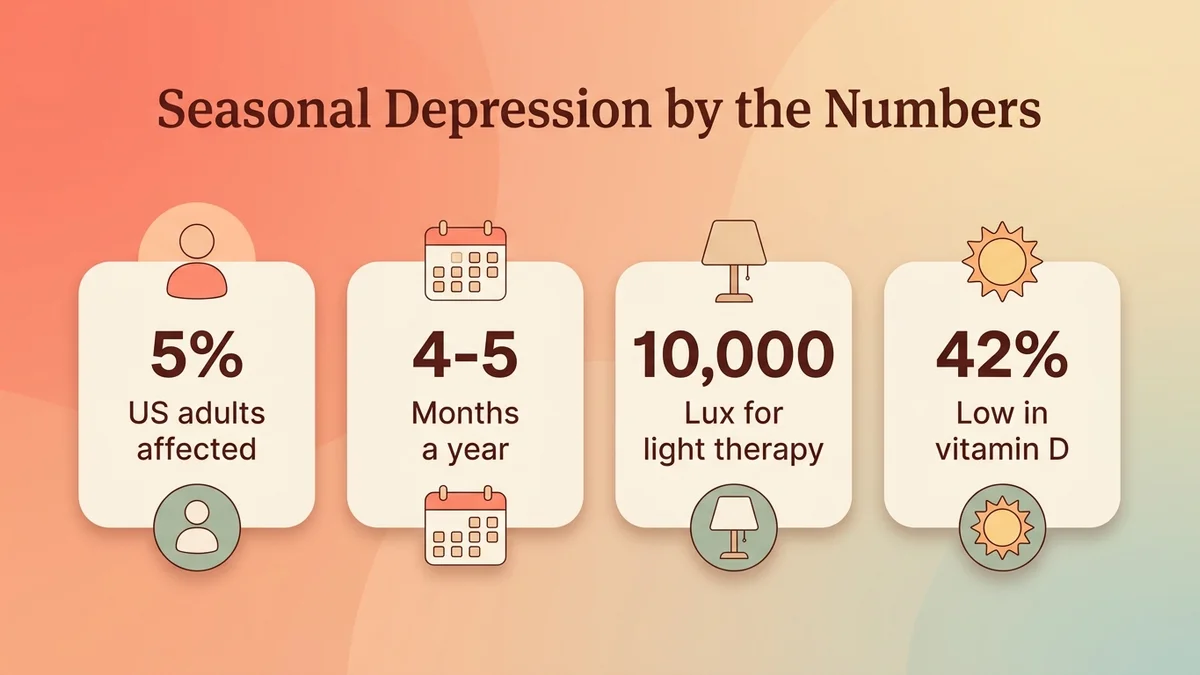
If this sounds like you, you're not alone. According to the American Psychiatric Association, seasonal affective disorder affects about 5% of adults in the United States, and a milder form — the "winter blues" — is far more common still. The good news: it's one of the best-understood and most treatable forms of depression.
The key takeaways
Seasonal depression (seasonal affective disorder, or SAD) is a clinical condition linked to the lack of light in fall and winter. It stands out through oversleeping, carb cravings and weight gain. Light therapy (30 min/day at 10,000 lux) helps most people who try it. Combined with physical activity, vitamin D and CBT, remission is possible within a few weeks.
What are the symptoms of seasonal depression?
Seasonal depression has specific symptoms that set it apart from classic depression. Its most characteristic feature: symptoms appear every year at the same time, around October or November, and fade in spring around March or April.
Unlike "classic" depression, which often causes insomnia and loss of appetite, seasonal affective disorder produces so-called "atypical" symptoms. Your body switches into hibernation mode.
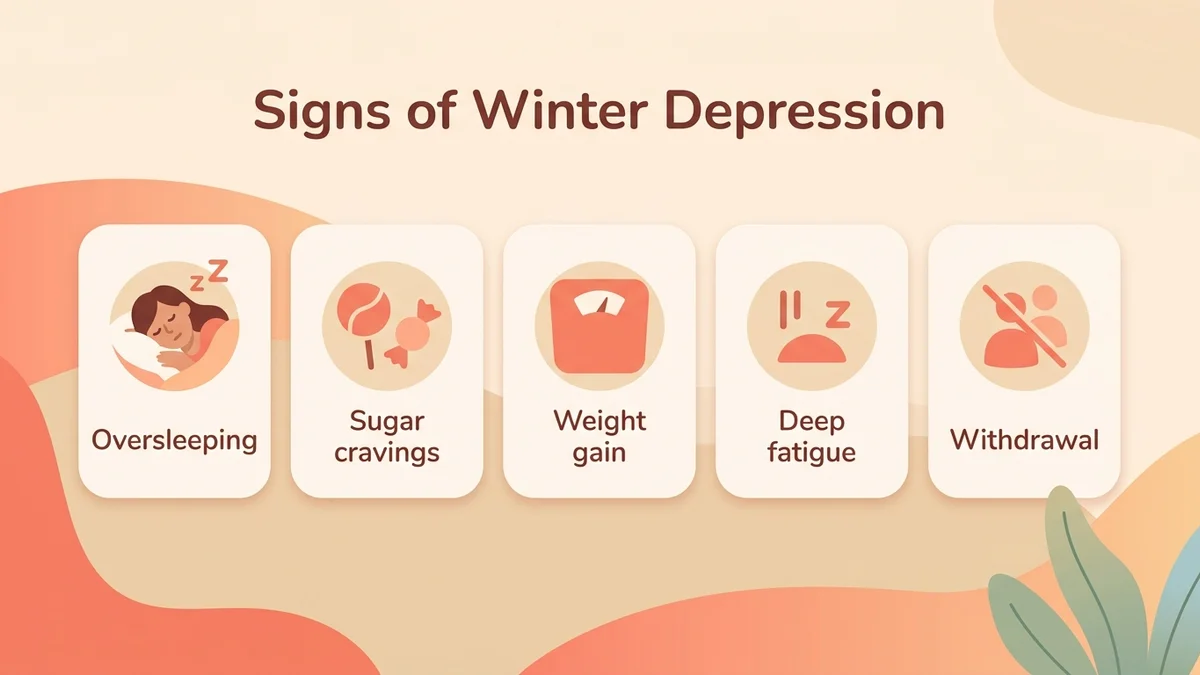
Symptoms of winter depression (the most common form)
| Symptom | Description | How common |
|---|---|---|
| Oversleeping | Needing 10+ hours of sleep a night, trouble getting up | Very common |
| Carb cravings | Cravings for sugar, bread, pasta, chocolate | Very common |
| Weight gain | A few pounds gained over the winter | Common |
| Persistent fatigue | Constant exhaustion despite long sleep | Nearly universal |
| Social withdrawal | Tendency to isolate, cancel plans | Very common |
| Sadness for no reason | Low mood tied to the short days | Nearly universal |
| Low libido | Marked decrease in sexual desire | Common |
| Trouble concentrating | Brain fog, unusual mistakes | Common |
Research shows that the brain's serotonin activity follows the seasons and is lowest in the darkest months, which helps explain these atypical symptoms.
Key point: If you sleep more than 10 hours a night, gain weight every winter without changing your habits, and these symptoms come back year after year, it's probably not just a simple slump.
Symptoms of summer depression (the rare form)
SAD can also occur in summer, although this form is much less common. The symptoms are reversed: insomnia, loss of appetite, restlessness, irritability and anxiety.
Winter blues or seasonal depression: how do you tell them apart?
Many people confuse the "winter blues" with clinical seasonal depression. Let's be clear: they're two different things.
| Criterion | Winter blues | Seasonal depression |
|---|---|---|
| Prevalence | Very common | About 5% of US adults |
| Duration | A few days to 2 weeks | 4-5 months (October to March) |
| Functioning | Maintained | Impaired (work, social life) |
| Intensity | Mild, fluctuating | Moderate to severe, constant |
| Recurrence | Not systematic | Every year, same period |
| Treatment | Not necessary | Light therapy + medical follow-up |
If your symptoms last more than two weeks and disrupt your daily life, see a professional. To understand the line between a simple slump and a clinical condition, our guide to feeling down explains the criteria.
Why do we get depressed when the light fades?
Lack of light is the main trigger of seasonal affective disorder. Your brain relies on light to regulate two essential hormones: serotonin (the feel-good hormone) and melatonin (the sleep hormone).
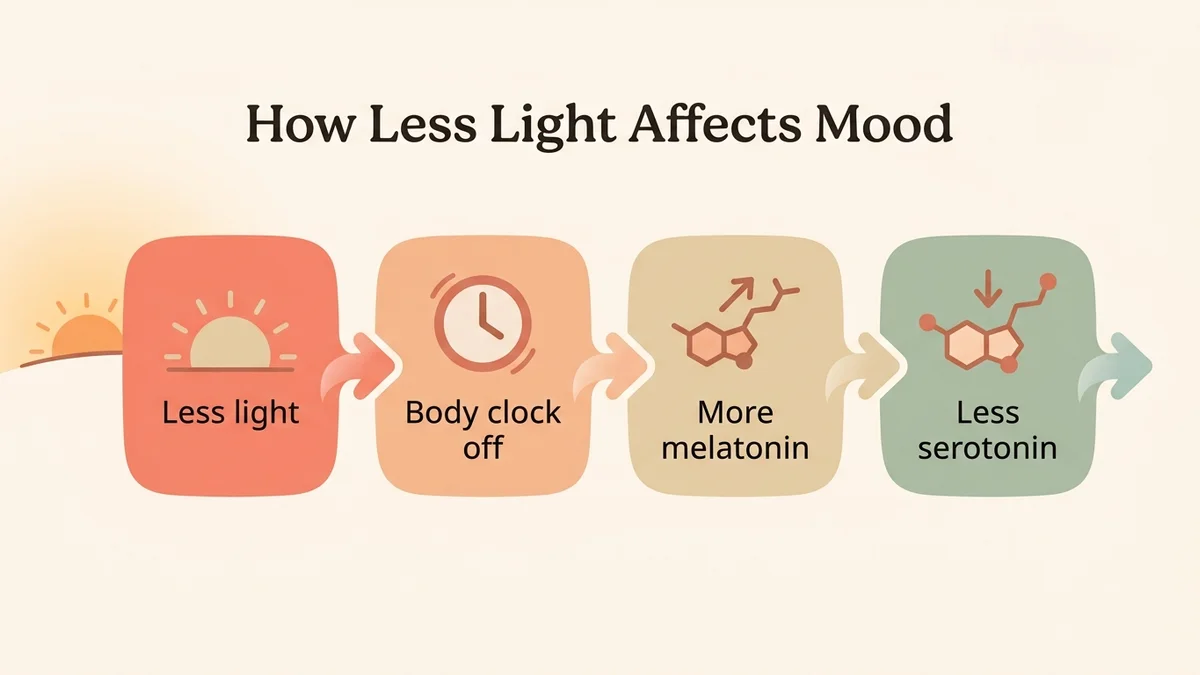
The light-serotonin-melatonin trio
In much of the northern United States, daylight drops from more than 15 hours in June to around 9 hours in December. This light deficit triggers a biological cascade:
- Less light reaches the retina: light-sensitive ganglion cells pick up fewer light signals
- The body clock gets thrown off: the suprachiasmatic nucleus (your internal clock) receives contradictory information
- Excess melatonin production: your brain thinks night lasts longer and secretes too much melatonin, hence the drowsiness
- Serotonin drops: since serotonin is the precursor of melatonin, less of it is available to regulate mood
Brain imaging studies have also found that people with SAD have more active serotonin transporters (SERT) in winter, which further reduces the serotonin available in the synapses.
Serena Coach tip: If you feel your energy dropping by mid-October, don't wait until December to act. The earlier you intervene, the faster you recover. Among our users, those who start their breathing routines in the fall report 40% fewer depressive symptoms in the depths of winter.
Who is most at risk?
Some people are more vulnerable to the lack of light than others:
- Women: diagnosed about four times more often than men
- Young adults: SAD usually begins between ages 18 and 30
- People living farther north: prevalence rises with latitude (about 1% in Florida versus close to 10% in Alaska, according to early surveys)
- People with a family history of depression or bipolar disorder
- Indoor workers: those who see little natural light during the day
To dig deeper into the link between cortisol, stress and mood, see our guide to lowering cortisol.
How is seasonal depression diagnosed?
The diagnosis rests on three criteria defined by the DSM-5 (Diagnostic and Statistical Manual of Mental Disorders):
- Recurring depressive episodes at a specific time of year (fall/winter)
- Full remission in spring/summer
- Recurrence for at least two consecutive years
Your primary care doctor can make the diagnosis. They may use the Seasonal Pattern Assessment Questionnaire (SPAQ), developed by Dr. Norman Rosenthal, the psychiatrist who first described SAD in 1984.
And if you're wondering how to tell burnout from seasonal depression, our article on burnout symptoms at work will help you sort it out.
Real-life scenarios
A Sunday in November
You wake up at 11 a.m. and the bedroom is still dark. You stay under the covers, wanting nothing. The fridge calls you toward cheese and chocolate. Your friends suggest a walk, but you say no. You tell yourself "it's just winter." Except this scene has repeated every weekend for six weeks.
What to do: get outside before noon, even for 15 minutes. Natural morning light, even on a gray day, provides 2,000 to 10,000 lux. That's enough to curb melatonin production and restart your body clock.
The windowless office
You get to work in the dark and leave in the dark. In between, you sit under fluorescent lights at 300-500 lux. Your brain hasn't received a strong enough light signal all day. The result: you're exhausted by 3 p.m. and you compensate with coffee and cookies.
What to do: put a light therapy lamp on your desk. 30 minutes at 10,000 lux in the morning while you check your email. It's a practical substitute for going out in natural light, and it fits easily into your work routine.
A busy parent in January
The kids are sick, the days are short, and you have no time for yourself. You compensate with sugar, sleep 10 hours and feel guilty about it. The fatigue builds up and you withdraw.
What to do: 5 minutes of cardiac coherence in the morning before the kids wake up. It's not much, but those 5 minutes reactivate your parasympathetic nervous system and, according to the HeartMath Institute, lower cortisol by 23%.
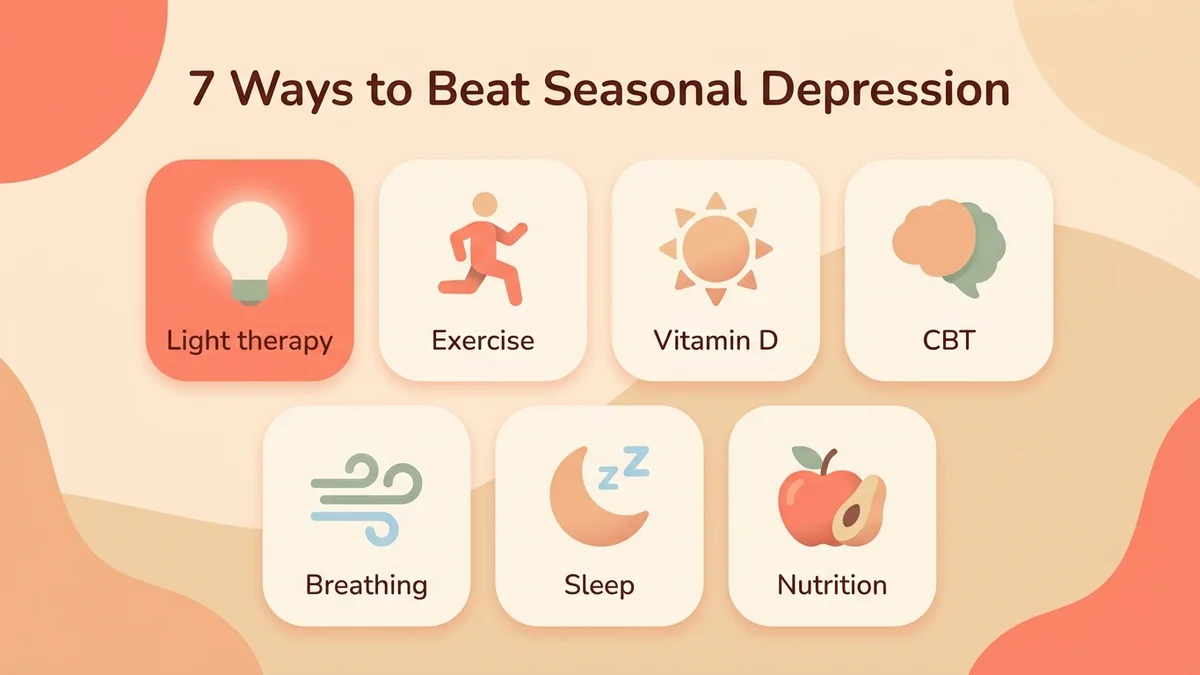
7 science-backed solutions for seasonal depression
1. Light therapy: the reference treatment
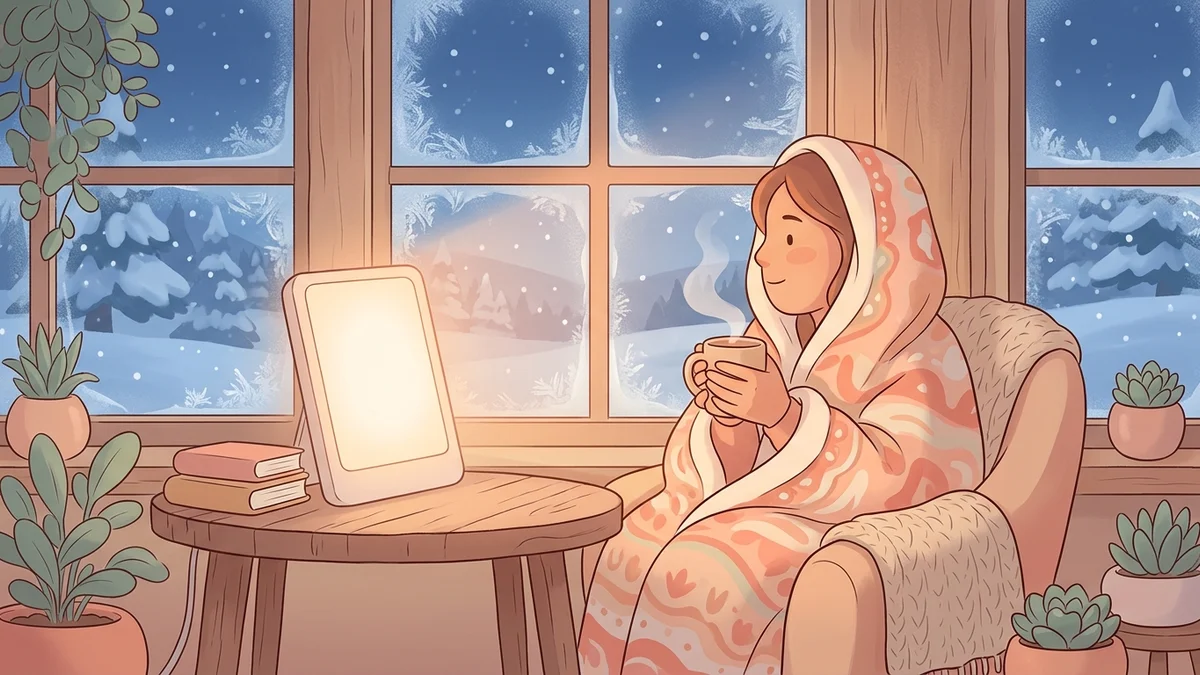
Light therapy is a first-line treatment for SAD. The principle: expose your eyes (not your skin) to intense artificial light that mimics sunlight.
Recommended protocol:
- Intensity: 10,000 lux minimum
- Duration: 30 minutes a day
- Timing: within 2 hours of waking up
- Distance: about 12 inches (30 cm) from the lamp
- Treatment period: October to March
Light therapy at 10,000 lux for 30 minutes in the morning improves symptoms in most people with SAD, often within one to two weeks.
Several studies show effectiveness comparable to antidepressants for SAD, with fewer side effects. Side effects are uncommon: mild headaches, passing nausea or eye strain at the start of treatment. If you have bipolar disorder or an eye condition, check with your doctor first.
In this TED-Ed lesson, psychologist Kelly Rohan — a leading SAD researcher — explains why winter affects mood and how light therapy and CBT help. You can complement these approaches with guided breathing exercises in Serena to amplify the benefits.
2. Physical activity: your natural antidepressant
Moving remains one of the most powerful remedies for seasonal depression. Large meta-analyses published in the British Journal of Sports Medicine show that regular exercise meaningfully reduces depressive symptoms, sometimes as much as medication or therapy.
Ideally, combine exercise and natural light. A 30-minute outdoor walk in the morning delivers both benefits. Even on an overcast day, outdoor light reaches 2,000 to 10,000 lux — 5 to 20 times more than indoor lighting.
3. Vitamin D: address the deficiency
In winter, your skin makes almost no vitamin D because of limited sun exposure. Yet this vitamin plays a direct role in serotonin production. An estimated 42% of US adults are vitamin D deficient, and levels drop further in winter, especially at northern latitudes.
Supplementation (often 1,000 to 2,000 IU a day) can help, but confirm the right dose with your doctor through a blood test. Foods rich in vitamin D (fatty fish, eggs, UV-exposed mushrooms, fortified milk) complement supplementation but aren't enough on their own.
4. Cognitive behavioral therapy (CBT)
CBT tailored to seasonal affective disorder (CBT-SAD) works as well as light therapy in the short term and better in the long term. In a trial published in the American Journal of Psychiatry (Rohan et al., 2016), recurrence two winters later was 27% after CBT-SAD versus 46% after light therapy.
The principle: identify and restructure negative thoughts associated with winter ("winter never ends," "I can't stand the cold") and schedule enjoyable activities despite the season.
5. Breathing and meditation
Breathing exercises activate the parasympathetic nervous system and help regulate stress hormones. Mindfulness meditation reduces rumination and mental fatigue with regular practice over several weeks.
Cardiac coherence (6 breaths per minute for 5 minutes) in the morning is particularly well suited to people with SAD. It acts like a "reset" for your nervous system — our free cardiac coherence timer guides each breath.
6. Sleep hygiene
Paradoxically, sleeping too much makes seasonal depression worse. Oversleeping maintains daytime drowsiness and further disrupts the body clock. For natural solutions, see our complete guide to sleep problems.
Ground rules:
- Set a consistent wake-up time, even on weekends
- Limit sleep to about 8 hours
- Get light exposure as soon as you wake up
- Avoid naps longer than 20 minutes
Not sure what your ideal schedule is? Our sleep calculator helps you time your wake-up with your sleep cycles.
7. Mood-supporting nutrition
Sugar cravings are a symptom, not a solution. Sugar gives a quick lift followed by a crash that worsens symptoms. Instead, focus on:
| Nutrient | Sources | Effect on mood |
|---|---|---|
| Tryptophan | Turkey, bananas, eggs, milk | Direct precursor of serotonin |
| Omega-3s | Salmon, sardines, walnuts, flaxseed | Neural protection, anti-inflammatory |
| Vitamin D | Fatty fish, eggs, mushrooms, fortified milk | Serotonin synthesis |
| Magnesium | Dark chocolate, almonds, spinach | Nervous system regulation, less fatigue |
| B vitamins | Legumes, eggs, whole grains | Neurotransmitter production |
The Serena perspective
At Serena, we see a striking pattern in our users' anonymized data. App usage rises by 47% between October and February, peaking in November. The most practiced breathing exercises in winter are cardiac coherence (46% of sessions) and 4-7-8 breathing in the evening (31% of sessions).
In theory, seasonal depression is "simple" to treat: light and patience. In practice, we see that users who combine light therapy AND daily breathing routines report improvement twice as fast as those using light therapy alone. Consistency makes all the difference.
Serena Coach tip: The key isn't intensity but consistency. 5 minutes of cardiac coherence every morning + 30 minutes of light therapy during breakfast. That's the most effective combination we observe. And start in September, before symptoms set in.
How Serena can support you this winter
Serena offers tools designed to help you through the winter months:
- Guided breathing exercises: cardiac coherence and 4-7-8 breathing to regulate your nervous system
- Daily mood tracking: spot the seasonal ups and downs of your mood with the Circumplex model
- Gratitude journal: a practice linked to greater wellbeing in research from the University of California
- Personalized routines: build a morning routine adapted to the dark season
To build a complete morning routine for winter, see our wellbeing morning routine guide.
Frequently asked questions
How long does seasonal depression last?
Seasonal depression typically lasts 4 to 5 months, from October-November to March-April. Symptoms ease on their own as daylight returns in spring. With appropriate treatment (light therapy + CBT), improvement usually comes within 1 to 3 weeks.
What's the difference between the winter blues and seasonal depression?
The winter blues affect many people with mild, passing symptoms. Seasonal depression is a clinical condition that affects about 5% of US adults, with severe symptoms that disrupt daily functioning for 4 to 5 consecutive months.
Is light therapy effective for seasonal depression?
Yes. It's a first-line treatment, and most people with SAD improve with it. Exposure to 10,000 lux for 30 minutes in the morning has shown effectiveness comparable to antidepressants for SAD, with fewer side effects.
Can seasonal depression be prevented?
Yes. Start light therapy in early fall, keep up regular outdoor activity, check your vitamin D levels and consider preventive CBT. In the American Journal of Psychiatry trial by Rohan and colleagues (2016), CBT-SAD led to fewer recurrences than light therapy two winters later.
Does vitamin D help with seasonal depression?
Vitamin D contributes to serotonin synthesis, and deficiency is common — about 42% of US adults are deficient. Supplementation can complement light therapy but doesn't replace it. Ask your doctor about testing before choosing a dose.
Can seasonal depression happen in summer?
Yes, the summer form exists but is much rarer. It shows up as insomnia, loss of appetite, irritability and restlessness, possibly linked to excessive heat and daylight.
When should I see a doctor about seasonal depression?
See a doctor if your symptoms last more than two weeks, if your daily functioning is impaired, if you have dark thoughts or if episodes return every fall. Therapy is often covered by health insurance or an Employee Assistance Program. If you have thoughts of suicide, call or text 988 at any time.
Can children have seasonal depression?
Yes. SAD also affects children and teenagers, especially older teens. Signs include increased irritability, slipping grades, social withdrawal and persistent morning fatigue. Talk to a pediatrician or child psychiatrist if these symptoms return every winter.
Conclusion
Seasonal depression isn't a character weakness. It's a biological condition linked to light, recognized by the scientific community since 1984 and effectively treatable. If you recognize yourself in the symptoms described here, don't face winter alone.
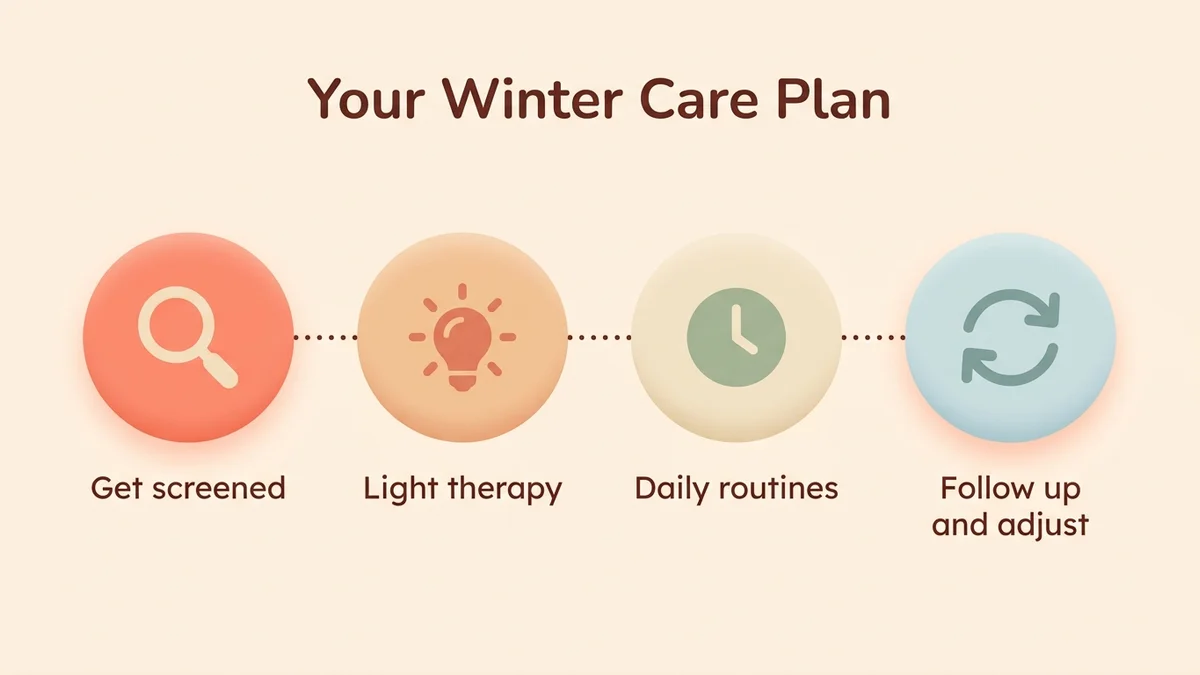
Start with three simple steps: get natural light first thing in the morning, practice 5 minutes of cardiac coherence and talk to your doctor if symptoms persist. And for daily support, Serena offers breathing exercises and mood tracking suited to every season.
If you're experiencing persistent mental fatigue, it may be a sign that your brain needs extra support. Don't wait.