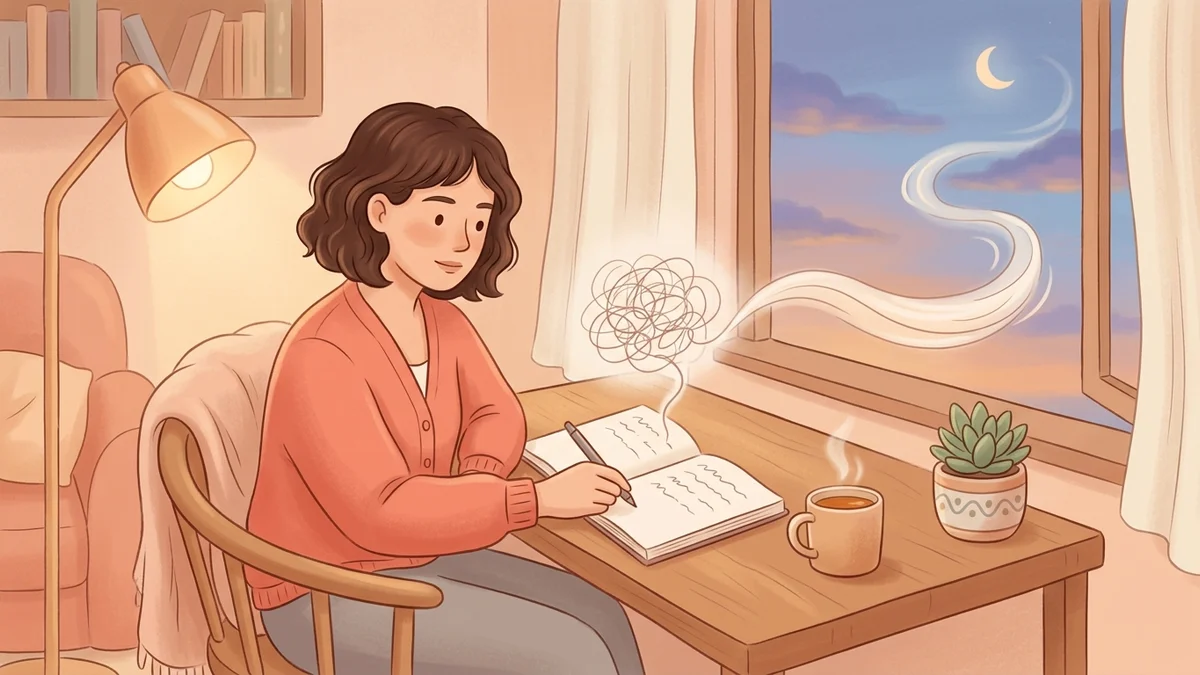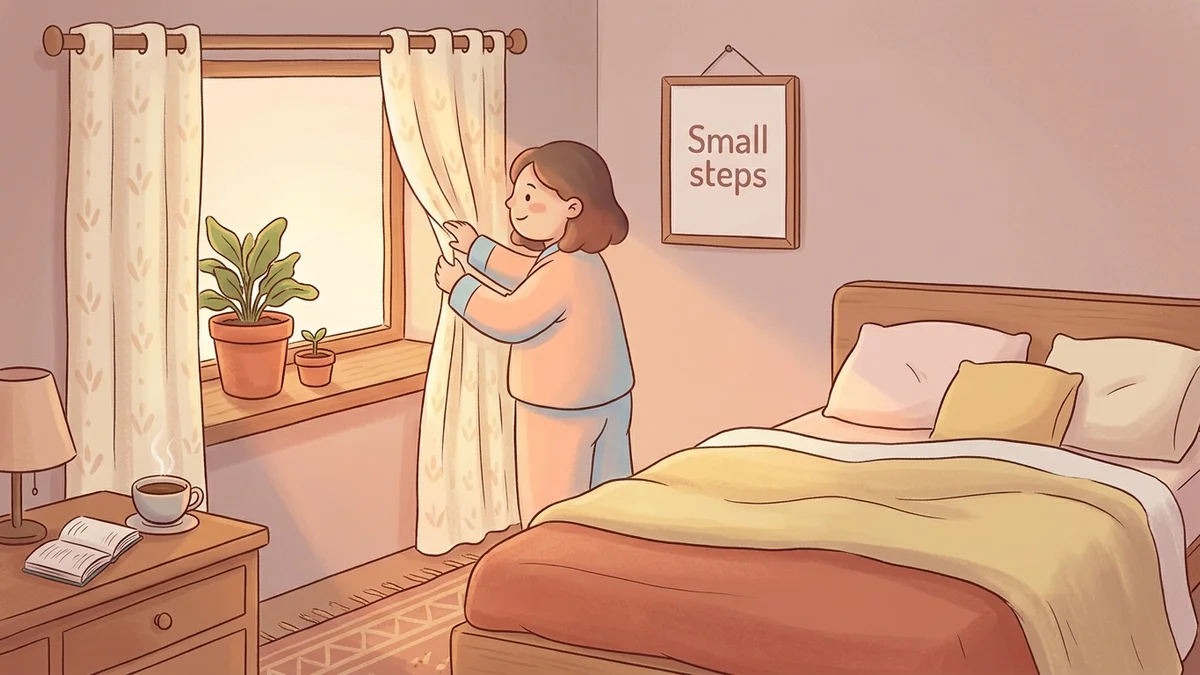
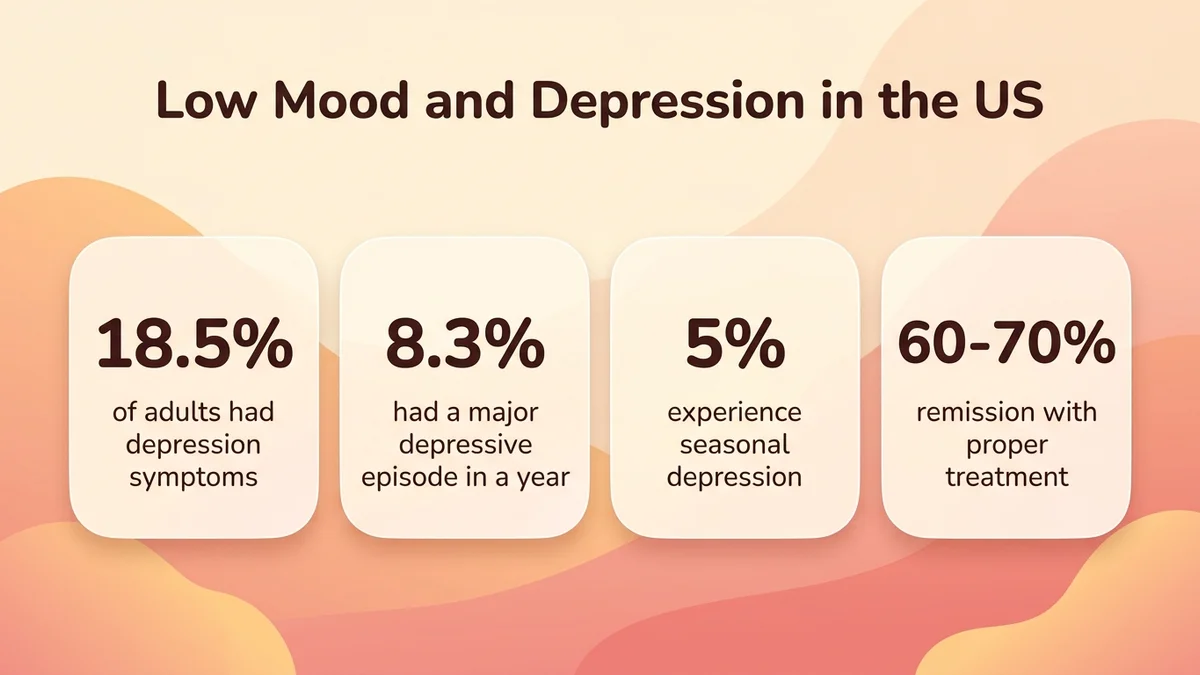
You've felt drained for several days. The alarm goes off and you stay frozen in bed, with no energy and no desire to start the day. The things that used to bring you joy leave you indifferent. You wonder: is this just a slump, or something deeper? You're not the only one asking. According to the CDC's National Center for Health Statistics, 18.5% of US adults experienced symptoms of depression — mild, moderate or severe — in a two-week period. Updated in April 2026.
Here's the short answer: feeling down is a signal that your body and mind need attention. It differs from depression in how long it lasts (less than two weeks) and in the fact that it's reversible with the right tools. In this article, you'll learn to tell the difference — and above all, to take action.
The key takeaways
Feeling down happens to almost everyone and lasts less than two weeks. It differs from clinical depression in being temporary and reversible. To bounce back: keep a routine, move for 30 minutes a day, look after your sleep and don't isolate yourself. Beyond 14 days of symptoms, see a professional.
What are the symptoms of depression compared with feeling down?
Feeling down shows up as a temporary dip in mood, often linked to a specific event. Depression is a clinical disorder defined by the WHO (2023): at least five symptoms present nearly every day for at least two weeks.
Understanding this distinction matters. Too many people downplay depression by calling it "just feeling a bit low." Others worry needlessly over a passing slump.
| Criterion | Feeling down | Clinical depression |
|---|---|---|
| Duration | A few days to 2 weeks | More than 2 weeks |
| Intensity | Variable, with ups and downs | Constant, little improvement |
| Identifiable cause | Often yes (conflict, fatigue) | Not always |
| Functioning | Maintained, despite the effort | Impaired (work, social life, hygiene) |
| Pleasure | Reduced but possible | Absent (anhedonia) |
| Suicidal thoughts | Rare | Possible and frequent |
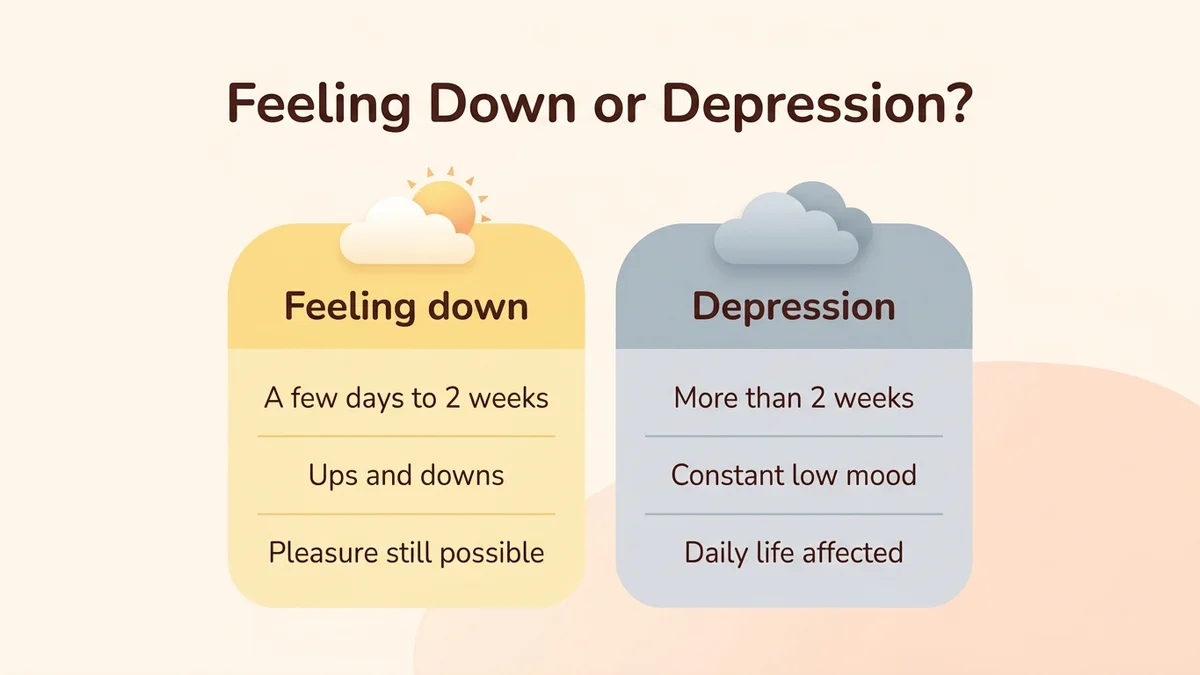
Key point: According to the WHO's ICD-11 classification, a depressive episode requires at least five symptoms for a minimum of 14 days to be diagnosed. Below that threshold, it's most often a passing low mood.
Serena Coach tip: At Serena, we see that many of our users confuse accumulated fatigue with the start of depression. Simply naming what you feel, using mood tracking, already reduces the anxiety that comes with uncertainty.
How do you get out of a low mood and bounce back?
Bouncing back from a passing low takes concrete actions, not grand resolutions. As many psychiatrists put it, the first step isn't feeling motivated — it's taking one action, however tiny, in the right direction.
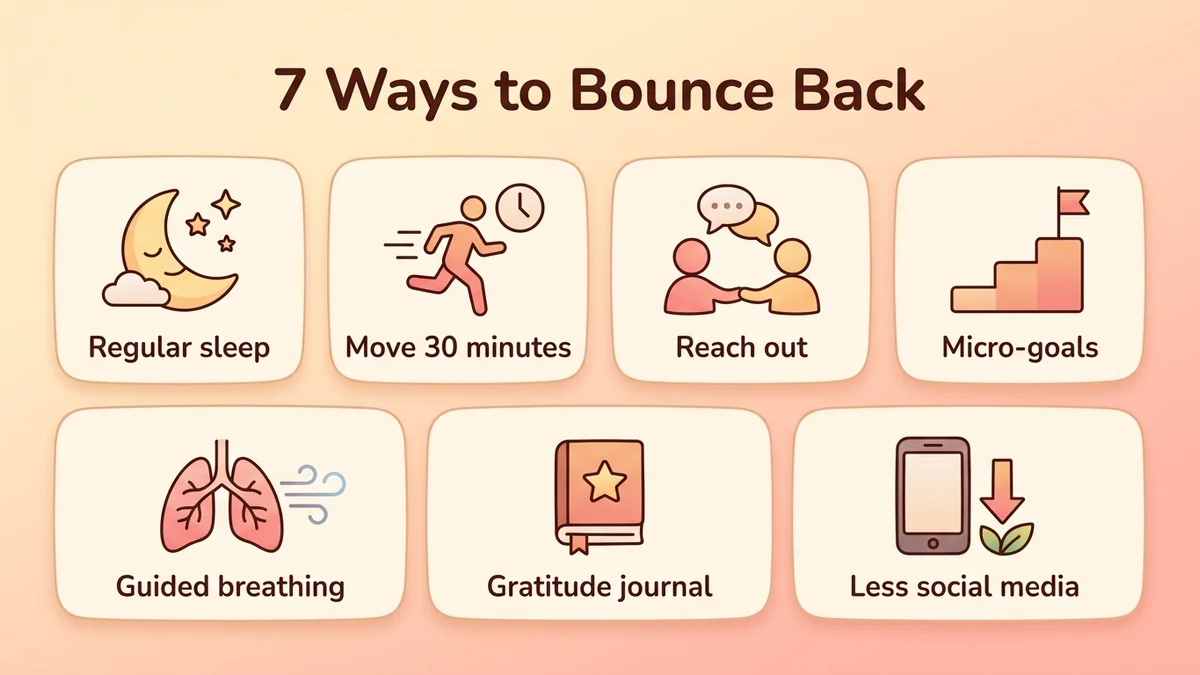
Here are 7 research-backed strategies:
1. Restore a sleep routine
Sleep is the first pillar to rebuild. Research shows that just two nights of poor sleep are enough to increase depressive symptoms by 31%.
Set the same bedtime and wake-up time, weekends included. Turn off screens 45 minutes before bed. Sophrology for sleep or the 4-7-8 technique can help you fall asleep naturally again.
2. Move for 30 minutes a day
According to a meta-analysis in the British Journal of Sports Medicine (2024), physical activity reduces depressive symptoms by 26% on average. No need to run a marathon. A brisk walk, 20 minutes of yoga or even some energetic housework will do.
The effect is biochemical: exercise releases endorphins, boosts serotonin and lowers cortisol. Read our guide on how to lower cortisol to understand this mechanism in detail.
3. Talk, even briefly
Social withdrawal makes a low mood worse. Pick one or two people you trust and send a simple message: "I'm not doing great right now, I just need to know you're there." No need to explain everything.
4. Structure your day into micro-goals
When energy is low, long to-do lists paralyze you. Break your day into 3 realistic micro-goals. For example: take a shower, go outside for 15 minutes, make a simple meal. Every completed step sends a reward signal to your brain.
5. Practice guided breathing
Breathing directly influences the parasympathetic nervous system. Five minutes of cardiac coherence three times a day lowers cortisol by 23% according to the HeartMath Institute. It's quick, free and doable anywhere.
6. Keep a gratitude journal
Writing down three positive things every evening redirects your brain's attention toward the positive. According to a University of California study (2024), this practice increases subjective wellbeing by 25% in six weeks. Our article on the gratitude journal details the complete method.
7. Limit social media
A University of Bath study (2024) shows that cutting social media by 30 minutes a day significantly improves mood and self-esteem within three weeks. News feeds amplify social comparison, which is poison for your mood.
Why does a low mood set in for no apparent reason?
Sometimes, a low mood arrives without any identifiable trigger. You haven't been through a shock or a major conflict, and yet the fog rolls in. That's normal, and here's why.
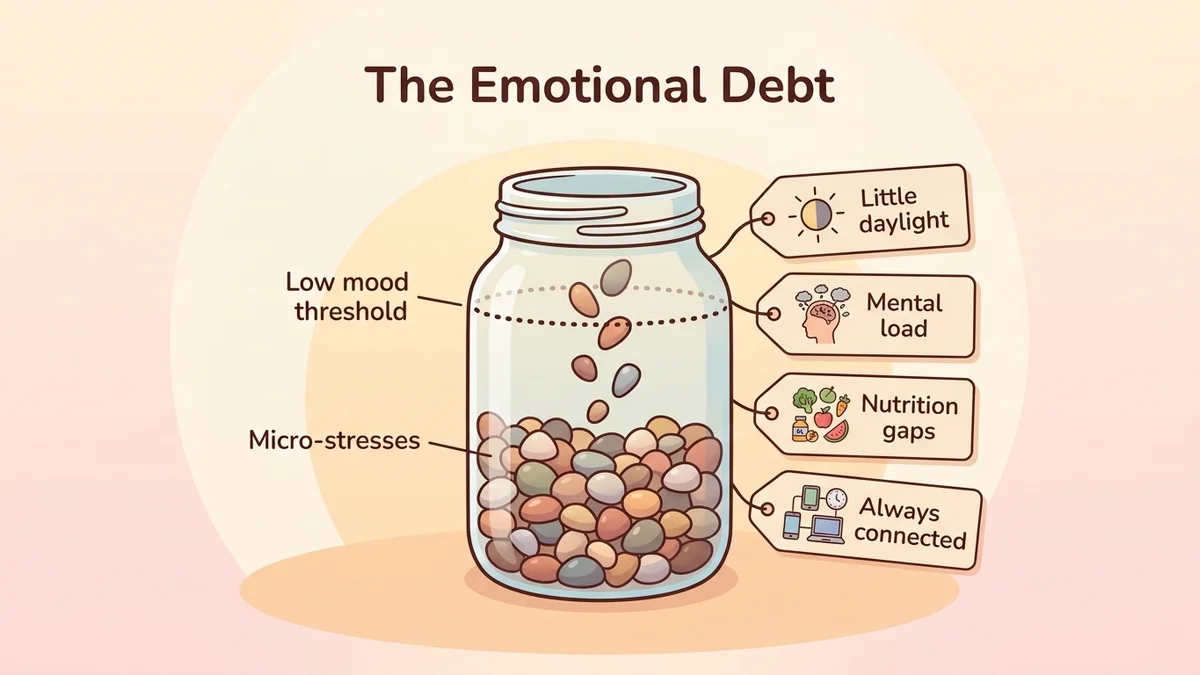
The brain works by accumulation. Clinicians often describe low mood "for no reason" as the result of an emotional debt: untreated micro-stresses that pile up over weeks.
Several invisible factors keep this state going:
- Lack of natural light: light regulates melatonin and serotonin. According to the American Psychiatric Association, about 5% of US adults experience seasonal affective disorder, and many more feel milder "winter blues."
- Accumulated mental load: without even realizing it, your brain is running at full throttle. Read our article on mental exhaustion to understand this mechanism.
- Nutritional imbalances: deficiencies in magnesium, vitamin D or omega-3s directly affect mood.
- Hyperconnectivity: the constant flow of information keeps the nervous system on alert.
Key point: A low mood "for no reason" rarely has no reason. It most often results from an accumulation of factors that the body signals before the mind becomes aware of them.
Real-life scenarios
A Monday morning with no energy
Luke, 34, software developer. For three weeks, Sunday night has become a moment of dread. On Monday morning, he drags himself to the office on autopilot. He's lost his love of coding, even though he used to adore it. His solution: he started a 20-minute walk before work, turned off notifications on Sundays after 6 p.m., and began tracking his mood to identify his real triggers. Within two weeks, Monday morning stopped feeling like a wall.
Feeling down after a breakup
Sarah, 28, after a separation. In the first weeks, everything seems gray. She eats poorly, sleeps too much and has stopped seeing her friends. The turning point: she set just one goal a day. First, "leave the house." Then, "call a friend for 10 minutes." She added three minutes of guided breathing every morning. After a month, she describes her state as "fragile but alive."
The exhausted parent
Kevin, 40, father of two. The mental load caught up with him quietly. Never any time for himself, growing irritability, the feeling of running without ever arriving. His primary care doctor identified a low mood linked to exhaustion. The prescription: a series of sessions with a therapist covered by his insurance, moderate physical activity, and a protected 30 minutes for himself every day.
Understanding depression to better prevent it
In the United States, an estimated 21 million adults had at least one major depressive episode in a single year, according to the National Institute of Mental Health (NIMH). The good news is that support has never been more accessible, from primary care doctors to telehealth therapy and free crisis lines.
| Figure | Source |
|---|---|
| 18.5% of adults had symptoms of depression in a two-week period | CDC, NCHS (2019 data) |
| 8.3% of adults had a major depressive episode in a year | NIMH (2021 data) |
| 18.6% of young adults aged 18-25 had a major depressive episode in a year | NIMH (2021 data) |
| About 5% of adults experience seasonal affective disorder | American Psychiatric Association |
| 61% of adults with a major depressive episode received treatment | NIMH (2021 data) |
The good news is that depression is treatable. According to the WHO (2023), psychotherapy is the first recommended treatment. For moderate to severe forms, it combines effectively with antidepressants. Remission rates with appropriate treatment reach 60 to 70%.
Depression explained on video
To better understand depression from the inside, this World Health Organization video uses the metaphor of the "black dog" to illustrate daily life with depression. It has been viewed tens of millions of times and remains one of the resources most often recommended by health professionals.
As this video illustrates, depression isn't just sadness. It's a state that colors your entire perception of the world. Recognizing this "black dog" is the first step toward taming it. With Serena, you can start by tracking your mood every day to identify the days and situations that weigh on you most.
The Serena perspective
At Serena, we see a recurring pattern among our users: most only realize how deep their low mood goes after they start tracking it over several days. The Circumplex model we use (inspired by James Russell's research) makes it possible to tell emotional fatigue apart from real sadness.
Anonymized data from our users shows that those who practice guided breathing for at least 5 minutes a day for two weeks report improved mood in 73% of cases. Academic theory talks about 4 to 6 weeks for significant results. In real life, the first effects often arrive sooner, especially when users combine breathing with a gratitude journal.
Let's be honest: an app never replaces a health professional. But it can be the first accessible step when you're not yet ready to reach out.
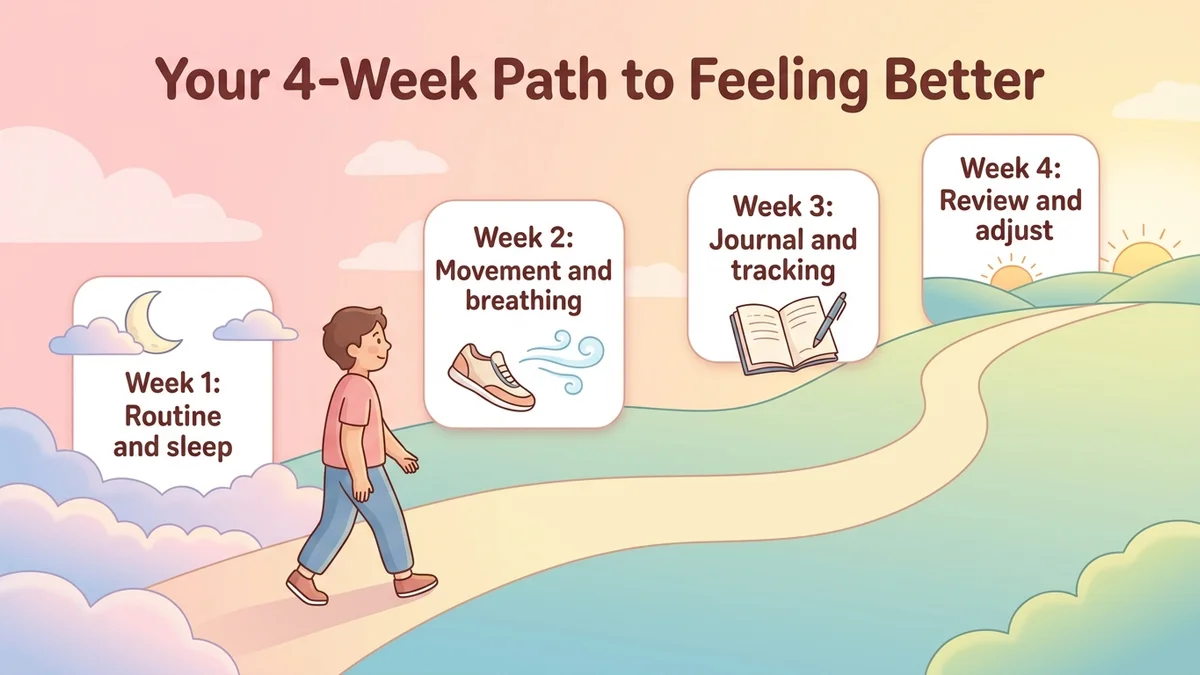
Serena Coach tip: Don't try to feel better "all at once." The users who bounce back most effectively are the ones who set a single goal per day during the first week. Not two. Just one.
How Serena can help you through a low period
Serena brings together several science-backed tools in a single app:
- Circumplex mood tracking: pinpoint exactly what you're feeling, beyond a simple "fine / not fine"
- Guided breathing: 6 breathing techniques, including cardiac coherence, ready in under a minute
- Gratitude journal: refocus your attention on the positive — 3 minutes in the evening is enough
- Mindfulness exercises: bring yourself back to the present when your thoughts start looping
In reality, the hardest first step isn't "getting motivated." It's opening the app and doing one 3-minute exercise. Try it for free at serena-app.com.
Frequently asked questions
What is the difference between feeling down and depression?
Feeling down lasts a few days to two weeks, often with an identifiable trigger. Clinical depression, according to the WHO's ICD-11, requires at least five persistent symptoms for a minimum of 14 days. The key distinction: a low mood fluctuates, while depression stays constant and affects daily functioning.
What are the first symptoms of depression?
The first signs are often subtle: unexplained fatigue even after rest, a gradual loss of interest in usual activities, sleep problems (insomnia or oversleeping), unusual irritability and difficulty concentrating. These signals often appear several weeks before a formal diagnosis.
Can you get out of a low mood without medication?
A mild to moderate low mood responds very well to non-medication approaches: regular physical activity, restoring your sleep, social support, guided breathing and emotion management techniques. For diagnosed depression, medication may be necessary. That's for your doctor to decide.
Does diet really affect mood?
Yes. Tryptophan (found in bananas, turkey and eggs) is the direct precursor of serotonin, the feel-good hormone. Omega-3s (fatty fish, walnuts) protect neurons. Magnesium (dark chocolate, almonds) reduces irritability and supports sleep.
How do I know if I should see a professional?
Three warning signs: your symptoms last more than two weeks, they affect your ability to work or maintain relationships, or you have recurring dark thoughts. Your primary care doctor is the right first point of contact. And if you're ever in crisis, you can call or text 988 at any time in the US.
Is seasonal depression a real low mood?
Seasonal depression (seasonal affective disorder) is a condition recognized by medicine. According to the American Psychiatric Association, about 5% of US adults experience it. It's linked to a lack of natural light, which disrupts serotonin and melatonin production. Light therapy (30 minutes a day) is the first-line treatment. Read our full guide to seasonal depression.
Do wellbeing apps help with a low mood?
Apps based on scientific evidence (CBT, cardiac coherence, mindfulness) can be an accessible first tool. They don't replace a professional, but they serve as a bridge toward feeling better. What matters is choosing an app that combines mood tracking, breathing and gratitude.
Which supplements help with a low mood?
St. John's wort is the herbal remedy with the most evidence for mild depressive symptoms. Magnesium, vitamin D and omega-3s round out the approach. Be careful: St. John's wort interacts with many medications, including birth control and antidepressants. Talk to your doctor before taking any supplement.
Conclusion
Feeling down isn't a weakness. It's a signal your body and mind send to say "I need attention." By recognizing the symptoms, understanding the difference from clinical depression and taking concrete steps every day, you can bounce back.
And if the low mood lasts more than two weeks? Reach out. Your primary care doctor, a therapist or the 988 Lifeline are there so you don't have to face these hard moments alone.
In the meantime, start with one small step: download Serena and log your first mood entry. Three minutes. That's all it takes to take the first step.