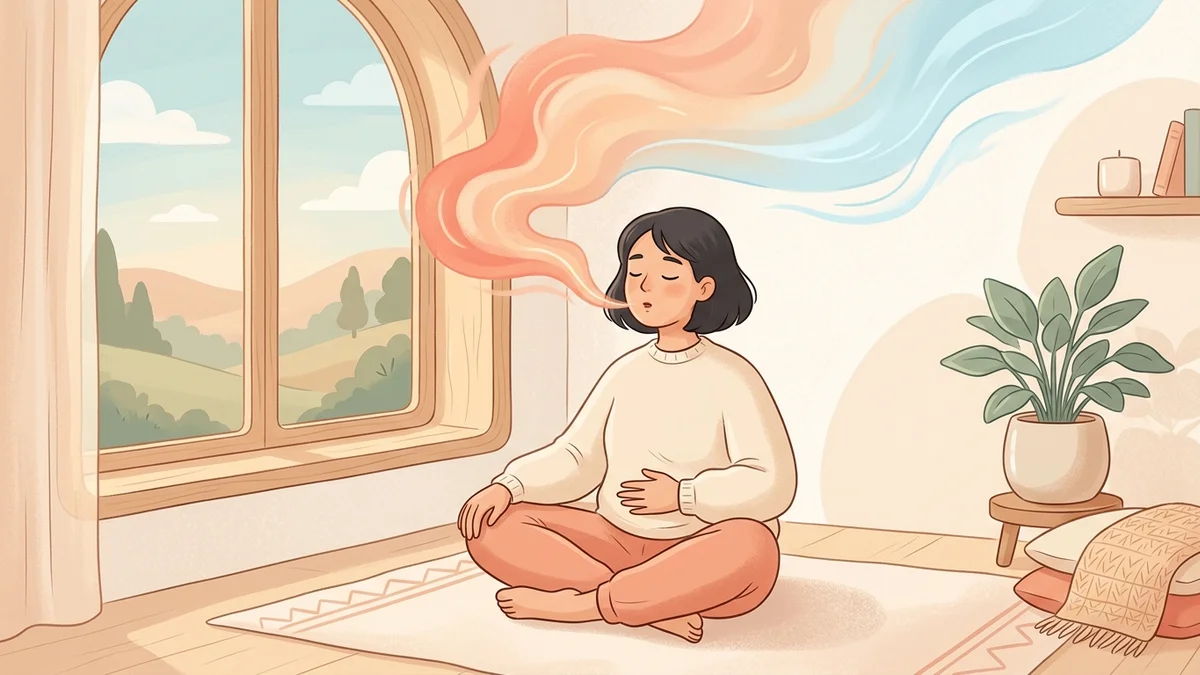
Your coworker cuts you off in a meeting. Your blood boils, your jaw clenches, your heart starts pounding. You feel anger rising like a burning wave — and you know the next few seconds will decide whether you keep control or lose it. You're not alone: in the American Psychological Association's Stress in America surveys, anger and irritability consistently rank among the most common signs of stress people report. Updated in April 2026.
The good news? Science has pinpointed exactly what works — and, just as importantly, what doesn't. A 2024 meta-analysis of 154 studies settled the debate. Here are the 9 techniques that actually work.
The key takeaways
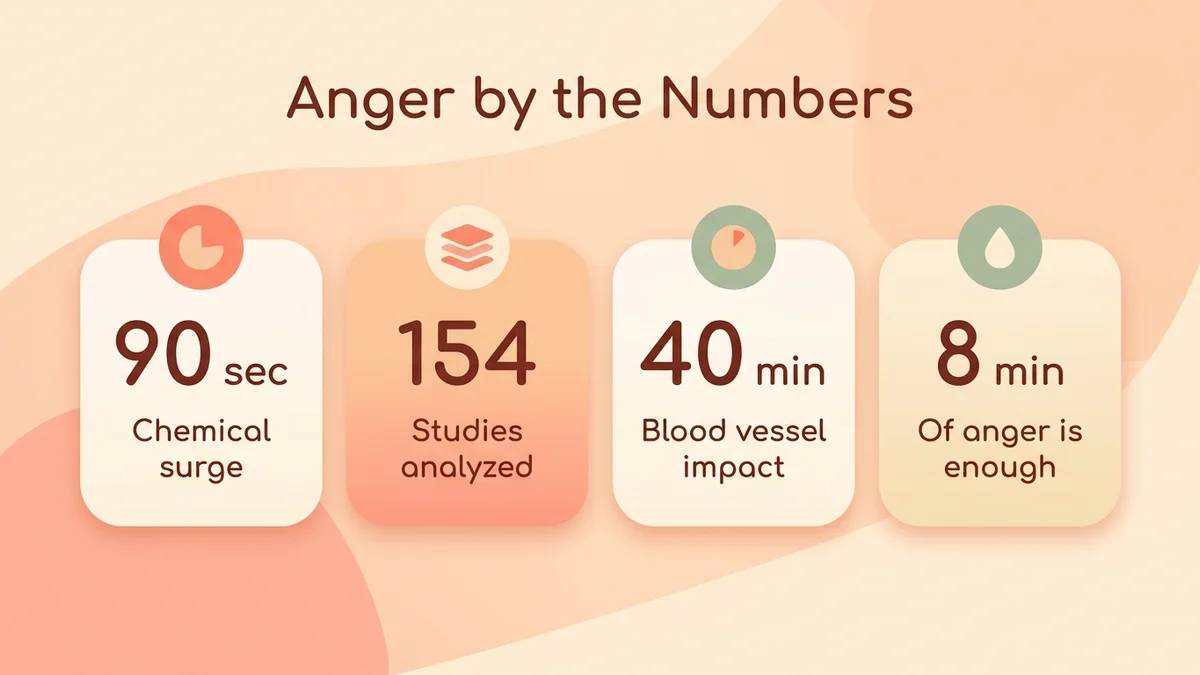
Anger is a normal emotion whose initial chemical surge lasts about 90 seconds. According to the Kjærvik and Bushman meta-analysis (2024, 154 studies, 10,000+ participants), calming techniques — deep breathing, meditation, mindfulness — are what reliably reduce it. Venting physically keeps anger going. Nine proven techniques help you manage it, from emergency moments to long-term change.
What happens in your brain when you get angry?
Anger triggers a precise neurochemical cascade in less than a second. The amygdala, your brain's alarm system, detects a threat or an injustice and activates the sympathetic nervous system before your prefrontal cortex — the seat of reasoning — has had time to analyze the situation.
Anger triggers a rapid release of adrenaline and cortisol within a fraction of a second, before the prefrontal cortex can step in.
The result: your heart rate speeds up, your muscles tense, your blood pressure climbs. You're literally "disconnected" from your rational brain. That's why you say things you regret later.
| Phase | Duration | What's happening | Your state |
|---|---|---|---|
| Trigger | < 1 second | The amygdala detects a threat | Reflexive, uncontrollable |
| Chemical surge | 1 to 90 seconds | Adrenaline and cortisol flood the body | Peak tension |
| Plateau | 90 s to 20 min | The prefrontal cortex gradually regains control | Growing clarity |
| Return to calm | 20 to 60 min | Stress hormones are metabolized | Fatigue, sometimes guilt |
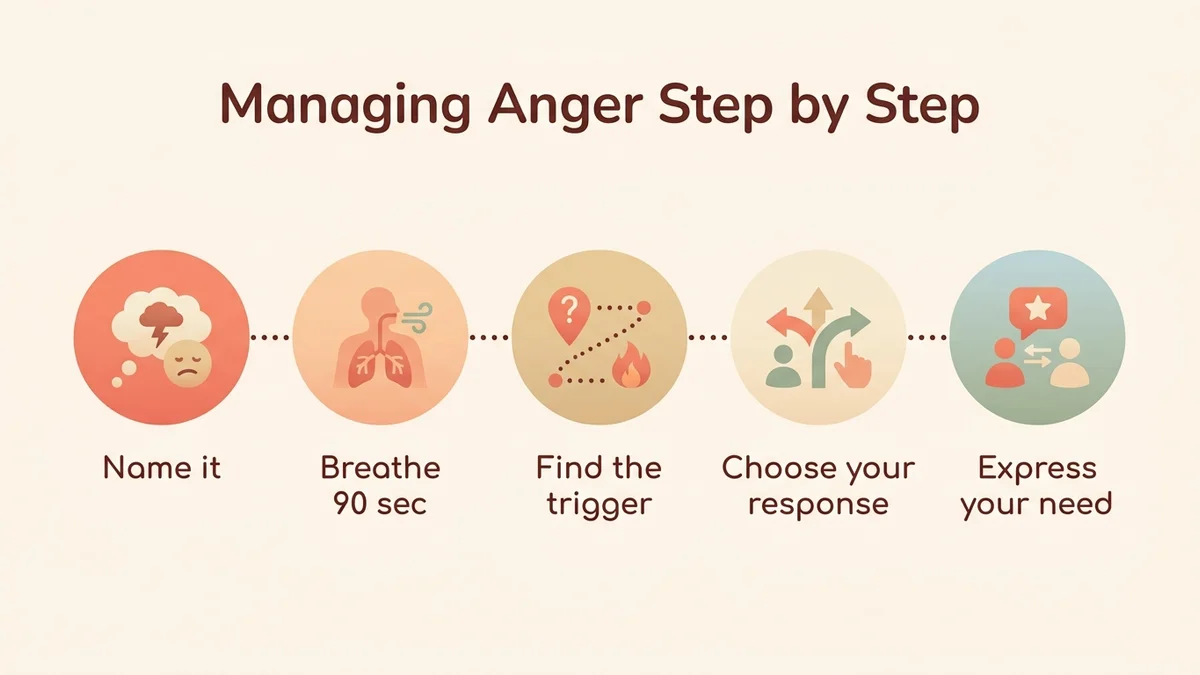
The key insight, popularized by neuroscientist Jill Bolte Taylor: the chemical surge of an emotion lasts only about 90 seconds. If you still feel angry after that, it's your thoughts that are restarting the cycle. That's where the techniques come in.
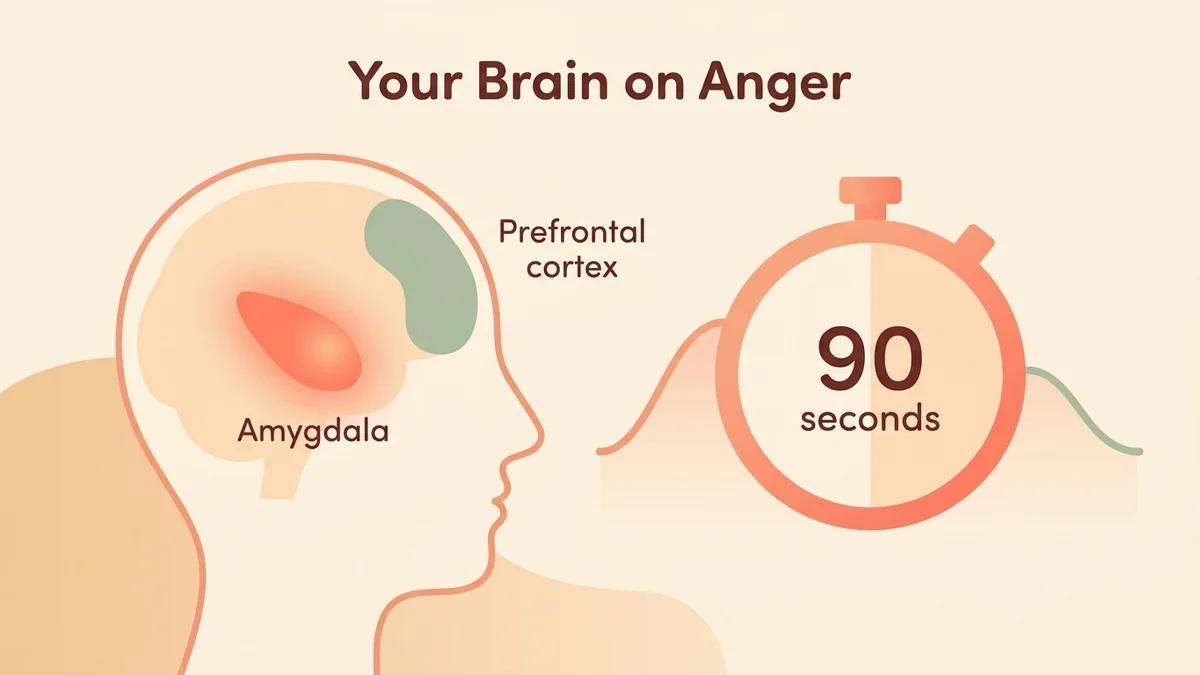
If you're experiencing persistent physical symptoms linked to stress, chronic anger could be an underlying cause.
Key point: Anger isn't a character flaw. It's a biological survival response that only becomes a problem when it repeats or is out of proportion.
Why doesn't "blowing off steam" calm anger?
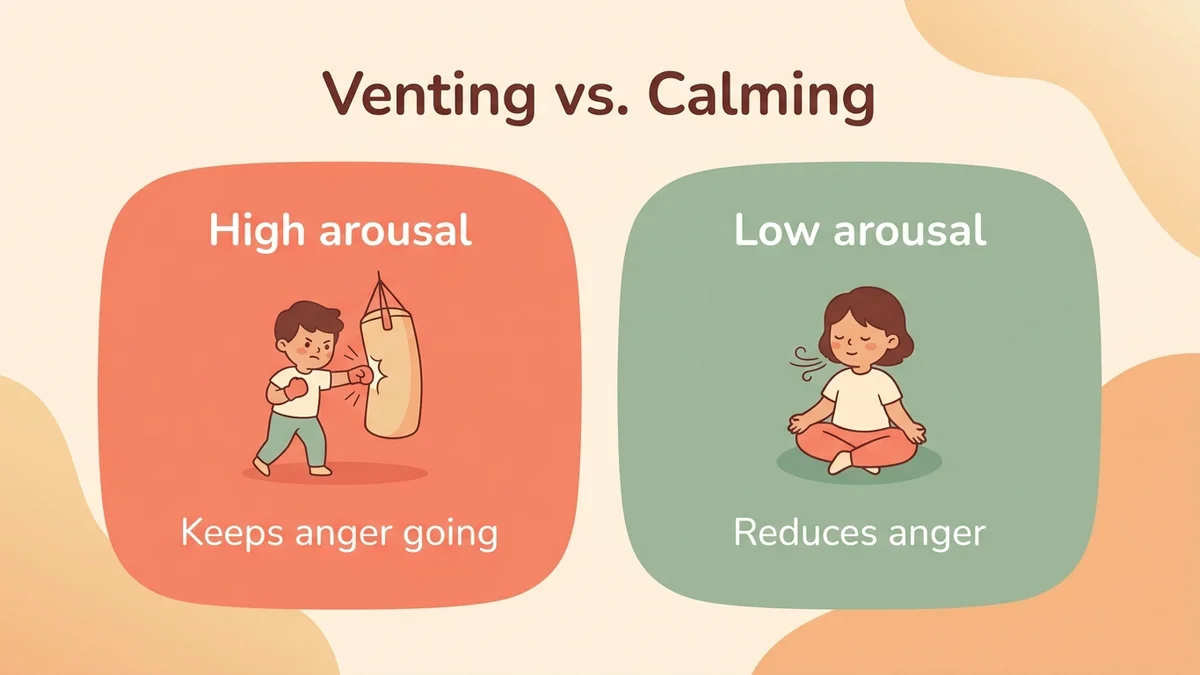
Because intense physical activities keep the body in a state of arousal — exactly the state you're trying to leave. The meta-analysis by Kjærvik and Bushman (Clinical Psychology Review, 2024), covering 154 studies and more than 10,000 participants, shows that calming techniques (breathing, meditation, mindfulness) are what effectively reduce anger.
Punching a pillow, screaming into it, running as fast as you can — these reflexes feel logical. Yet science says otherwise. Activities that increase physiological arousal are largely ineffective at reducing anger. They keep your body in "fight" mode and restart stress hormone production.
| Approach | Examples | Effectiveness (2024 meta-analysis) |
|---|---|---|
| High arousal | Hitting a bag, running, yelling | Ineffective — keeps anger going |
| Low arousal | Deep breathing, meditation, yoga | Very effective — reduces anger |
| Gentle activities | Slow walking, cooking, reading | Moderately effective |
Venting physically after getting angry maintains arousal instead of reducing it, according to a meta-analysis of 154 studies published in Clinical Psychology Review (2024).
This finding held across ages, genders and cultures. If you usually "get the anger out" through intense effort, it's time to change your approach.
Serena Coach tip: Next time you feel anger rising, resist the reflex to "blow off steam." Sit down and breathe deeply for 90 seconds. It's counterintuitive, but it's what the science recommends.
How to calm an angry outburst in 90 seconds
Use deep belly breathing (4 seconds in, 4 seconds hold, 6 seconds out), a strategic time-out (leave the room for 2 minutes) or 5-4-3-2-1 sensory grounding. All three make use of the roughly 90-second window during which the chemical surge naturally subsides.
Each can be used anywhere — at the office, on public transit, at home.
Technique 1: Deep belly breathing
Belly breathing directly activates the parasympathetic nervous system and slows the stress response. It's one of the best-supported techniques in the 2024 meta-analysis.
- Breathe in through your nose for 4 seconds, letting your belly expand
- Hold your breath for 4 seconds
- Breathe out slowly through your mouth for 6 seconds
- Repeat 6 times (exactly 84 seconds)
To go further, our complete guide to cardiac coherence explains this approach in detail.
Technique 2: The strategic time-out
Physically step away from the situation for 2 minutes. It isn't running away: it's giving your prefrontal cortex time to regain control.
- Simply say: "I need a minute, I'll be right back."
- Change rooms or step outside for a walk
- Don't make any decisions until the wave has passed
Technique 3: 5-4-3-2-1 sensory grounding
This mindfulness technique redirects your attention from anger to your senses. Mentally identify:
- 5 things you can see
- 4 things you can touch
- 3 sounds you can hear
- 2 things you can smell
- 1 thing you can taste
Within 60 to 90 seconds, your amygdala calms down because your brain is busy processing neutral sensory information. Try it with our guided 5-4-3-2-1 grounding exercise.
What are the effects of anger on your health?
Occasional anger is normal. Chronic anger, on the other hand, takes a toll on your body. A study published in the Journal of the American Heart Association (2024) measured the effects of 8 minutes of recalled anger in 280 adults: the blood vessels' ability to dilate was significantly reduced, and the effect lasted up to 40 minutes afterward.
Eight minutes of anger impaired blood vessel dilation for up to 40 minutes, a potential pathway to cardiovascular risk, according to a JAHA study (2024).
| Body system | Effect of chronic anger |
|---|---|
| Cardiovascular | Impaired blood vessel dilation, high blood pressure |
| Immune | Weakened defenses, chronic inflammation |
| Digestive | Acid reflux, irritable bowel symptoms |
| Neurological | Sustained stress hormones linked to memory and concentration problems |
| Skin | Flare-ups of eczema and psoriasis, stress-related skin reactions |
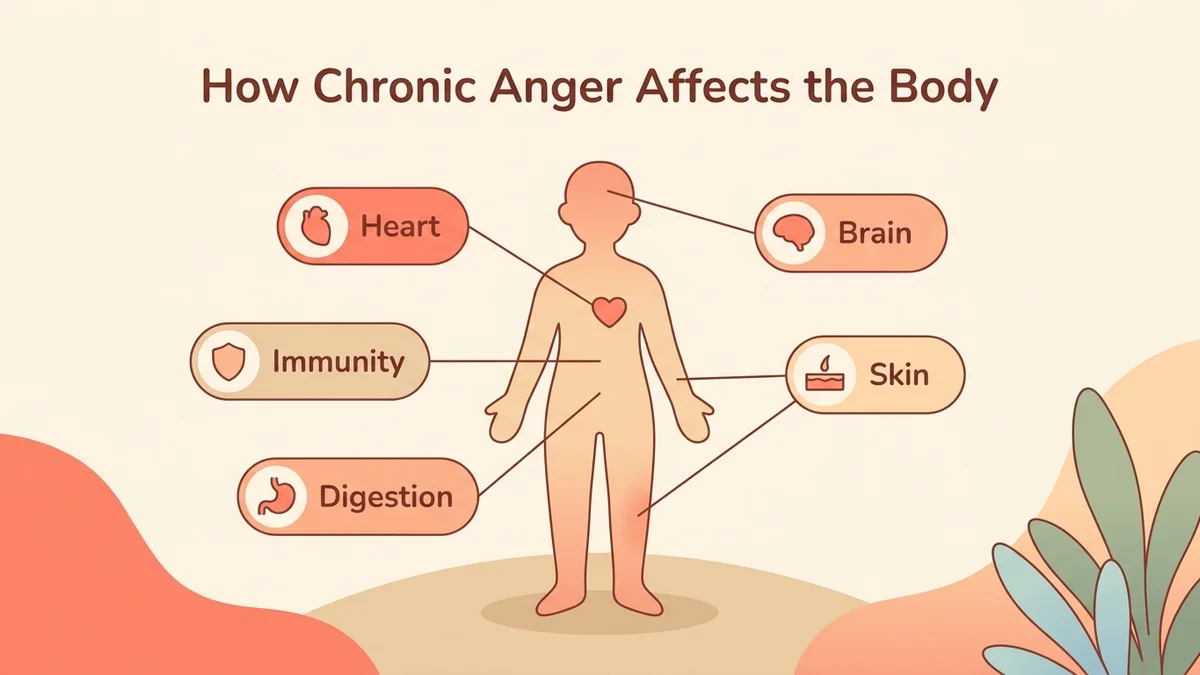
These effects aren't reserved for "hotheads." Frequent episodes of intense frustration — even when kept inside — can take the same toll.
6 long-term techniques to manage anger for good
The three emergency techniques help you in the moment. The next six transform your relationship with anger over time.
Technique 4: Cognitive reframing (CBT)
Cognitive behavioral therapy teaches that it's never the event itself that triggers anger, but your interpretation of it. A coworker interrupts you? Your automatic thought ("He doesn't respect me") triggers the anger. The alternative ("He's stressed about his deadline") defuses it.
| Automatic thought | Emotion | Alternative thought | Result |
|---|---|---|---|
| "He's ignoring me on purpose" | Intense anger | "Maybe he's distracted" | Mild frustration |
| "I'm always the one doing everything" | Rage, bitterness | "I'll express my need clearly" | Calm determination |
| "This situation is unbearable" | Imminent explosion | "It's unpleasant, but temporary" | Manageable discomfort |
Anger often comes from the gap between what we want and what reality gives us. Learning to tolerate that gap is the key. You can practice spotting and reframing these thoughts in our CBT thought record.
Technique 5: Mindfulness meditation
Regular meditation strengthens the connections between the prefrontal cortex and the amygdala. Research on mindfulness programs shows that even brief daily practice (around 10 minutes) can reduce emotional reactivity within a few weeks.
Start with 5 minutes each morning: sit down, close your eyes, observe your breath without changing it. When a thought pops up, note it mentally and return to your breath.
Technique 6: The anger journal
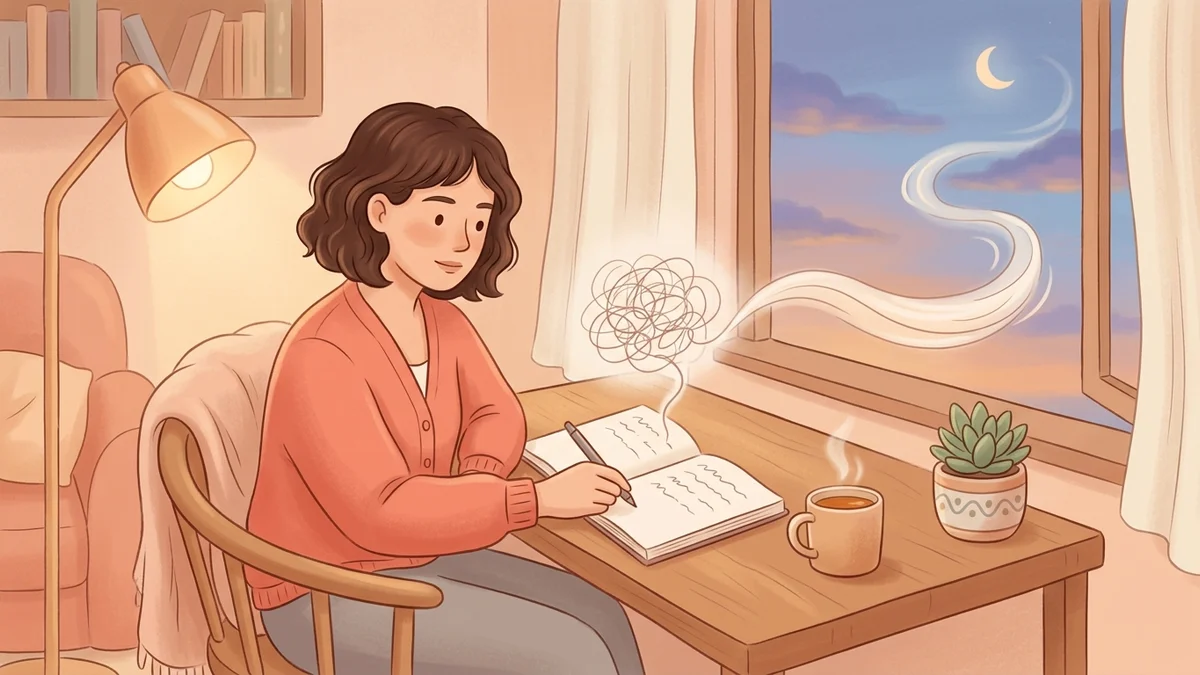
Keep a notebook where you log each anger episode in four columns:
- Situation: what happened?
- Automatic thought: what did I tell myself?
- Intensity: from 1 to 10
- Real trigger: which need wasn't met?
After two weeks, patterns emerge. You identify your recurring triggers and can anticipate them. If you already know the gratitude journal method, it's the same principle applied to difficult emotions.
Technique 7: Daily cardiac coherence
Practicing cardiac coherence 3 times a day (5 minutes each time) lowers your baseline stress level. You no longer fly off the handle because your emotional tolerance threshold is higher.
The 3-6-5 method: 3 times a day, 6 breaths per minute, for 5 minutes. Our free cardiac coherence timer guides you through each session.
Technique 8: Gentle physical activity
While intense exercise keeps anger going, low-arousal activities effectively reduce it. Yoga, walking in nature, tai chi or even cooking engage the body without restarting the stress hormone cascade.
Technique 9: Assertive communication
Expressing anger doesn't mean exploding at someone. Assertive communication means stating what you feel without blaming, taking responsibility for your emotions. Instead of "You're driving me crazy!" (accusation), try "I feel frustrated when..." (expression). That shift from "you" to "I" radically changes the dynamic of a conflict.
How to express anger without hurting others
Nonviolent Communication (NVC), developed by Marshall Rosenberg, is one of the most effective methods for turning anger into constructive dialogue. It rests on four steps: factual observation, expression of the feeling, identification of the need and a concrete request.
Bottled-up anger explodes sooner or later. Anger expressed violently destroys relationships. NVC sits between the two.
The 4-step NVC formula:
- Observation: "When you arrive late to our plans..." (fact, not judgment)
- Feeling: "...I feel frustrated and not considered..."
- Need: "...because I need to feel my time is respected."
- Request: "Could you let me know when you're going to be late?"
Marshall Rosenberg's Nonviolent Communication transforms destructive anger into constructive dialogue through four steps: observation, feeling, need, request.
As anger researcher Ryan Martin explains in this TED talk, anger is a healthy signal that something is wrong — the goal isn't to suppress it, but to channel it well. You can practice this kind of emotional expression with Serena, which helps you identify and regulate your emotions every day.
Real-life scenarios
At the office: your manager criticizes your work in front of the team
Your face burns, your fists clench under the table. Don't respond right away. Do the 4-4-6 breathing for 90 seconds. Then use NVC: "When I get feedback in front of the whole team, I feel put on the spot. Could we discuss it privately?" You've expressed your need without conflict.
At home: your teenager talks back
Emotional regulation gets put to the test with a provocative teen. Rather than raising your voice (which escalates the conflict), take a time-out: "Let's pick this conversation back up in 10 minutes, when we're both calmer." Your teen learns by example that anger can be managed rather than endured.
On the subway: someone shoves past you without apologizing
Frustration rises, intrusive thoughts pile up ("How rude!"). Use 5-4-3-2-1 grounding: redirect your attention to your five senses. Within 60 seconds, the situation loses its emotional charge. That's not passivity — it's discernment.
The Serena perspective
At Serena, anonymized mood-tracking data reveals a recurring pattern: users who identify anger within the first 30 seconds manage it 3 times better than those who recognize it late. Serena's Circumplex model — which maps emotions along two axes (energy and valence) — places anger in the "high energy, negative valence" quadrant, which explains why deactivating techniques are the ones that work.
Theory says the chemical surge lasts 90 seconds. In practice, our data shows that regular users of Serena's guided breathing report shorter anger episodes after 3 weeks of daily practice. The gap between theory and practice narrows with training — just like a muscle.
Serena Coach tip: Don't try to "never be angry again." Try to recognize anger as soon as it appears. The earlier you spot it, the wider your window for action. Daily mood tracking is your best ally for building that emotional awareness.
Managing your emotions every day with Serena
Managing anger isn't a battle you have to fight alone. Serena supports you with concrete tools:
- Guided breathing: 6 breathing techniques including cardiac coherence and 4-7-8 breathing, one tap away when anger rises
- Circumplex mood tracking: identify your emotions in real time and spot the patterns behind your triggers
- Mindfulness exercises: short sessions (3-5 minutes) designed to strengthen your ability to let go day to day
The app is designed for the moments you need it most: before a stressful meeting, after a conflict, or in the evening to release the day's frustrations.
Frequently asked questions
Is it normal to get angry often?
Yes, anger is a universal and adaptive emotion. It signals that a boundary has been crossed or a need isn't being met. It becomes a problem when it's disproportionate, almost daily, or has a lasting impact on your relationships. An anger journal helps you distinguish normal episodes from warning signs.
How can I calm my anger instantly?
Arousal-reducing techniques like deep belly breathing are the most effective, according to the Kjærvik and Bushman meta-analysis (Clinical Psychology Review, 2024). Breathe in for 4 seconds, hold for 4 seconds, breathe out for 6 seconds. Within about 90 seconds — the length of the chemical surge — the parasympathetic nervous system takes over again.
Why doesn't venting through exercise calm anger?
The 2024 meta-analysis (154 studies, 10,000+ participants) shows that activities increasing physiological arousal — hitting a bag, running, yelling — keep the body in "fight" mode. Techniques that reduce arousal (breathing, meditation, yoga) are the ones with solid scientific support.
Is anger dangerous for your health?
Yes. The Journal of the American Heart Association study (2024) of 280 adults showed that 8 minutes of anger impaired blood vessel dilation for up to 40 minutes. Over the long term, chronic anger raises cardiovascular risk, disrupts immunity and worsens digestive problems.
How can I express anger without hurting others?
Use Marshall Rosenberg's Nonviolent Communication (NVC) in four steps: factual observation, expression of the feeling, identification of the need and a concrete request. This method replaces accusations with dialogue and turns conflict into an opportunity for mutual understanding.
When should I see a professional about anger?
See a psychologist if your anger leads to violent behavior, regularly lasts more than 30 minutes, damages your relationships or leaves you with intense guilt after each episode. Cognitive behavioral therapy (CBT) shows significant results, often within 8 to 12 sessions. If you ever fear you might hurt yourself or someone else, call or text 988 right away.
Does meditation really help with anger?
Yes. The Kjærvik and Bushman meta-analysis (2024) ranks meditation and mindfulness among the most effective techniques. They strengthen the connections between the prefrontal cortex and the amygdala, improving emotional regulation, with measurable changes after a few weeks of regular practice.
Is anger hereditary?
A tendency toward a hot temper has a genetic component, but environment plays a decisive role. Neuroscience confirms that emotional regulation is a neuroplastic skill: it develops with practice, whatever your starting temperament. To see where you stand, try our emotional intelligence test.
Conclusion
Anger is neither your enemy nor a character flaw. It's a biological signal whose chemical surge lasts about 90 seconds — as long as you don't restart it with your thoughts. The 9 techniques in this guide, supported by the largest meta-analysis ever conducted on the subject (Kjærvik and Bushman, 2024), give you the tools to turn this raw emotion into an emotional skill.
Start today: next time anger rises, breathe deeply for 90 seconds and notice what happens. And if you'd like daily support, try Serena for free — guided breathing is available the moment you open the app.