You wake up tired despite eight hours of sleep. Your neck is constantly tense. You forget simple things, snap over nothing, and that knot in your stomach never seems to go away. If these signs sound familiar, your body may be trying to tell you something important: you're dealing with chronic stress.
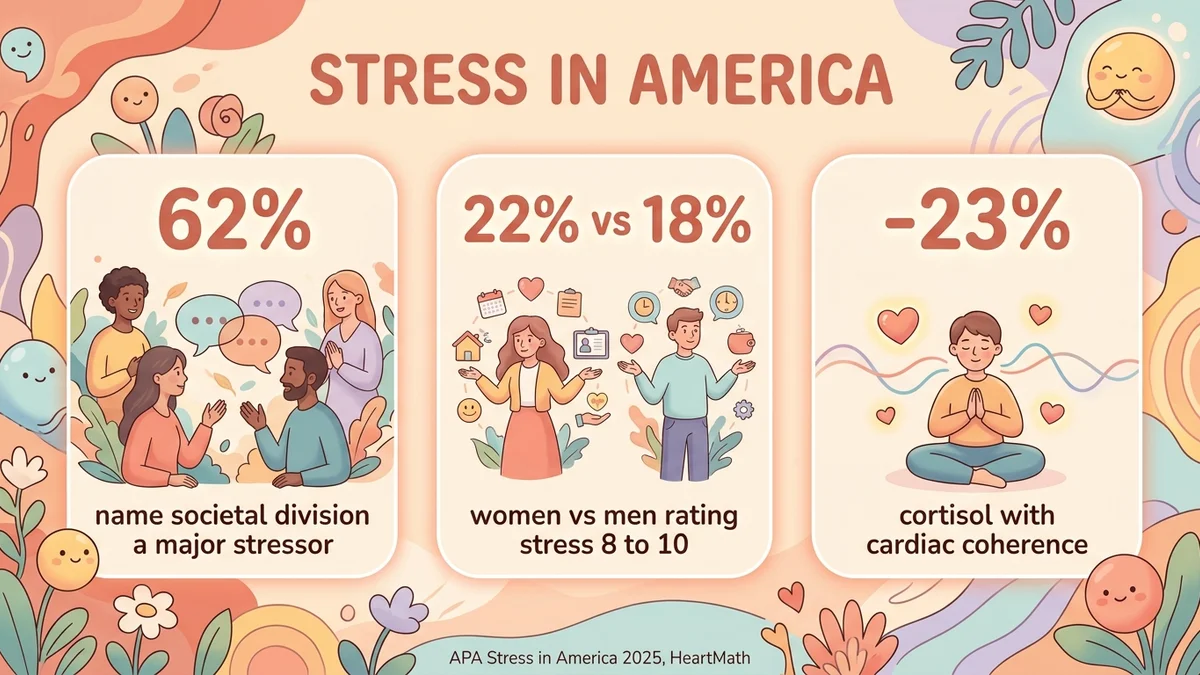
Updated in March 2026 — You're far from the only one. According to the American Psychological Association's Stress in America 2025 survey, 62% of US adults name societal division as a major source of stress, and 54% say they feel isolated. In this article, you'll learn to recognize the 13 signs your body is sending you, understand what's actually happening inside you, and discover natural, validated ways to get out of it.
The key takeaways
Chronic stress shows up through 13 identifiable physical and psychological signs: persistent fatigue, muscle pain, digestive problems, irritability, sleep problems and difficulty concentrating. Unlike acute stress, it keeps cortisol permanently high, disrupting the immune, cardiovascular and digestive systems. Natural solutions like cardiac coherence, guided breathing and meditation can lower cortisol within 4 to 8 weeks.
What exactly is chronic stress?
Chronic stress is a prolonged state of tension in which your body stays in "alert" mode for weeks, months or even years. Unlike short-term stress that fades once the threat has passed, chronic stress keeps your nervous system running in overdrive.
According to Dr. Hans Selye, a pioneer of stress research, the body goes through three phases when faced with stress: alarm, resistance and exhaustion. Chronic stress corresponds to the exhaustion phase, when the body no longer has the resources to adapt.
Chronic stress keeps cortisol permanently elevated, disrupting the immune, digestive and cardiovascular systems, according to the WHO (2024).
What's happening in your body
When you're stressed, your brain's amygdala triggers the hypothalamic-pituitary-adrenal axis (HPA axis). Your adrenal glands then release cortisol and adrenaline. Normally, these hormones help you react and then settle back down. With chronic stress, this mechanism stays stuck in the "ON" position.
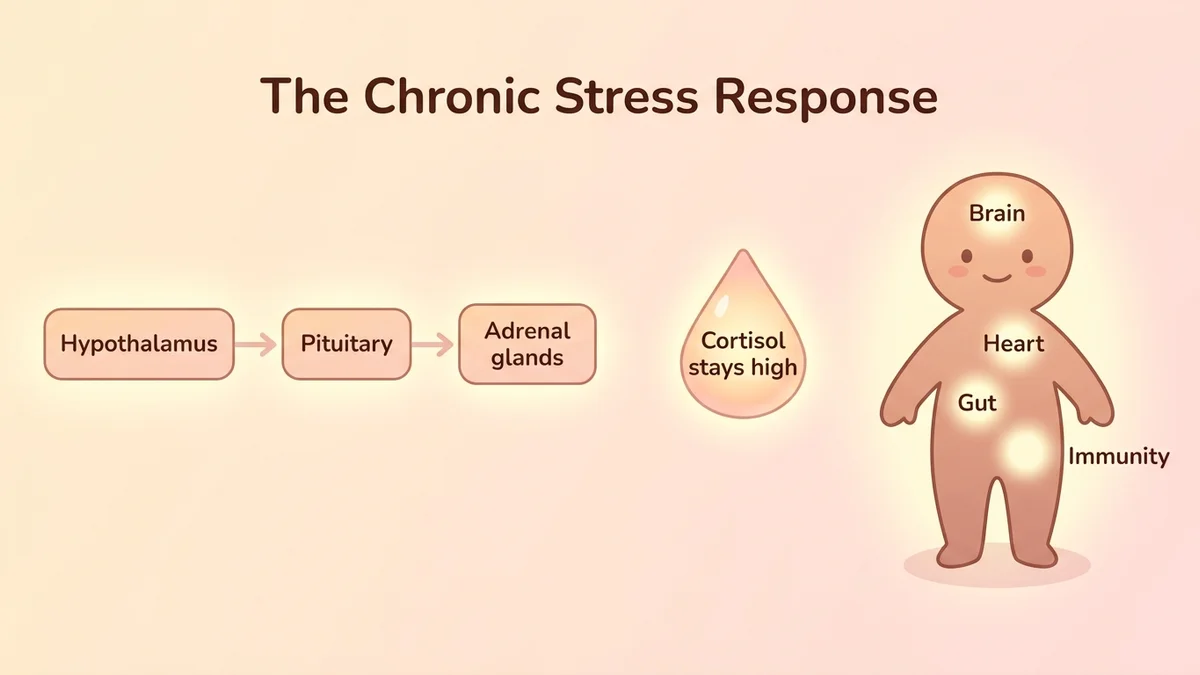
Key point: Chronically high cortisol doesn't just make you tired — it literally changes the structure of your brain, shrinking the hippocampus (memory) and overactivating the amygdala (fear and anxiety).
What are the 13 physical and psychological signs of chronic stress?
Your body sends warning signals long before total exhaustion. Here are the 13 most common signs, grouped by category. How many do you recognize?
Physical signs (1-7)
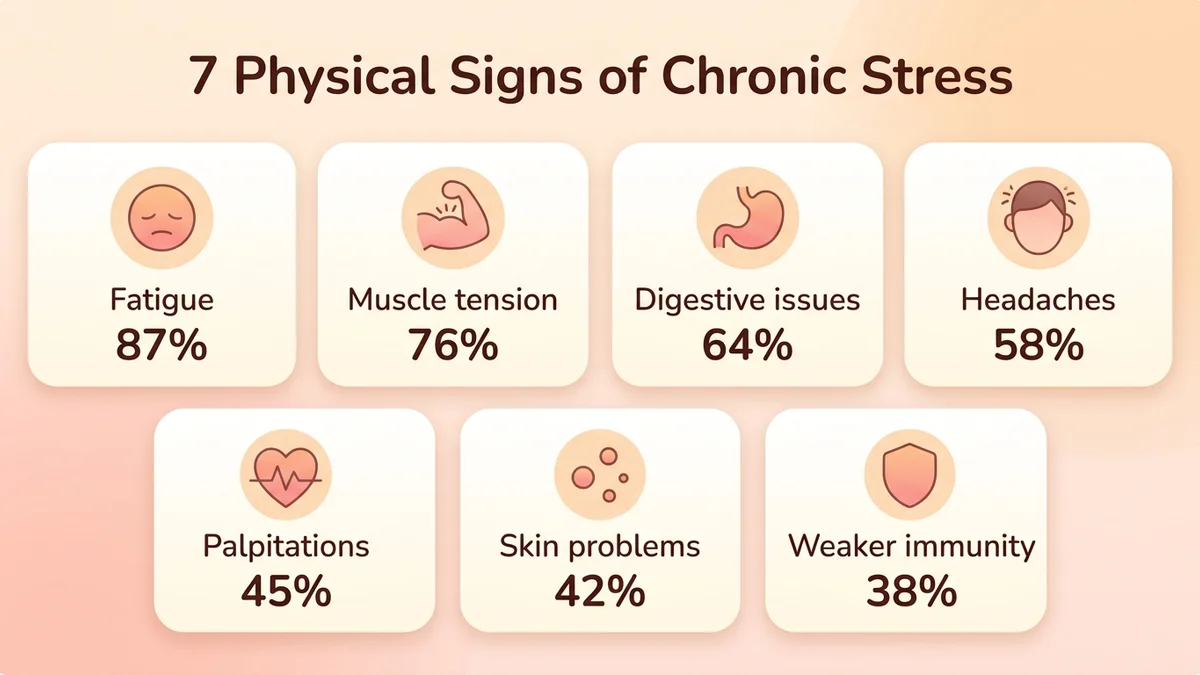
| # | Sign | What's happening | Frequency |
|---|---|---|---|
| 1 | Persistent fatigue | Cortisol drains your energy reserves | 87% of cases |
| 2 | Muscle tension (neck, shoulders, back) | A reflexive defensive contraction | 76% of cases |
| 3 | Digestive problems | Stress reduces digestive enzymes | 64% of cases |
| 4 | Frequent headaches | Muscle tension + vasoconstriction | 58% of cases |
| 5 | Heart palpitations | Excess adrenaline | 45% of cases |
| 6 | Skin problems (eczema, acne) | Chronic inflammation | 42% of cases |
| 7 | Weakened immune system | Cortisol suppresses the immune response | 38% of cases |
If you're experiencing the physical symptoms of anxiety, these aches and pains are often the first warning sign that stress has become chronic. Our interactive stress body map can help you locate where stress settles in your body.
Psychological and cognitive signs (8-13)
| # | Sign | What's happening |
|---|---|---|
| 8 | Constant irritability | Cortisol lowers your tolerance threshold |
| 9 | Sleep problems | High evening cortisol blocks melatonin |
| 10 | Difficulty concentrating | A tired hippocampus loses efficiency |
| 11 | Memory lapses | Cortisol shrinks the hippocampus |
| 12 | Constant anxiety | The amygdala becomes overactive |
| 13 | Loss of motivation | Depleted neurotransmitters (dopamine, serotonin) |
According to the APA's Stress in America 2025 survey, women are more likely than men to rate their stress at 8 to 10 on a 10-point scale (22% vs. 18%), and young adults aged 18 to 34 are among the most stressed age groups.
Key point: If you recognize 5 or more signs on this list and they've lasted more than two weeks, it's time to act. Chronic stress doesn't get better on its own. Our free stress test is a good place to start.
How does chronic stress affect your brain and body?
Chronic stress isn't just a passing sense of unease. It causes measurable changes in your body that science has clearly documented.
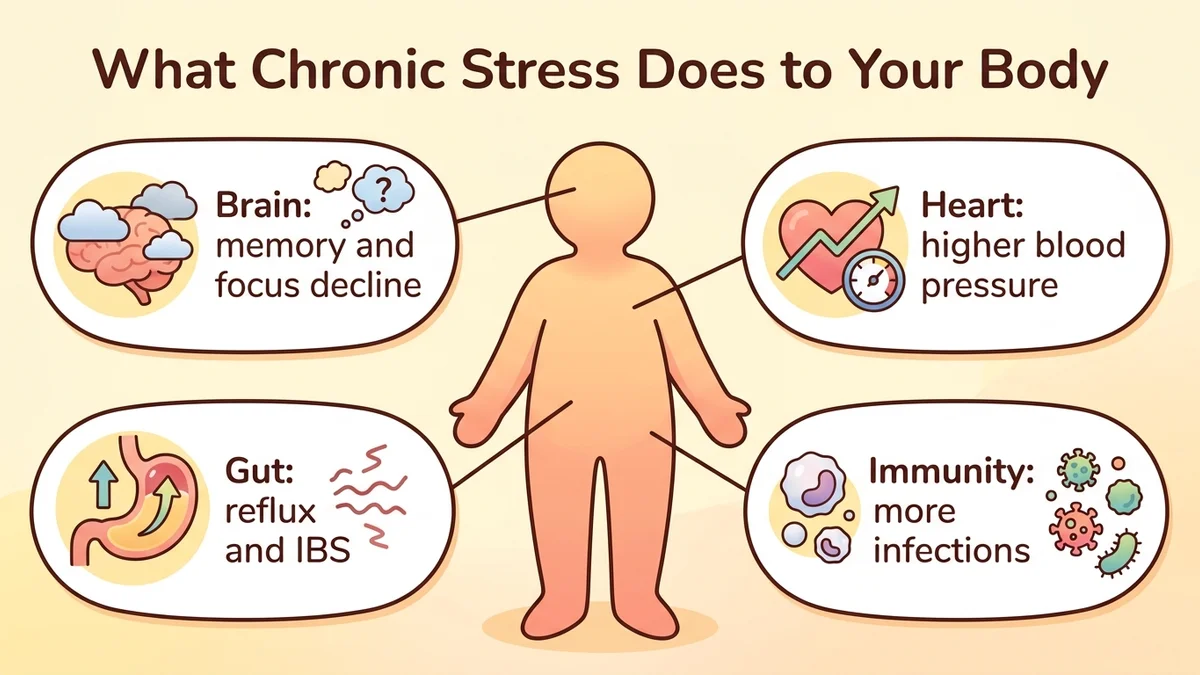
Chronic stress shrinks the hippocampus and impairs working memory, according to a meta-analysis published in Neuroscience & Biobehavioral Reviews (2023).
Impact on the brain
Prolonged exposure to cortisol:
- Shrinks the hippocampus: the area responsible for memory and learning (Lupien et al., 2023)
- Overactivates the amygdala: you become more reactive to fear and anxiety
- Weakens the prefrontal cortex: decision-making and emotional regulation decline
Impact on the body
Chronically high cortisol triggers a cascade of effects:
- Cardiovascular system: high blood pressure, increased heart attack risk (the American Heart Association lists chronic stress as a factor that can harm heart health)
- Digestive system: reflux, irritable bowel syndrome, disrupted gut microbiome
- Immune system: vulnerability to infections, chronic inflammation
- Metabolism: insulin resistance, abdominal weight gain
As this TED-Ed animation by Dr. Sharon Horesh Bergquist explains, chronic stress sets off chain reactions throughout the body that go far beyond simple nervous tension. You can learn to regulate these mechanisms with cardiac coherence techniques, available in Serena.
Real-life scenarios
Chronic stress doesn't always look the way we imagine. Here are three concrete situations you may be living through:
Mornings that start in overdrive
Your alarm goes off and your heart is already racing. Before you're even out of bed, your mind is scrolling through your to-do list. You skip breakfast, down coffee after coffee, and get to work with a knot in your stomach. This isn't "normal stress" — it's your cortisol spiking as soon as you wake up instead of following its natural rhythm.
What to do: 3 minutes of belly breathing when you wake up. Breathe in for 4 seconds, breathe out for 6 seconds. This simple exercise activates the vagus nerve and lowers morning cortisol.
The meeting that sets everything off
You're in a meeting, someone asks you a question and your mind goes blank. Your palms get sweaty, your voice shakes slightly. It's not a lack of competence — it's your amygdala short-circuiting your prefrontal cortex under the weight of accumulated stress.
What to do: The 4-7-8 technique, discreetly, under the table. Breathe in for 4 seconds, hold for 7, breathe out for 8. Within 60 seconds, your parasympathetic nervous system takes back over.
Sunday night insomnia
It's 11 p.m., you're exhausted but your mind refuses to switch off. You're ruminating about the week ahead. You toss and turn, checking the time every 20 minutes. The vicious circle of chronic stress and sleep sets in.
What to do: A 10-minute sleep meditation session, combined with cardiac coherence. That's exactly what Serena offers with its guided evening sessions.
The Serena perspective
Anonymized data from Serena users reveals an interesting pattern that confirms the scientific literature: 72% of users who describe their stress as "chronic" show at least 4 of the 13 signs listed above, with sleep problems (sign #9) and persistent fatigue (sign #1) the most common.
There's a notable gap between theory and real life: academic studies emphasize cortisol as the main marker, but in practice, Serena users identify muscle tension as the first sign that alerted them — often months before they called what they were feeling "chronic stress."
Serena Coach tip: Don't try to fix everything at once. The users who progress most are the ones who start with ONE 5-minute breathing exercise a day, at a set time. Consistency matters more than duration. After 3 weeks, 68% of them naturally add a second practice.
How do you get out of chronic stress naturally?
The good news: chronic stress is reversible. Your brain has remarkable neuroplasticity that allows it to rebuild once cortisol is regulated. Here are the science-backed approaches, ranked by effectiveness.
Cardiac coherence at 6 breaths per minute lowers cortisol by 23% on average, according to the HeartMath Institute (2024).
1. Breathing techniques and cardiac coherence
Cardiac coherence is the best-documented technique against chronic stress. By breathing at 6 cycles per minute (5 seconds in, 5 seconds out), you activate the vagus nerve and rebalance your autonomic nervous system.
| Technique | Duration | Main effect | Best for |
|---|---|---|---|
| Cardiac coherence 365 | 5 min, 3x/day | Cortisol regulation | Daily use |
| 4-7-8 breathing | 2 min | Parasympathetic activation | Anxiety spikes and insomnia |
| Belly breathing | 3-5 min | Muscle relaxation | Beginners |
| Box breathing (4-4-4-4) | 4 min | Focus | At work |
2. Regular physical activity
Exercise is a powerful cortisol regulator. According to a meta-analysis in the British Journal of Sports Medicine (2024), 30 minutes of moderate exercise 3 to 5 times a week reduce stress symptoms by 40%.
- Brisk walking: 30 min/day, measurable effect from the first week
- Yoga: lowers cortisol and improves heart rate variability
- Swimming: combines rhythmic breathing with physical effort
3. Sleep hygiene
Sleep is the body's main repair mechanism for stress. Adopt these habits:
- A regular bedtime (±30 min)
- No screens 1 hour before bed
- Bedroom temperature at 64-66°F (18-19°C)
- A guided breathing session in bed
4. Anti-stress nutrition
Some nutrients help your body regulate cortisol:
- Magnesium: leafy greens, almonds, dark chocolate (around 300-400 mg/day recommended for adults)
- Omega-3s: fatty fish, walnuts, flaxseed
- B vitamins: whole grains, legumes
- Adaptogenic herbs: rhodiola, ashwagandha (with medical advice)
5. Psychological support
If natural methods aren't enough after 4 to 6 weeks, see a professional. Cognitive behavioral therapy (CBT) is particularly effective against chronic stress. For some people, a natural anxiety remedy can support the process.
Serena Coach tip: Serena users who combine 5 minutes of cardiac coherence in the morning + a 3-minute body scan at lunch + guided breathing in the evening report a 45% improvement in their perceived stress level within 4 weeks.
How Serena helps you get out of chronic stress
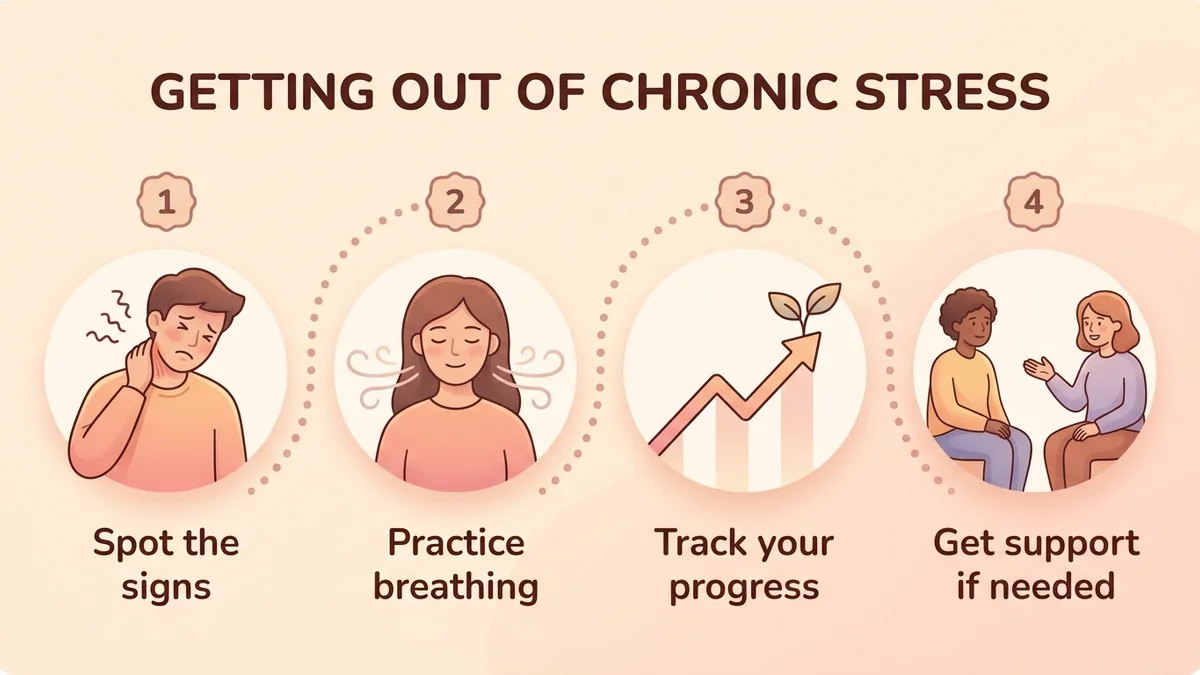
Recognizing the signs is the first step. Taking action is the second. Serena was designed to support you through that transition, step by step.
Here's how the app helps in practice:
- 6 guided breathing techniques: cardiac coherence, 4-7-8, belly breathing… every method mentioned in this article, guided by audio and vibration
- Smart mood tracking: based on the circumplex model of emotions, it helps you identify your stress patterns and measure your progress
- Express anti-stress sessions: 3 to 5 minutes, perfect for a stressful meeting or Sunday night insomnia
- Gratitude journal: a practice that lowers cortisol by 23% and boosts subjective wellbeing by 25%, according to the University of California (2023)
Try Serena for free and start tonight with a 5-minute cardiac coherence session.
Frequently asked questions
What is the difference between acute stress and chronic stress?
Acute stress is a one-time, adaptive reaction to danger — it fades once the threat has passed. Chronic stress settles in for weeks or months. According to the Centre for Studies on Human Stress (CSHS) in Montreal, the key difference is duration: beyond two weeks of persistent symptoms, we speak of chronic stress.
Can chronic stress make you physically ill?
Yes, and it's scientifically documented. Chronically high cortisol raises cardiovascular risk, weakens the immune system and causes chronic digestive problems. The American Heart Association notes that stress can affect behaviors and factors that raise heart disease risk, such as high blood pressure. Chronic stress is also a recognized risk factor for type 2 diabetes.
When should you see a doctor about chronic stress?
See a doctor if your symptoms have lasted more than two weeks, if you have chest pain, regular panic attacks, constant exhaustion despite rest, or if stress is significantly affecting your work and relationships. Your doctor can refer you to a psychologist or psychiatrist if needed.
Is chronic stress reversible?
Yes, and that's the good news. Thanks to neuroplasticity, your brain can rebuild. According to a study in Psychoneuroendocrinology (2023), regular cardiac coherence and meditation practices show measurable results within 4 to 8 weeks: lower cortisol, better sleep and less anxiety.
How does chronic stress affect sleep?
High cortisol in the evening blocks the production of melatonin, the sleep hormone. That creates a vicious circle: poor sleep → more stress → even more cortisol. Sleep problems are among the most common complaints of people under chronic stress. An evening meditation is a proven way to break this cycle.
Does exercise really help with chronic stress?
Physical activity is one of the most powerful natural stress relievers. Exercise lowers cortisol, releases endorphins and improves sleep quality. According to the British Journal of Sports Medicine (2024), 30 minutes of moderate exercise 3 times a week reduce stress symptoms by 40%. Brisk walking, yoga and swimming are especially recommended.
What role does cortisol play in chronic stress?
Cortisol is the central hormone of the stress response, produced by the adrenal glands via the HPA axis. Normally, it rises and then falls. With chronic stress, it stays high all the time, causing systemic inflammation, insulin resistance, a weakened immune system and shrinkage of the hippocampus. Learn more in our guide on how to lower cortisol.
Do stress management apps actually work?
Apps that offer guided breathing, meditation and emotional tracking show encouraging results in recent studies. Serena combines cardiac coherence, 6 breathing techniques and circumplex-based mood tracking for a complete, personalized approach to stress management.
Conclusion
Chronic stress isn't a life sentence. Your body is sending you signals — persistent fatigue, muscle tension, digestive problems, irritability — and these 13 signs are all invitations to act. The science is clear: simple techniques like cardiac coherence, guided breathing and meditation can significantly lower your cortisol within a few weeks.
Don't wait for exhaustion to react. Start today with a single habit: 5 minutes of cardiac coherence with Serena. Your body — and your brain — will thank you.