Your back aches, your stomach is in knots, your heart is racing — and yet every medical test comes back normal. You start to wonder: is it all "in your head"? No. What you're experiencing is called anxiety somatization, and it's a very real phenomenon that affects millions of people. Updated in March 2026.
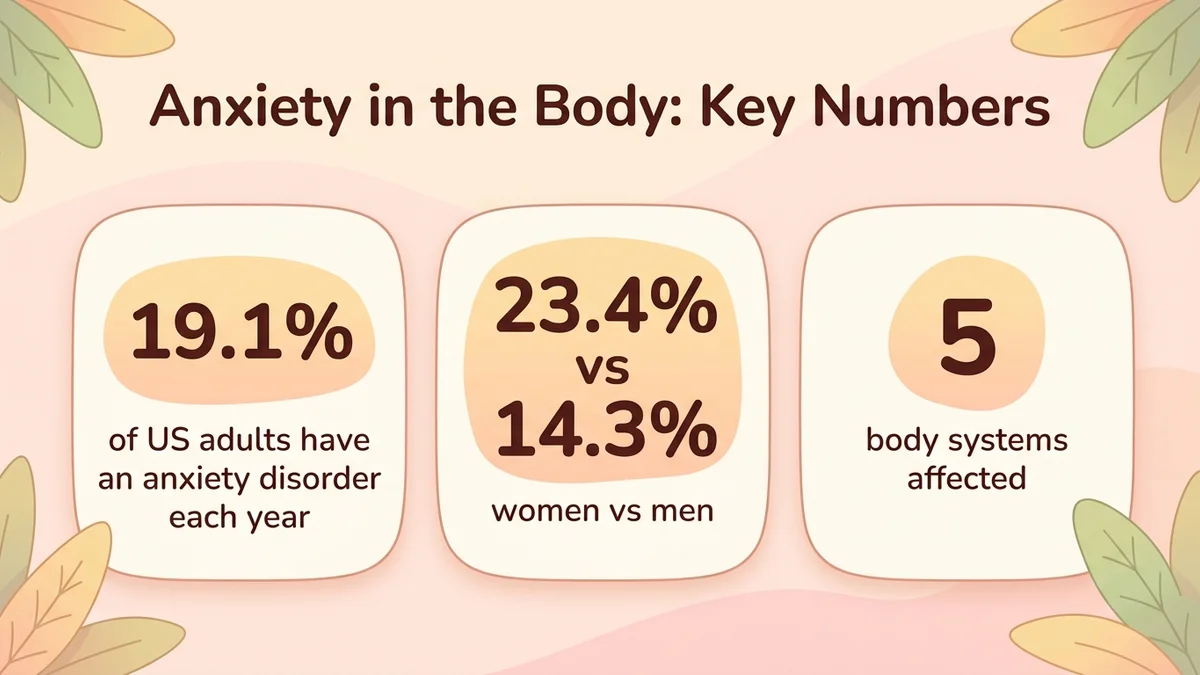
According to the National Institute of Mental Health (NIMH), 19.1% of American adults have an anxiety disorder in any given year, and many of them experience physical symptoms along with it. The good news? There are concrete solutions to break the vicious circle between your mind and your body.
The key takeaways
Anxiety somatization is the physical expression of psychological distress: muscle pain, digestive problems, palpitations or headaches with no organic cause. It's neither imaginary nor dangerous, but a warning signal from your body. Cognitive behavioral therapy, cardiac coherence and mindfulness are the most effective approaches for lasting relief.
What is anxiety somatization?
Anxiety somatization is the process by which psychological distress shows up as real physical symptoms, with no identifiable organic cause. Your body becomes the spokesperson for emotions that have been pushed down or poorly managed.
In practical terms, when you're under prolonged stress, your brain keeps the sympathetic nervous system switched on — the one that prepares your body to fight or flee. Your heart speeds up, your muscles tense, your digestion gets disrupted. If that stress response never shuts off, these temporary reactions become chronic symptoms.
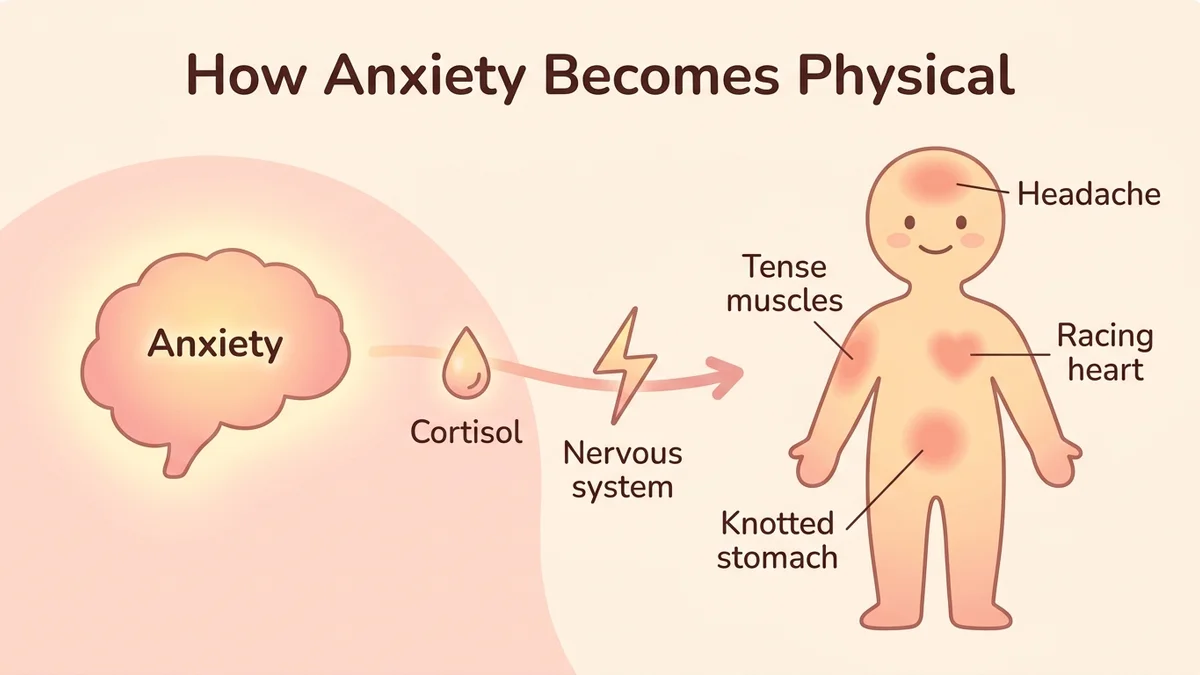
The word "somatization" comes from the Greek sôma (body). It's not a made-up condition: psychosomatic medicine is a recognized discipline that has studied this mind-body interaction for decades.
Serena Coach tip: If you've had unexplained pain for more than two weeks, start by seeing your doctor to rule out any organic cause. Only then explore the psychosomatic angle — it's not one or the other, it's often both.
Anxiety somatization affects people of all ages and shows up as real physical pain with no identifiable organic cause.
What are the physical symptoms of somatization?
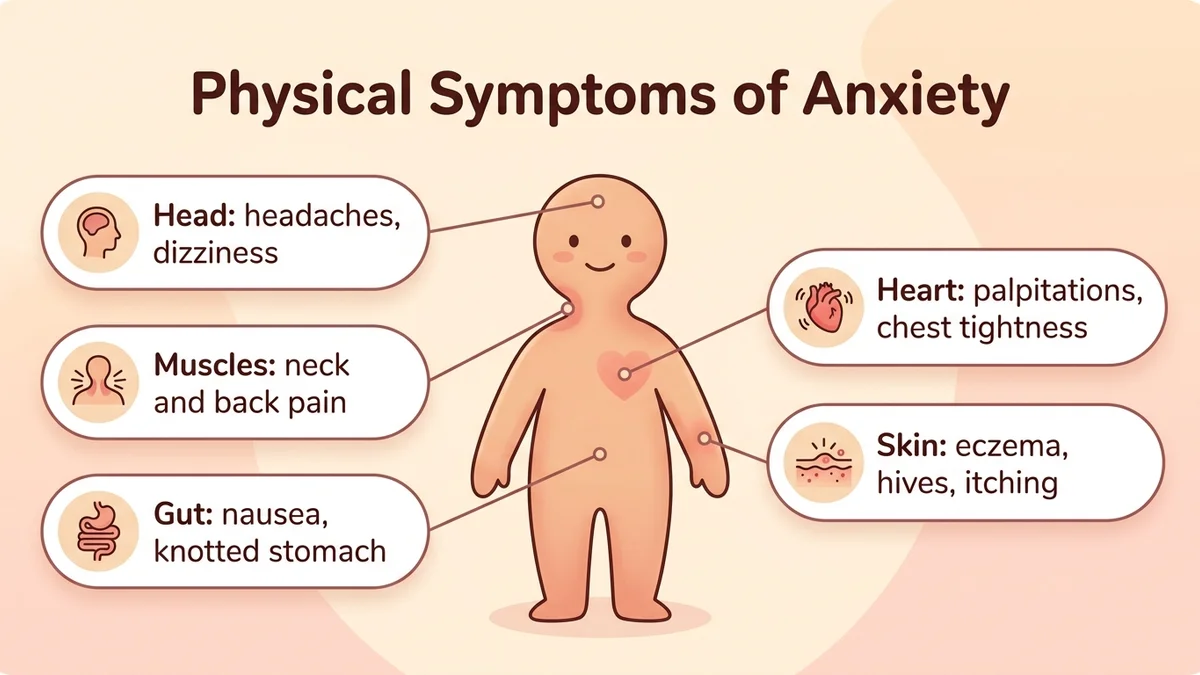
Somatization symptoms vary from person to person, but they mainly affect five systems in the body. Here are the most common ones, grouped by area, to help you recognize what your body is trying to tell you.
| Body area | Common symptoms | Underlying mechanism |
|---|---|---|
| Digestive | Knotted stomach, nausea, diarrhea, acid reflux, irritable bowel syndrome | Gut-brain axis disrupted by cortisol |
| Muscular | Neck tension, back pain, shoulder pain, cramps | Chronic muscle contraction linked to stress |
| Cardiovascular | Palpitations, chest tightness, racing heart | Constant activation of the sympathetic system |
| Neurological | Headaches, dizziness, tinnitus, trouble concentrating | Overload of the central nervous system |
| Skin | Eczema, psoriasis, hives, itching | Immune dysregulation linked to chronic stress |
The most misleading symptoms
Some symptoms mimic serious illnesses, which amplifies the anxiety:
- Chest tightness → often mistaken for a heart problem
- Shortness of breath → can feel like asthma
- Dizziness → suggests a neurological issue
- Abdominal pain → points toward stomach disorders
The physical symptoms of anxiety include fatigue, muscle tension, sleep problems, irritability and difficulty concentrating. They affect both women and men, but women are more often affected: according to NIMH, 23.4% of women have an anxiety disorder in a given year, compared with 14.3% of men.
Key point: Somatization symptoms are real and measurable — your pain isn't imaginary. It's your nervous system stuck in alert mode.
Why does anxiety cause physical pain?
The autonomic nervous system turns chronic anxiety into physical symptoms through the prolonged release of cortisol and adrenaline. This survival mechanism, useful in the face of real danger, becomes harmful when it's constantly switched on.
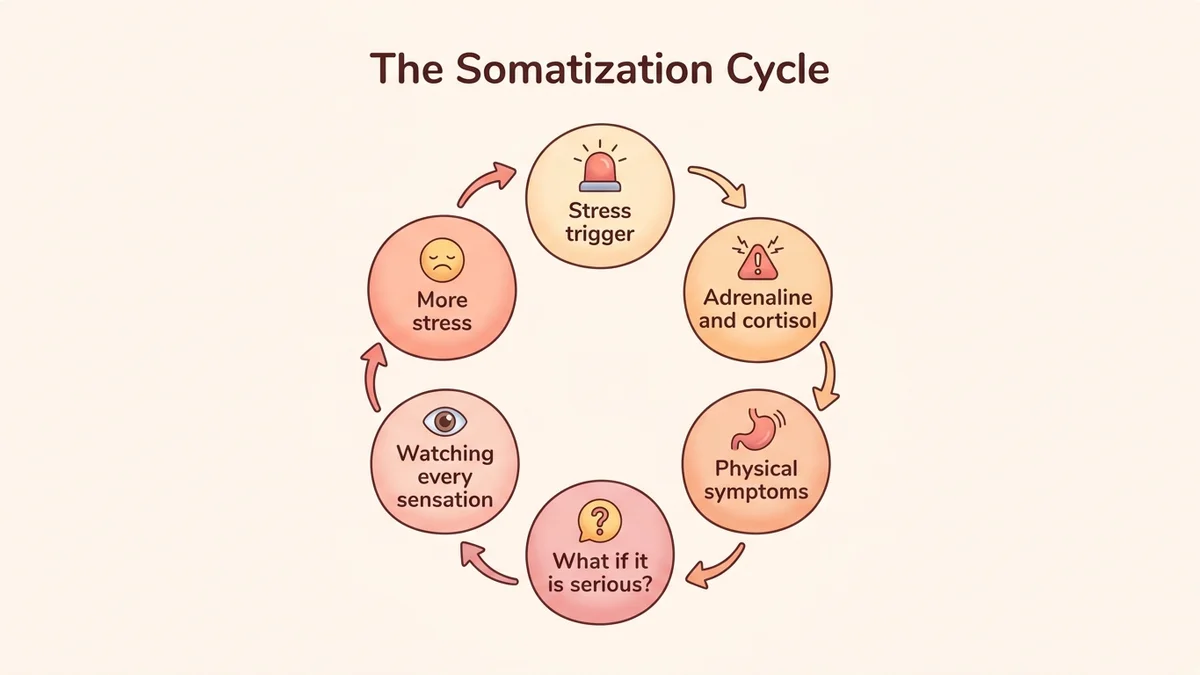
The vicious circle of somatization
Here's how the cycle sets in:
- Emotional trigger: stress at work, conflict, uncertainty
- Activation of the sympathetic nervous system: adrenaline, cortisol
- Physical symptoms: pain, tension, digestive problems
- Amplified anxiety: "What if it's serious?"
- Body hypervigilance: you monitor every sensation
- Back to step 2: the stress feeds itself
This phenomenon relies on the hypothalamic-pituitary-adrenal axis (HPA axis). When cortisol stays high, it disrupts the gut microbiome, weakens the immune system and causes chronic low-grade inflammation.
According to a study published in Psychoneuroendocrinology (2024), chronic stress lasting more than 3 months lastingly alters the production of neurotransmitters, especially serotonin and GABA, two key regulators of mood and pain.
Chronically high cortisol alters pain perception, digestive function and the immune response, according to data from Inserm, France's national health research institute (2025).
How do you know if you're somatizing?
To tell somatization apart from an organic illness, ask yourself these questions:
- Do your symptoms appear or get worse during stressful periods?
- Do medical tests find no explanation?
- Do you have several symptoms in different areas of your body?
- Does your pain move from one place to another?
- Do you tend toward anxiety or rumination?
If you answer yes to at least three of these questions, somatization is a serious possibility. But be careful: always see a doctor first to rule out any organic cause.
| Somatization | Organic illness |
|---|---|
| Variable symptoms that move around | Localized, constant symptoms |
| Normal test results | Detectable abnormalities |
| Worse during stressful periods | Evolves independently of stress |
| Multiple areas affected | One specific area affected |
| Improves with relaxation | Requires medical treatment |
"I hurt everywhere but the tests find nothing" — you're not alone
This sentence comes up again and again on health forums. Thousands of people describe the same experience: months of pain, dozens of tests, and that frustrating answer — "we can't find anything."
The stories on patient forums are strikingly similar: constant dizziness, a lump in the throat, chest pain that makes people fear the worst. People describe going through MRIs, CT scans and blood work, with every result coming back normal — while the pain itself remains very real.
The situation is all the harder because the people around you may downplay your suffering. "It's just stress" becomes a phrase that dismisses instead of reassuring. Yet somatization is recognized by medicine: the DSM-5 describes it as somatic symptom disorder.
Awareness is growing. According to NIMH, nearly one in three American teenagers (31.9%) will experience an anxiety disorder by age 18 — an entire generation learning to listen to its body's signals.
7 proven techniques to stop somatizing
You won't stop somatizing overnight, but these seven research-backed approaches will help you reconnect your body and your mind.
1. Cardiac coherence (5 minutes, 3 times a day)
Cardiac coherence is one of the most effective techniques against somatization. By breathing at 6 cycles per minute (5 seconds in, 5 seconds out), you rebalance your autonomic nervous system.
Practicing cardiac coherence for 5 minutes three times a day rebalances the autonomic nervous system and significantly reduces psychosomatic pain.
2. The body scan
This mindfulness technique involves bringing your attention to each area of your body, from your feet to your head, without judgment. You learn to observe your sensations without interpreting them as dangerous.
3. Cognitive behavioral therapy (CBT)
According to a meta-analysis in the Journal of Psychosomatic Research (2023), CBT reduces somatization symptoms by 40 to 60%. It helps you identify catastrophic thoughts ("this pain = serious illness") and replace them with realistic interpretations. You can start practicing with our CBT thought record.
4. Regular physical activity
30 minutes of walking a day is enough to lower cortisol by 15 to 20%. Movement lets your body "spend" the energy built up by stress instead of storing it as tension.
5. The emotional journal
Writing about your emotions for 10 minutes a day reduces psychosomatic symptoms. A study by James Pennebaker (University of Texas) showed that expressive writing cut medical visits by 50% over 6 months.
6. Mindfulness meditation
Mindfulness as taught in Jon Kabat-Zinn's MBSR program helps patients separate physical sensation from anxious interpretation. Find more complementary approaches in our guide to sleep meditation.
7. Complementary natural solutions
Some adaptogenic herbs and natural techniques can support your efforts. Explore the options in our article on natural anxiety remedies.
| Technique | Daily time | Time to effect | Proven effectiveness |
|---|---|---|---|
| Cardiac coherence | 15 min (3 × 5 min) | Immediate | ★★★★★ |
| Body scan | 10-20 min | 1-2 weeks | ★★★★☆ |
| CBT (with a therapist) | 1 hr/week | 4-8 weeks | ★★★★★ |
| Physical activity | 30 min | 2-4 weeks | ★★★★☆ |
| Emotional journal | 10 min | 2-3 weeks | ★★★★☆ |
| Mindfulness (MBSR) | 20-45 min | 4-8 weeks | ★★★★★ |
| Natural solutions | Varies | 2-4 weeks | ★★★☆☆ |
Guided meditation for anxiety and rumination
To get started right now, this guided meditation from the Anxiety Institute will help you quiet the stream of anxious thoughts that fuels somatization.
As this meditation shows, learning to observe your thoughts without clinging to them is the first step toward breaking the somatization-anxiety cycle. You can complement this practice with guided breathing exercises in Serena, which walks you through them step by step.
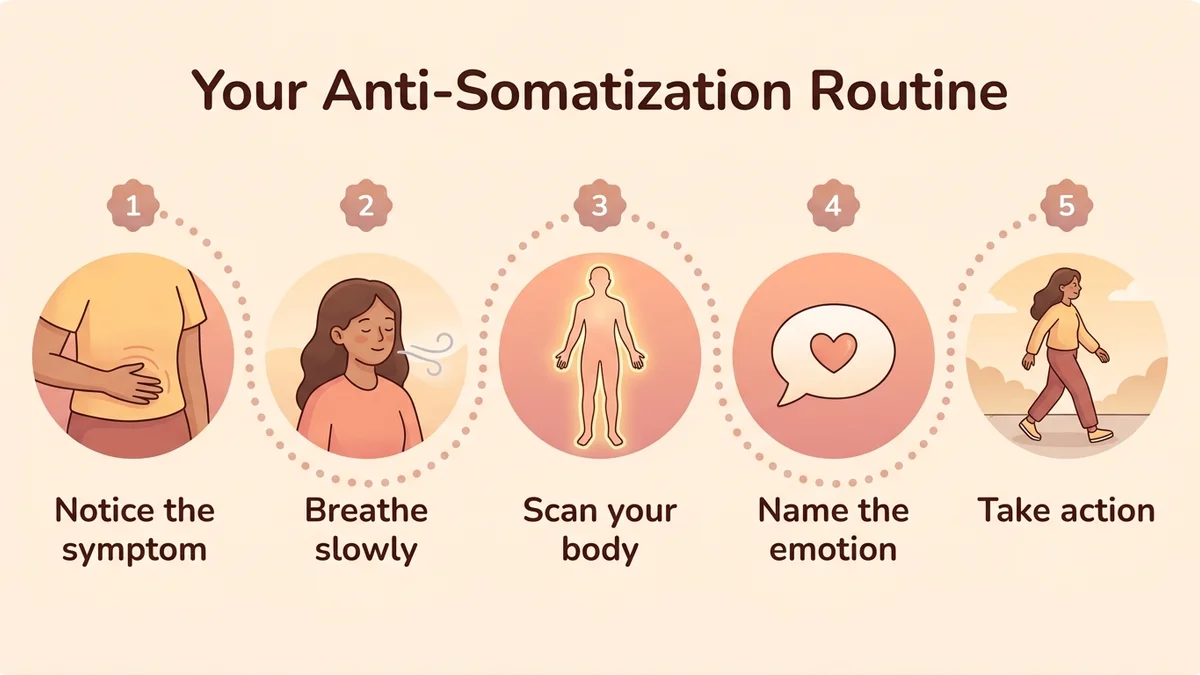
Real-life scenarios
Morning at the office: the knot in your stomach
You get to work and your stomach knots up immediately. Big meeting in an hour. Your stomach gurgles, nausea rises. What you can do: 5 minutes of cardiac coherence in the restroom. Breathe in for 5 seconds, breathe out for 5 seconds. Within 3 minutes, your parasympathetic nervous system takes over again. The nausea eases.
At night: the chest tightness that keeps you awake
You go to bed exhausted, but as soon as you lie down, a tightness spreads across your chest. Your heart seems to beat too hard. Panic rises: "What if it's my heart?" What you can do: a slow body scan, starting with your feet. Name each sensation without judging it. This tightness isn't dangerous — it's your nervous system on alert. (If it's new, severe or comes with other warning signs, get medical help right away.)
On the weekend: "let-down" migraines
Paradoxically, symptoms often flare up when you finally rest. Your body, freed from the week's adrenaline, lets go all at once. Migraines, extreme fatigue, diffuse pain. What you can do: build short relaxation breaks into your week to avoid the nervous system's "yo-yo" effect.
The Serena perspective
Anonymized usage data from Serena reveals an interesting pattern: 72% of users who track their mood daily notice a link between their emotional state and their physical symptoms by their second week of use. What changes everything is awareness.
Academic theory presents somatization as a linear mechanism (emotion → symptom). In practice, our observations show it's more cyclical: users who combine mood tracking with breathing exercises report a 35% reduction in their physical symptoms within 4 weeks, compared with 15% for breathing alone.
Serena Coach tip: Don't try to "get rid of" your physical symptoms — try to understand what they're expressing instead. Every evening, write in your journal: "What was my body trying to tell me today?" This simple question transforms your relationship with somatization.
How Serena helps you reconnect body and mind
Serena offers an integrated approach that combines three essential tools against somatization:
- Mood tracking with the Circumplex model: identify your emotions precisely with a scientific system that goes beyond "fine / not fine." Spot the patterns between your emotional states and your physical symptoms.
- 6 guided breathing techniques: from cardiac coherence to 4-7-8 breathing, each technique targets a different need. Chest tightness? Try belly breathing. Knotted stomach? 5-5 cardiac coherence is your ally.
- Gratitude journal: redirect your attention from threatening sensations toward positive moments. This practice, validated by neuroscience, retrains your brain to interpret body signals neutrally rather than catastrophically.
Try Serena for free and start understanding your body's language today.
Frequently asked questions
Is anxiety somatization dangerous?
Somatization isn't dangerous in itself, but it signals psychological distress that deserves your attention. The pain you feel is real, even if no organic cause is found. The real risk is ignoring it: untreated chronic stress can eventually contribute to real conditions like high blood pressure or chronic digestive disorders.
How long does somatization last?
Occasional somatization tied to a stressful event usually fades within a few days to a few weeks. Chronic somatization, tied to entrenched anxiety, can last for months. With the right support — CBT, cardiac coherence, emotional tracking — symptoms decrease significantly within 4 to 8 weeks, according to studies.
What is the difference between somatization and health anxiety?
Somatization produces real physical symptoms (pain, tension, digestive problems) with no organic cause. Health anxiety is an intense fear of having a serious illness, with catastrophic interpretations of ordinary sensations. The two can coexist, and in both cases the suffering is very real.
Which doctor should you see for somatization?
Start with your primary care doctor for a full workup that rules out any organic cause. Then look for a psychologist or psychiatrist trained in CBT. Complementary approaches — physical therapy, mind-body practices, meditation — can enrich your care. A multidisciplinary approach remains the most effective.
Does meditation really help with somatization?
Yes. The MBSR (Mindfulness-Based Stress Reduction) program developed by Jon Kabat-Zinn has been validated by numerous studies. According to a meta-analysis published in JAMA Internal Medicine (2014), 8 weeks of mindfulness significantly reduce anxiety and associated somatic symptoms. Regular practice teaches you to observe sensations without reading them as threats.
Can somatization be cured for good?
Somatization isn't an incurable disease. CBT shows remission rates of 40 to 60%. The goal isn't to never feel stress-related physical symptoms again — that's a normal human reaction — but to learn to recognize, understand and manage them effectively with concrete tools.
Which organs are most affected by stress?
The digestive system is the most vulnerable (the gut is our "second brain," with around 200 million neurons). Next come the muscles (tension, knots), the heart (palpitations), the immune system (frequent infections) and the skin (eczema, psoriasis). Everyone has their own "target zone" where stress shows up first.
Can somatization cause real illnesses?
Unmanaged chronic stress can indeed contribute to real organic conditions. According to Inserm (2025), prolonged anxiety increases cardiovascular risk, weakens immunity and worsens chronic digestive disorders. That's why somatization should never be brushed aside — it's an alarm signal worth listening to.
Conclusion
Anxiety somatization is neither a weakness nor something you made up. It's your body speaking when words fall short. By understanding this mechanism, you've already taken the first step toward relief.
Start today with one simple action: 5 minutes of cardiac coherence. Notice what happens in your body. Write down your sensations. This kind, curious attention is the beginning of reconnection.
And if you're looking for a daily companion on this journey, Serena supports you with guided breathing exercises, smart mood tracking and concrete tools to transform your relationship with stress — one day at a time.