Where does your stress live? The body map
Tap the areas that hurt. You'll understand why your body is speaking up in that exact spot.
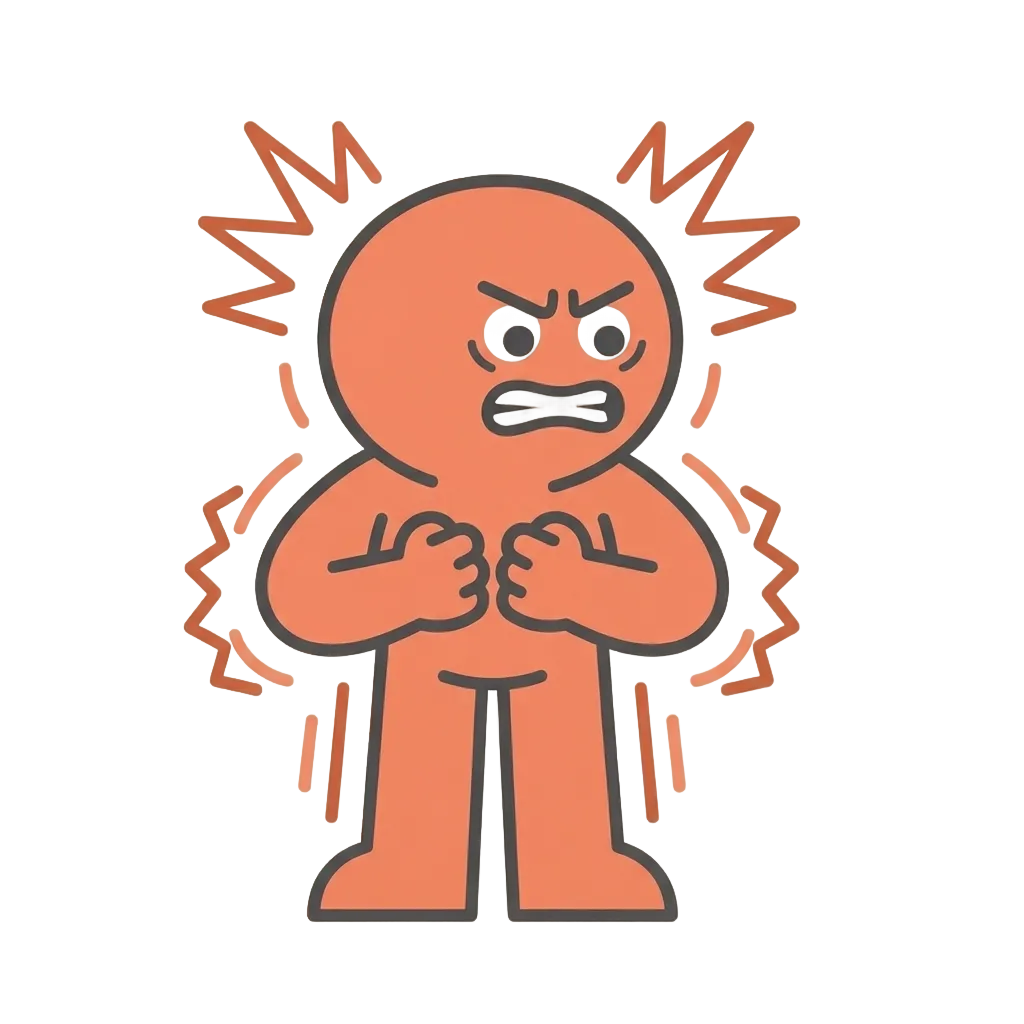
A neck like concrete, a knotted stomach, a jaw clenched shut on waking, a lump in the throat for no obvious reason. Your body isn't playing tricks on you: it is translating into physical signals a tension your mind can no longer carry alone. This has a name — somatisation — and it is not in your imagination.
What this map is based on
Nine areas where stress shows up most often, drawn from the literature on somatisation and the stress response described by Hans Selye. For each area you get the physiological explanation of what is happening and one concrete way to release it.
Your data
No sign-up, no email. What you tap stays in your browser: only your overall score, fully anonymous, feeds the comparison with other participants.
Somatisation, or when stress travels through the body
Somatisation means expressing psychological tension through physical symptoms. It is neither an invention nor a character flaw: it is a normal function of the body that only becomes a problem when it settles in. The physician Hans Selye described the stress response in three stages as early as the 1930s — alarm, resistance, exhaustion — and showed that the body pays a biological price when the resistance stage drags on too long.
In practice, stress activates two routes. The fast route, adrenaline, speeds the heart, lifts breathing into the upper chest and tenses muscles within seconds. The slow route, the hypothalamic-pituitary-adrenal axis, releases cortisol for hours: it maintains vigilance, puts digestion on standby, alters immunity and lowers the pain threshold. Occasional stress uses both routes then shuts them down. Chronic stress leaves them running, and that is when the body starts to hurt.
Where does stress live in the body?
There is no single area: everyone has their own anchor point, often stable over the years. The most frequently reported locations are the following.
- The neck and trapezius muscles, held on guard by the protective reflex that pulls the head into the shoulders. This is the most common site of stress-related muscle tension.
- The jaw, clenched by day and often grinding at night, with a masseter that never returns to rest.
- The gut and intestines, linked to the brain by the vagus nerve and the microbiome: stress-related stomach pain is among the most reported symptoms, up to irritable bowel syndrome.
- The chest, where high breathing and a racing heart create a tightness many people mistake for a cardiac problem.
- The head, with tension headaches born of prolonged contraction of the muscles around the skull.
- The skin, where stress amplifies histamine release and weakens the skin barrier, triggering itching, eczema or hives.
Physical symptoms of stress: why they are entirely real
Many people go through a gruelling journey: they see doctors, undergo tests, and are told everything is normal. The message they hear is often "it's all in your head". That is a misunderstanding, and it does a lot of damage. Normal tests mean no lesion explains the pain, not that the pain is false. The mechanisms of somatic stress are physical: prolonged muscle contraction, altered intestinal motility, histamine release, a lowered pain threshold.
This distinction changes everything in how you treat yourself. As long as you believe you are inventing your pain, you judge yourself and grit your teeth — literally. As soon as you understand the mechanism, you can act on it. Stress can cause genuinely real pain, and that pain responds well to approaches aimed at the nervous system rather than at the painful area alone.
How to release stress-related muscle tension
Treating the painful area helps, but it is not enough if the nervous system stays on alert: the muscle contracts again during the day. The most direct route to that system is breathing. An exhale longer than the inhale stimulates the vagus nerve, which activates the parasympathetic branch — rest and digestion. Five minutes of slow breathing twice a day produces a measurable effect on heart rate variability within a few weeks.
Three principles make this work. Consistency beats intensity: five minutes every day is worth more than an hour on Sunday. Early detection matters as much as release: the sooner you feel your area light up, the less effort it takes to calm it. And nothing forces you to choose between approaches — medical treatment, physiotherapy and stress work complement each other, they don't replace one another.
Frequently asked questions
Release the tension where it actually sits
Serena guides you through short breathing exercises that work on the nervous system: jaw unclenched, stomach settled, breath dropping back down.
Download SerenaIn case of acute distress or suicidal thoughts:3114 — free, 24/7
This tool is for informational purposes only and does not replace a professional diagnosis. If distress persists, please consult a healthcare professional.