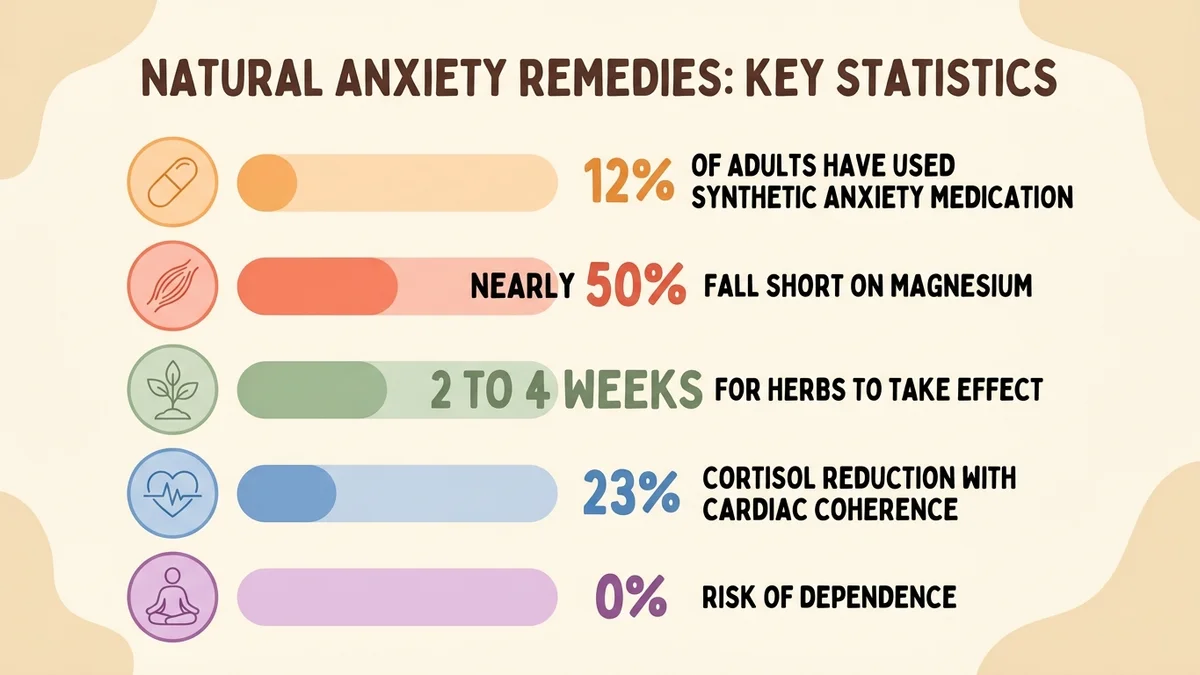
Your hands are trembling slightly. Your stomach is in knots. You know that anxiety is there, diffuse, quietly eating away at your daily life — your sleep, your focus, the moments that are supposed to feel good. You may have considered medication, but something holds you back: the fear of side effects, of dependence, that longing for a gentler solution. You are not alone. In the United States, roughly 12% of adults have used a prescription anxiety or sedative medication, and a growing number of people are looking for an effective natural anxiety remedy they can access without a prescription. Updated in March 2026, this guide walks you through the 10 most powerful natural remedies, all backed by science.
The key takeaways
Natural anxiety remedies — valerian, passionflower, rhodiola, magnesium — act on the neurotransmitters GABA and serotonin to reduce anxiety without dependence. Valerian is recognized by the WHO as the most studied option. Guided breathing and meditation are powerful complements to herbal medicine. Expect results within 2 to 4 weeks of consistent use.
What is a natural anxiety remedy and how does it work?
A natural anxiety remedy is a plant-based or mineral substance, or a mind-body practice, that eases the symptoms of anxiety without relying on synthetic drugs. Unlike benzodiazepines (such as Xanax or Valium), natural remedies don't hit the central nervous system abruptly — instead, they work to restore balance gradually.
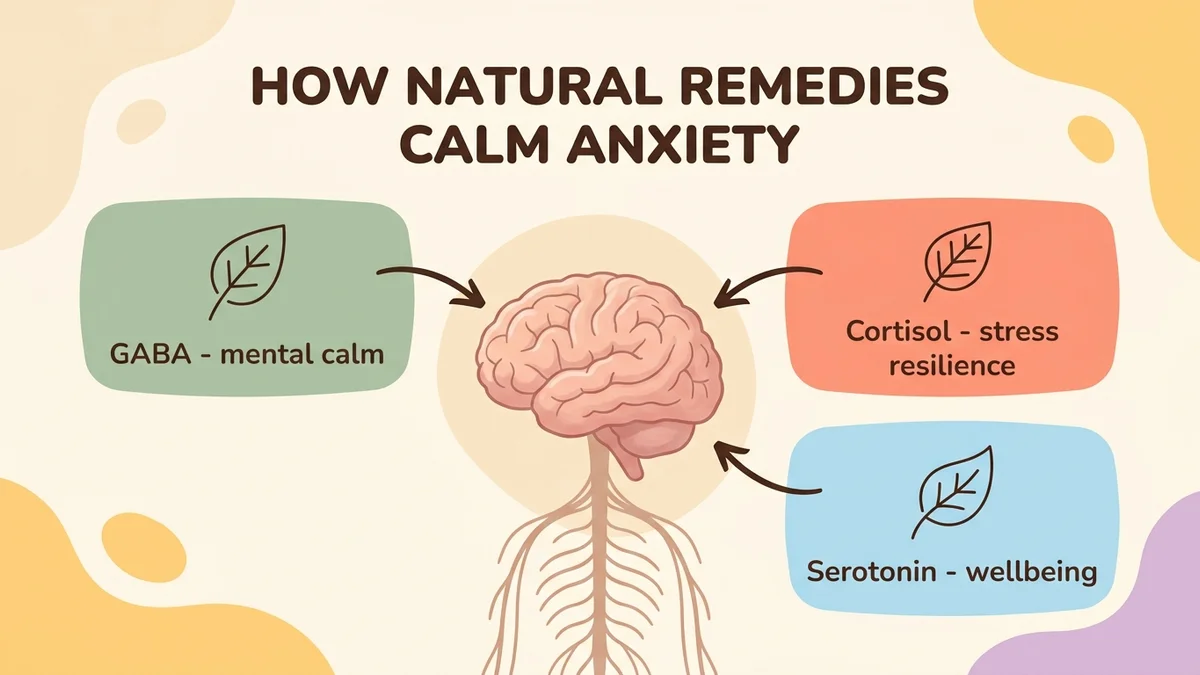
In practice, they act on three main levers:
- Modulating GABA: gamma-aminobutyric acid is the brain's main inhibitory neurotransmitter. When its activity increases, mental agitation subsides. Valerian and passionflower stimulate this mechanism naturally.
- Regulating cortisol: adaptogenic herbs like rhodiola and ashwagandha help your body respond better to chronic stress by limiting excessive cortisol production.
- Supporting serotonin: griffonia (rich in 5-HTP) and saffron promote the production of serotonin, the neurotransmitter tied to wellbeing and a precursor of melatonin for sleep.
As psychiatrist Dr. David Servan-Schreiber, author of The Instinct to Heal (2003), put it: "natural approaches can often treat mild to moderate anxiety just as effectively as medication, with fewer side effects."
Key point: Natural anxiety remedies don't mask symptoms — they help your nervous system find its balance again in a lasting way, with no risk of dependence.
What are the 10 best natural anxiety remedies?
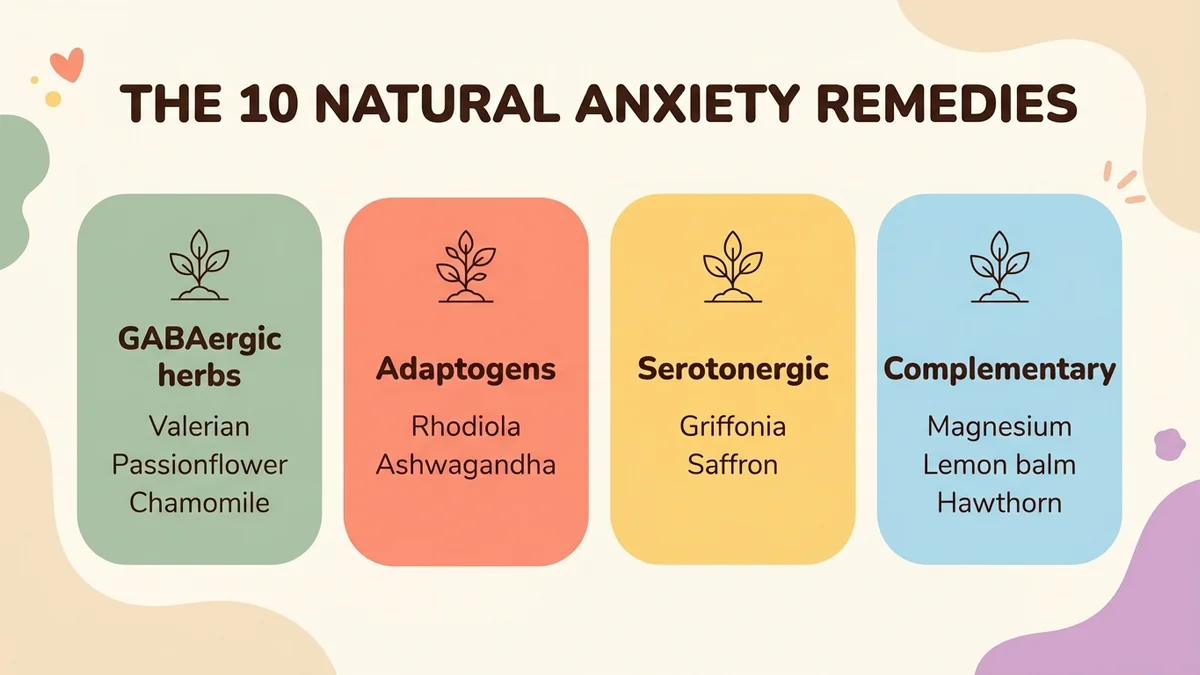
Here are the 10 most effective natural anxiety remedies, ranked by strength of scientific evidence. Each one targets a different facet of anxiety — the right choice depends on your profile.
1. Valerian — the most powerful natural anxiety remedy
Valerian (Valeriana officinalis) is probably the most studied natural anxiety remedy in the world. Recognized by the WHO and the European Commission, it acts directly on the brain's GABA-A receptors — the same mechanism as benzodiazepines, but without dependence.
Valerian acts on the brain's GABA-A receptors and reduces anxiety without causing dependence, according to the World Health Organization.
- Recommended dosage: 300 to 600 mg of standardized extract, 30 minutes before bed
- Time to effect: 2 to 4 weeks of daily use
- Caution: may cause drowsiness — avoid driving after taking it
2. Passionflower — to quiet a racing mind
Passionflower (Passiflora incarnata) is the ally of anyone who overthinks. Recognized by the WHO for its use against nervous restlessness, it's gentler than valerian and is especially suited to mild anxiety that disrupts sleep.
Passionflower is recognized by the World Health Organization for treating nervous restlessness and anxiety-related sleep problems.
- Dosage: 200 to 500 mg of dry extract, or 2 to 3 cups of infusion per day
- Time to effect: 2 to 3 weeks
- Bonus: can be paired with valerian for a stronger effect
3. Rhodiola — the anti-stress adaptogen
Rhodiola (Rhodiola rosea) is an adaptogenic herb that boosts your body's resistance to stress. Unlike valerian (which calms you down), rhodiola makes you more resilient without making you sleepy.
- Dosage: 200 to 400 mg of standardized extract (3% rosavins)
- Time to effect: within the first week for some users
- Ideal for: work-related stress, anxiety-driven fatigue, burnout
4. Magnesium — the anti-anxiety mineral
Magnesium is involved in more than 300 enzymatic reactions, including the regulation of the nervous system. Yet studies estimate that nearly half of adults don't meet their daily magnesium needs. That shortfall directly worsens anxiety.
Magnesium helps regulate more than 300 enzymatic reactions in the body, and a large share of the population falls short of the recommended intake.
- Recommended form: magnesium bisglycinate (best absorption)
- Dosage: 300 to 400 mg per day
- Time to effect: just a few days — the fastest on this list
5. Ashwagandha — the Ayurvedic anxiety remedy
Ashwagandha (Withania somnifera) has been used for more than 3,000 years in Ayurvedic medicine. A meta-analysis published in the Journal of Alternative and Complementary Medicine (2021) confirms that it significantly lowers cortisol and anxiety scores.
- Dosage: 300 to 600 mg of KSM-66 extract per day
- Time to effect: 4 to 6 weeks
- Caution: not recommended for people with autoimmune conditions or taking immunosuppressants
6. Lemon balm — the herb for digestive calm
Lemon balm (Melissa officinalis) is especially effective when anxiety shows up as digestive trouble — a knotted stomach, nausea, bloating. It has both anxiolytic and antispasmodic properties.
- Dosage: 300 to 600 mg of extract, or an infusion 3 times a day
- Bonus: fast-acting on the physical, gut-level symptoms of anxiety
7. Saffron — the mood-lifting spice
Saffron contains crocin and safranal, two active compounds with anxiolytic and antidepressant properties. According to a study published in Phytomedicine (2023), 30 mg of saffron per day is as effective as an SSRI antidepressant for mild anxiety.
- Dosage: 30 mg of standardized extract per day
- Time to effect: 4 to 6 weeks
- Price: more expensive than other herbs
8. Hawthorn — for a racing heart
Hawthorn (Crataegus) is the go-to remedy when anxiety shows up as palpitations and the sensation of a heart beating too fast. Its flavonoids help regulate heart rate and soothe nervousness.
- Dosage: 300 to 900 mg of extract per day
- Ideal for: palpitations, stress-related tachycardia, performance anxiety
9. Chamomile — the gentle everyday remedy
Chamomile (Roman or German) is recognized by the WHO for its soothing properties. A University of Pennsylvania study (2020) showed that chamomile supplementation significantly reduces the symptoms of generalized anxiety disorder (GAD).
- Dosage: 220 to 1,100 mg of extract, or 3 cups of tea per day
- Advantage: very well tolerated, and safe for children (as a tea)
10. Griffonia — the serotonin precursor
Griffonia (Griffonia simplicifolia) contains 5-HTP, a direct precursor of serotonin. It's particularly useful when anxiety comes with mood swings or stress-related food cravings.
- Dosage: 100 to 200 mg of 5-HTP per day
- Caution: never combine with antidepressants (risk of serotonin syndrome)
Valerian, passionflower or rhodiola: how to choose?
The right choice depends on your anxiety profile. Here's a comparison table to help:
| Criterion | Valerian | Passionflower | Rhodiola |
|---|---|---|---|
| Type of anxiety | Anxiety + insomnia | Rumination, restlessness | Chronic stress, fatigue |
| Mechanism | GABA-A | Gentle GABAergic | Adaptogen (cortisol) |
| Time to effect | 2-4 weeks | 2-3 weeks | 1-2 weeks |
| Effect on sleep | Strong (drowsiness) | Moderate | None (energizing) |
| When to take | Evening | Morning and evening | Morning only |
| WHO recognition | Yes | Yes | No (but strong studies) |
| Dependence | No | No | No |
Serena Coach tip: If you're unsure, start with magnesium (fast results), then add an herb after 2 weeks. Many of our users report that the magnesium + passionflower combination is their winning duo for calming everyday anxiety.
Are breathing and meditation natural anxiety remedies?
Yes — and they may be the most powerful of all. Guided breathing and meditation act directly on the autonomic nervous system, with nothing to swallow. They activate the vagus nerve, which tells your body to switch into "rest and recovery" mode.
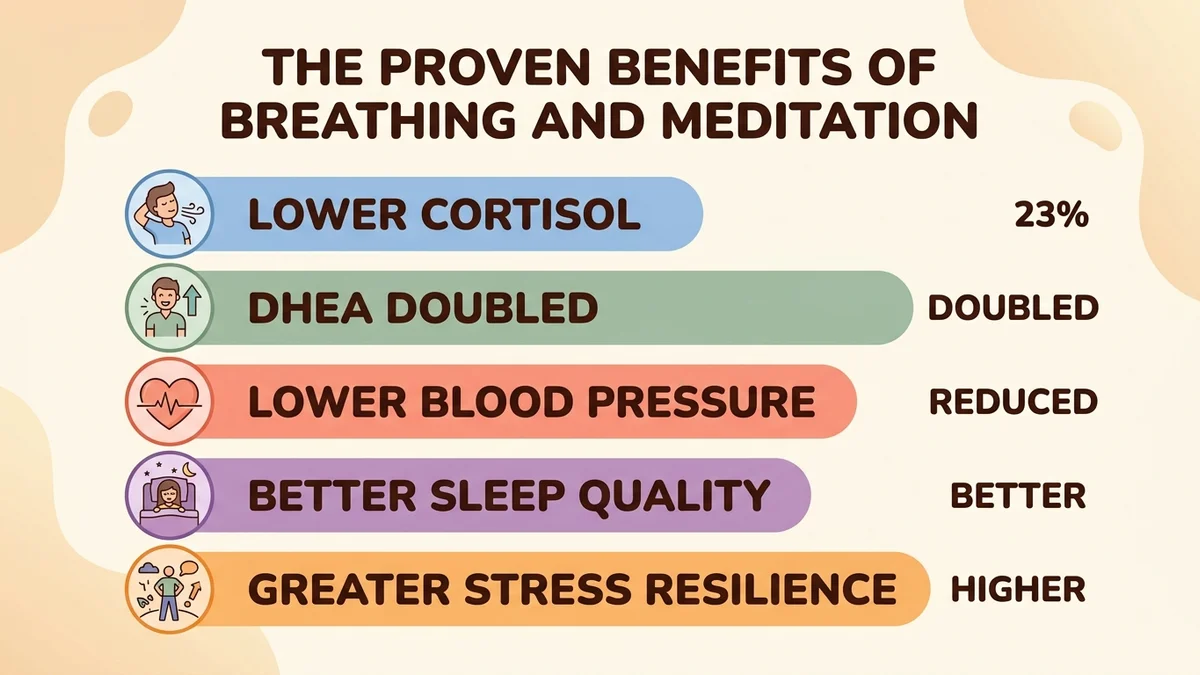
Cardiac coherence is the best-documented example. By breathing at 6 cycles per minute for 5 minutes, you:
- Lower your cortisol by 23% according to the HeartMath Institute (2024)
- Double your production of DHEA (an anti-stress hormone)
- Activate the parasympathetic nervous system within minutes
Cardiac coherence at 6 breaths per minute lowers cortisol by 23% on average and doubles DHEA, according to the HeartMath Institute.
Mindfulness meditation is just as effective. According to a meta-analysis published in JAMA Internal Medicine (2014, confirmed in 2025), it significantly reduces anxiety, depression and chronic pain.
Guided meditation for anxiety
Guided meditations from clinicians who specialize in anxiety disorders are especially well suited to anxious minds — they teach you to observe your worries without fighting them.
As these guided meditations show, observing your worries without fighting them is the first step to freeing yourself from them. You can weave this approach into your daily routine with Serena, which combines guided breathing with tracking of your emotional state.
Key point: Breathing and meditation aren't "wellness gimmicks" — they're physiological techniques validated by decades of research, on par with medicinal herbs.
Natural anxiety remedies vs. benzodiazepines: the comparison
Torn between a natural solution and a conventional treatment? Here's an honest comparison:
| Criterion | Natural Remedies | Benzodiazepines |
|---|---|---|
| Effectiveness | Mild to moderate anxiety | Any severity |
| Time to effect | 1 to 4 weeks | 15 to 30 minutes |
| Dependence | None | High risk after 4 weeks |
| Side effects | Rare and mild | Drowsiness, confusion, memory loss |
| Withdrawal | No tapering needed | Gradual tapering required |
| Prescription required | No | Yes |
| Long-term use | Compatible | Not advised beyond 12 weeks |
Health authorities recommend a maximum of about 12 weeks for benzodiazepines. Beyond that, the risk of dependence rises sharply. Natural remedies, by contrast, can be used over long periods without that risk.
Real-Life Scenarios
"I don't want to take medication, but my anxiety keeps me from sleeping"
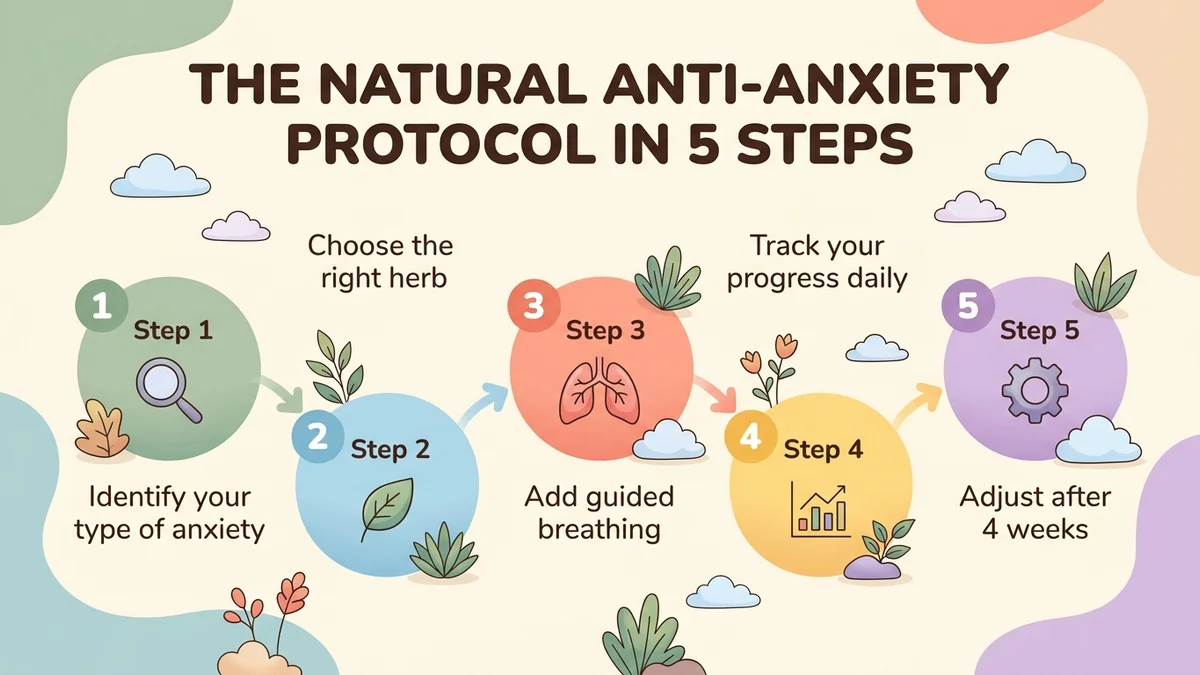
This is the most common profile among Serena users. Your doctor may have suggested an anxiety medication, but you'd rather take a natural approach. Here's a step-by-step protocol:
Weeks 1-2: Start with magnesium bisglycinate (300 mg in the evening) plus a passionflower infusion before bed. Add 5 minutes of cardiac coherence at bedtime.
Weeks 3-4: Introduce valerian (400 mg) 30 minutes before sleep. Increase cardiac coherence to 3 sessions a day.
Week 5 and beyond: Reassess. If your sleep improves, keep the protocol going. If not, see your doctor for a full evaluation.
"My heart races before every meeting at work"
Performance anxiety often shows up as palpitations. Hawthorn is your ally: take 300 mg in the morning. As a complement, practice 4-7-8 breathing (inhale for 4 seconds, hold for 7, exhale for 8) in the restroom 5 minutes before the meeting.
"I tried valerian and it doesn't work"
Did you stick with it for 4 weeks? Most people give up too soon. Herbs aren't fast-acting drugs. If valerian still isn't working after a full month, try rhodiola — it acts on a different mechanism (cortisol vs. GABA) and may suit your profile better.
The Serena Perspective
Anonymized data from our users reveals an interesting gap between theory and practice. While studies recommend 2 to 4 weeks to feel the effects of calming herbs, 68% of Serena users who combine herbal remedies with daily guided breathing report improvement within the first week.
The explanation? Guided breathing offers immediate relief that "bridges the gap" while the herbs kick in. It's this complementarity — herbs plus mind-body techniques — that produces the best results.
Another field observation: users who track their anxiety daily in Serena (via the Circumplex emotion model) get better at spotting their triggers and adjusting their herbal intake accordingly. This objective tracking turns an intuitive effort into a personalized protocol.
Serena Coach tip: Don't hunt for THE miracle herb. Look for the combination that works for YOU. Rate your anxiety every day on a scale of 1 to 10 for a month. It's the only way to objectively measure how well your natural protocol is working.
How long before you feel the effects?
The time to effect varies with the natural remedy you choose. Here's what to expect:
| Natural Remedy | First Effects | Optimal Effect | Recommended Course |
|---|---|---|---|
| Magnesium | 3 to 5 days | 2 weeks | Ongoing (supplementation) |
| Rhodiola | 5 to 7 days | 3 to 4 weeks | 2 to 3 months, then a break |
| Passionflower | 7 to 14 days | 3 weeks | 1 to 3 months |
| Valerian | 14 to 21 days | 4 weeks | 1 to 3 months |
| Ashwagandha | 14 to 21 days | 6 weeks | 2 to 3 months |
| Saffron | 14 to 28 days | 6 weeks | 2 to 3 months |
| Cardiac coherence | Immediate | 7 to 10 days | Daily practice |
Rule of thumb: give an herb at least 3 weeks before judging whether it works. If you feel no improvement after a full month, switch herbs rather than increasing the dose.
Precautions: can you combine natural remedies with medication?
This is the question you must ask your doctor before anything else. Some interactions are serious:
- St. John's Wort interacts with many medications: oral contraceptives, blood thinners, antidepressants, immunosuppressants. It's even contraindicated with SSRIs (risk of serotonin syndrome).
- Valerian can amplify the effects of sedatives and anesthetics. Stop taking it 2 weeks before any surgery.
- Griffonia (5-HTP) should never be taken with an antidepressant — the risk of serotonin syndrome is real.
- CBD can either cancel out or amplify the effects of synthetic anxiety medications, depending on the case.
Golden rule: one herb at a time, one clear target (rumination, sleep, palpitations), 3 to 4 weeks of testing, then a review with your doctor.
Herbal references note that lemon balm and valerian "require particular care because they can interact with many medications."
How Serena Helps You Manage Anxiety Naturally
Calming herbs are effective, but they're only part of the solution. To manage anxiety over the long term, you also have to work on both body and mind — and that's where Serena comes in.
Serena brings together the most effective natural techniques in a single app:
- 6 guided breathing exercises, including cardiac coherence and 4-7-8 breathing
- Daily emotional tracking with the Circumplex model to identify your anxiety triggers
- A gratitude journal to rewire your brain toward the positive
- Guided meditations tailored to your current level of anxiety
The upside? While your herbs work deep on your biochemistry, Serena gives you immediate relief through breathing — plus objective tracking of your progress week after week.
Frequently Asked Questions
What is the best natural anxiety remedy?
Valerian is considered the most powerful and best-documented natural anxiety remedy. Recognized by the WHO and the European Commission, it acts on GABA-A receptors without causing dependence. That said, the "best" depends on your profile: passionflower is better suited to rumination, rhodiola to chronic stress, and magnesium offers the fastest results.
Do natural anxiety remedies cause dependence?
No. That's one of their major advantages. Unlike benzodiazepines (which create physical dependence within 4 weeks), calming herbs such as valerian, passionflower and rhodiola can be stopped at any time with no withdrawal symptoms. Even so, it's a good idea to take 2- to 4-week breaks after 3 months of use.
Can you combine natural remedies with medication?
Not without your doctor's advice. Some herbs interact dangerously with conventional treatments. St. John's Wort is especially problematic: it speeds up the metabolism of many medications (contraceptives, blood thinners, antidepressants). Valerian can amplify sedatives. Always consult your doctor first.
How long before you feel the effects?
It depends on the product. Magnesium works within a few days. Rhodiola may show effects within the first week. Valerian and passionflower require 2 to 4 weeks of daily use. Don't judge an herb's effectiveness before a full month of regular use.
Is valerian as effective as benzodiazepines?
For mild to moderate anxiety, yes. Studies show that valerian modulates the same receptors (GABA-A) as benzodiazepines, but more gradually. Its effect doesn't kick in within 15 minutes like a fast-acting sedative, but after a few weeks of regular use the results are comparable — without the side effects or the risk of dependence.
Can you take natural anxiety remedies during pregnancy?
Most calming herbs are not recommended during pregnancy and breastfeeding due to a lack of safety studies. Mild chamomile tea is generally considered safe. Magnesium is often prescribed by midwives. For any other herb, ask your doctor or midwife before starting.
Do natural anxiety remedies work for severe anxiety?
Natural remedies are suited to mild to moderate anxiety. In cases of generalized anxiety disorder (GAD), panic disorder or severe, disabling anxiety, they don't replace medical care and psychotherapy. They can, however, complement conventional treatment — always with your doctor's approval.
Are breathing and meditation really natural anxiety remedies?
Absolutely. Cardiac coherence lowers cortisol by 23% according to the HeartMath Institute. Mindfulness meditation significantly reduces anxiety symptoms according to JAMA Internal Medicine. These techniques are free, side-effect-free, and complementary to herbal remedies. Serena builds them into a daily program that's accessible to everyone.
Conclusion
Anxiety is not a life sentence, and synthetic drugs are not the only answer. Valerian, passionflower, rhodiola, magnesium — these natural anxiety remedies are backed by science and available without a prescription. The key is to choose the one that matches YOUR anxiety profile, give it time to work, and combine herbal medicine with mind-body techniques like guided breathing.
Start today: take 300 mg of magnesium bisglycinate tonight, and do 5 minutes of cardiac coherence with Serena. In two weeks, you'll be able to measure the difference.