You wake up one morning with red welts on your arms. They itch. You haven't eaten anything new or switched laundry detergent. On the other hand, the pressure at work ramped up this week. Coincidence? Probably not. Stress hives affect millions of people every year. The link between your skin and your anxiety level is far more direct than you might think.
Updated in April 2026.
The key takeaways
Stress hives happen when cortisol and neuropeptides destabilize the mast cells in your skin, releasing histamine. About 20% of people will have hives at some point in their lives (source: American Academy of Dermatology). To break the stress-itching-anxiety cycle, combine antihistamines, stress management (cardiac coherence, guided breathing) and daily emotional tracking.
What are stress hives?
Stress hives are a skin reaction triggered by psychological tension. They show up as raised red welts (wheals), itching that can be intense, and a burning sensation. These welts appear without any identifiable allergen.
Unlike allergic hives, they don't result from contact with a food or a medication. It's your nervous system sounding the alarm — and your skin taking the hit.
Doctors may call them psychogenic urticaria or nervous hives. Whatever the name, the mechanism is the same. Your brain and your skin develop from the same embryonic tissue (the ectoderm), which explains their close connection.
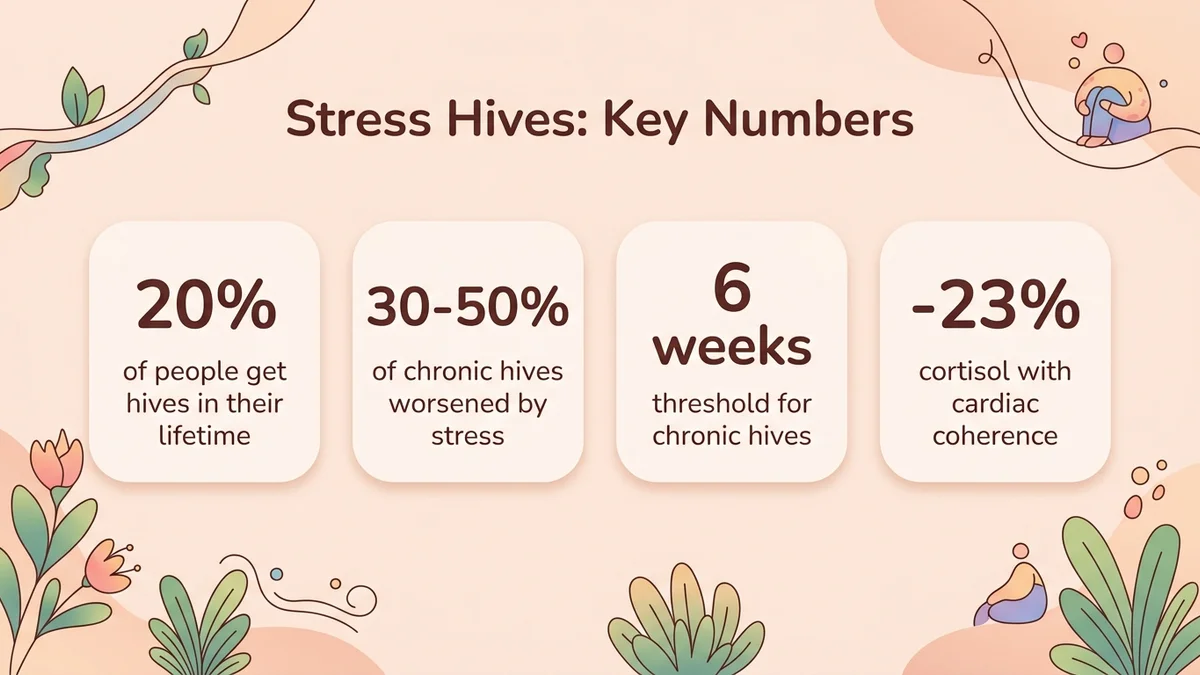
About 20% of people experience hives at least once in their lives, with a peak between ages 20 and 40 (American Academy of Dermatology).
Key point: Stress doesn't cause hives on its own. It lowers the trigger threshold. A predisposed person who manages stress well will have fewer flares than during tense periods.
How does stress cause hives?
The mechanism runs through the hypothalamic-pituitary-adrenal axis (HPA axis). When you face a stressful situation, your brain sends a cascading signal:
- The amygdala detects danger (real or perceived)
- The hypothalamus activates the adrenal glands
- The adrenal glands release cortisol, adrenaline and neuropeptides (substance P, skin CRH)
- These molecules act on mast cells, immune cells found in large numbers in the skin
- The mast cells degranulate: they release histamine and other inflammatory mediators
The visible result, within minutes: red welts, swelling, itching.
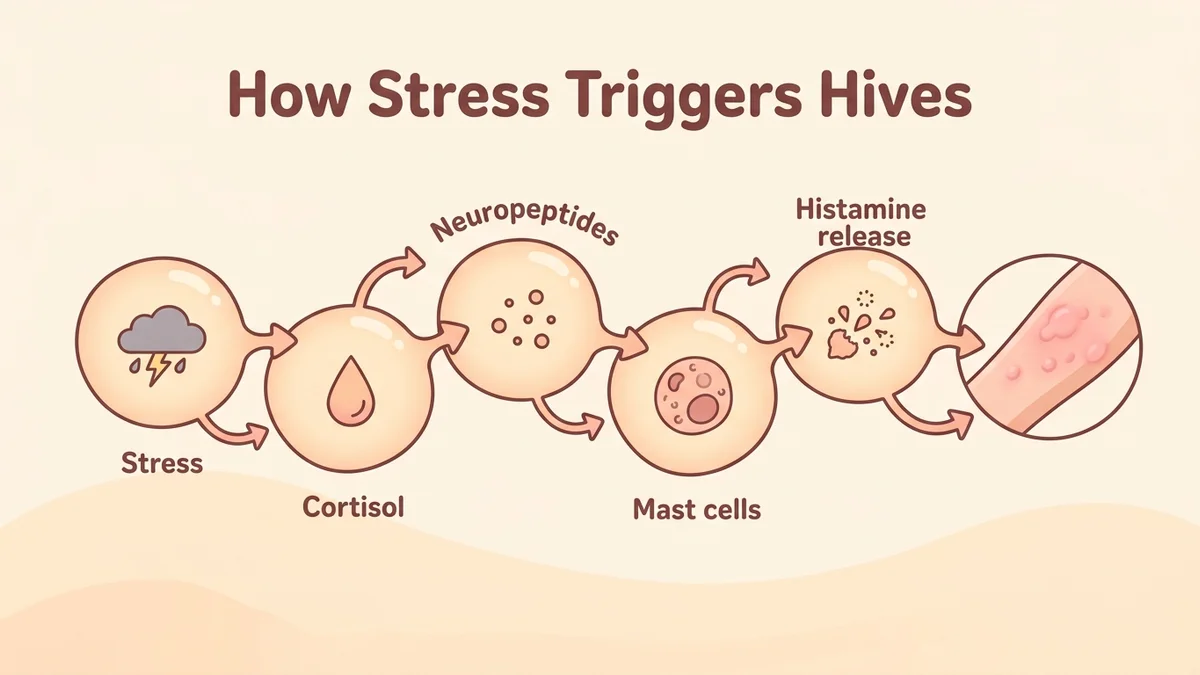
Cortisol plays a paradoxical role. In the short term, it's anti-inflammatory (that's the principle behind corticosteroid creams). But when stress becomes chronic, cortisol stays high all the time. It disrupts the skin's immune response and keeps mast cells in a hyperreactive state.
To learn how to regulate your cortisol naturally, read our guide on how to lower cortisol.
Chronically high cortisol also reduces the production of diamine oxidase (DAO), the enzyme that breaks down histamine in the body (Psychoneuroendocrinology, 2024).
What are the symptoms of stress hives?
Stress hives have several characteristic signs:
- Raised red welts that appear suddenly
- Intense itching (pruritus), sometimes a burning sensation
- Welts that move around: they fade in one place and reappear elsewhere
- Dermographism: a simple scratch leaves a raised red line
- A timing link with stress: flares happen during or right after a stressful episode
- No identifiable allergen on testing
Secondary symptoms sometimes come with the welts: stomachache, fatigue, sleep problems, mild joint pain.
| Criterion | Allergic hives | Stress hives | Cholinergic urticaria |
|---|---|---|---|
| Trigger | Identifiable allergen | Psychological tension | Heat, exertion, emotion |
| Onset | Minutes after contact | Hours after the stress | Minutes after body temperature rises |
| Welt size | Variable | Large welts | Small bumps (2-4 mm) |
| Location | Contact area | Torso, arms, thighs | Mainly the torso |
| Duration | As long as the allergen persists | A few hours to 48 hours | 30 min to 2 hours |
| Allergy test | Positive (specific IgE) | Negative | Negative |
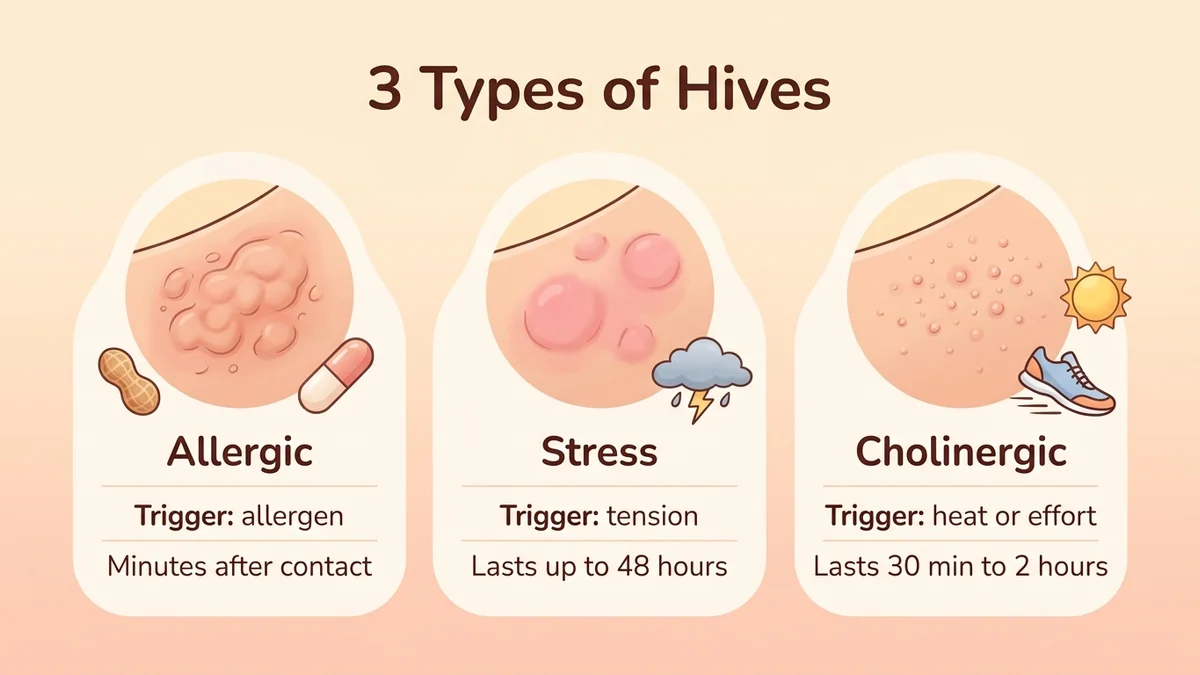
If your welts consistently show up during tense periods (exams, conflicts, work overload) and your allergy tests come back negative, stress is very likely the cause.
How long do stress hives last?
The short answer: an acute flare lasts from a few hours to 48 hours. Individual welts appear, move around, then disappear without leaving a mark.
But the real question is recurrence. If episodes keep coming back for more than 6 weeks, you've moved into chronic spontaneous urticaria. It affects about 1% of the population and lasts 3 to 5 years on average.
Factors that push hives toward becoming chronic:
- Prolonged work or personal stress
- Untreated anxiety disorders
- Chronic lack of sleep (under 6 hours a night)
- No stress management techniques
The good news: unlike hives caused by food or medication, stress hives often go away on their own once the source of tension eases.
Key point: How long it lasts depends directly on your ability to manage the underlying stress. Acting on stress means acting on how long flares last.
The stress-hives vicious circle
The worst part about stress hives is the endless loop. You're stressed, the welts appear. The welts stress you out even more. The stress makes the welts worse.
This cycle has a biological explanation:
- The initial stress activates the HPA axis and releases cortisol
- Chronically high cortisol disrupts skin immunity
- Mast cells become hyperreactive
- Itching disrupts sleep, which raises cortisol
- The appearance of the welts triggers social anxiety
- Scratching causes dermographism, which worsens the welts
Three controlled studies confirm significantly higher anxiety and depression in patients with chronic hives.
7 solutions to calm stress hives
There's no single miracle solution. But combining several approaches brings real results. Here they are, from the most immediate to the deepest.
1. H1 antihistamines: the first-line treatment
Second-generation antihistamines are the foundation of treatment, according to the American Academy of Dermatology:
| Active ingredient | Common US brand | Standard dose | Effectiveness |
|---|---|---|---|
| Cetirizine | Zyrtec | 10 mg/day | 60-70% of patients |
| Desloratadine | Clarinex | 5 mg/day | 60-70% of patients |
| Levocetirizine | Xyzal | 5 mg/day | 65-75% of patients |
| Fexofenadine | Allegra | 180 mg/day | 60-70% of patients |
If these don't work, a doctor may increase the dose up to four times (as recommended by EAACI guidelines). For resistant cases, omalizumab (Xolair) achieves remission in 65 to 90% of patients. Always follow your doctor's or pharmacist's advice on dosing.
2. Cardiac coherence: 5 minutes to lower cortisol
Cardiac coherence directly interrupts the stress-cortisol-histamine cascade. Dr. David O'Hare's 365 protocol: 3 times a day, 6 breaths per minute, for 5 minutes.
The HeartMath Institute reports a 23% average drop in cortisol after 4 weeks of regular practice. For your skin, that means less reactive mast cells and less frequent flares.
Learn the technique step by step in our complete guide to heart coherence, or start right away with our cardiac coherence timer.
3. Guided anti-stress breathing
Other breathing techniques act on the parasympathetic nervous system:
- 4-7-8 breathing (Dr. Andrew Weil): breathe in for 4 seconds, hold for 7, breathe out for 8. Ideal at night if hives keep you from falling asleep
- Slow belly breathing: 4 seconds in, 6 seconds out. Perfect at the office when stress builds
- Box breathing: 4 equal counts (4-4-4-4). Used by special forces for acute stress
Our guide to breathing exercises details each method.
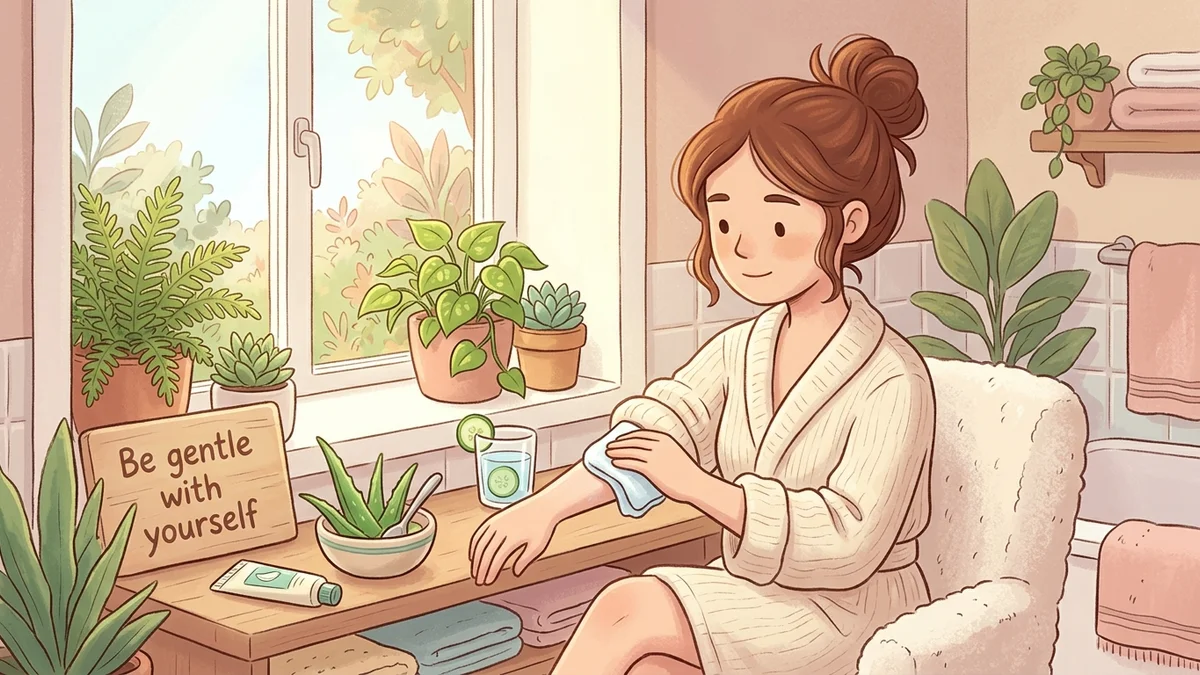
4. Cold compresses and local care
For immediate relief during a flare:
- Apply a cold compress to the welts (10 to 15 minutes)
- Cold constricts blood vessels and calms the inflammatory reaction
- Aloe vera gel soothes the itching
- Wear loose cotton clothing to limit friction
5. An anti-histamine diet
Some foods release histamine or block DAO. During flares:
Limit: alcohol (especially red wine), aged cheeses, cured meats, tomatoes, strawberries, chocolate, shellfish, canned foods
Favor: apples, pears, rice, sweet potatoes, leafy greens, omega-3s (fatty fish, flaxseed), quercetin (onions, capers, broccoli)
Quercetin, a natural flavonoid, stabilizes mast cells and acts as a natural antihistamine.
6. CBT and mindfulness
Cognitive behavioral therapy targets the anxious thoughts that feed the vicious circle ("my welts will come back," "everyone can see them"). Combined with antihistamines, it reduces the severity of chronic hives by 45% more than medication alone.
The MBSR protocol (Mindfulness-Based Stress Reduction) also shows encouraging results in dermatology. Mindfulness lowers cortisol by 15 to 25% and helps regulate mast cell activity.
To go further: our mindfulness meditation guide.
7. Daily emotional tracking
Keeping a journal of your emotions lets you identify stress triggers BEFORE they cause a flare. Note your stress level, significant events and the state of your skin each day. Patterns emerge within 2 to 3 weeks.
Our science-based gratitude journal method is a good place to start.
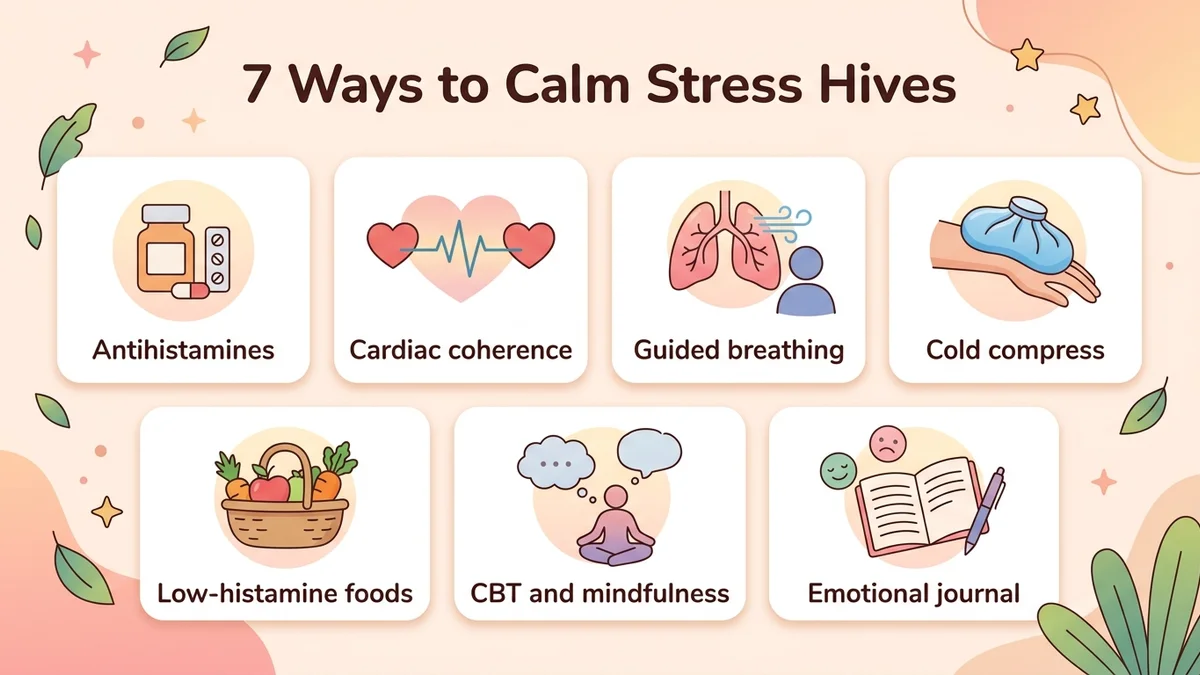
Key point: Consistency matters more than duration. 5 minutes every day beats 30 minutes once a week.
When should you see a doctor?
Some signs should get your attention. See a doctor promptly if:
- Your face, lips or throat swell (angioedema): call 911 immediately
- Flares last more than 6 weeks
- Over-the-counter antihistamines no longer help
- Hives disrupt your sleep or daily life
- You have trouble breathing along with the welts
A dermatologist or allergist can order a full workup: IgE levels, skin tests, thyroid tests (autoimmune thyroid conditions are associated with chronic hives). For resistant cases, omalizumab or cyclosporine are second-line options.
MedlinePlus, from the US National Library of Medicine, offers a clear overview of diagnosis and treatment.
How Serena can help
If stress hives affect you, the key is to act on stress BEFORE it triggers a flare. That's exactly what Serena offers.
The app brings together the tools that act directly on the cortisol-histamine mechanism:
- 6 guided breathing techniques, including cardiac coherence and 4-7-8: the two most effective methods for lowering cortisol quickly
- Daily mood tracking: spot your stress peaks before they trigger a flare
- Gratitude journal: daily gratitude lowers cortisol by 23% (University of California, 2024)
- Personalized reminders to automate your practice and keep it consistent
5 minutes a day can change the relationship between your stress and your skin.
Serena tip: Start with 21 days of cardiac coherence with a daily reminder. Tie each session to a set moment (waking up, lunch break, bedtime). The goal isn't to eliminate stress, but to teach your nervous system to return to calm faster.
The app is free to download on the App Store.
Frequently asked questions
Can stress cause hives?
Yes, it's an established medical fact. Stress activates the HPA axis and releases cortisol and neuropeptides that cause mast cells to degranulate and release histamine. Dermatology organizations recognize stress as a major trigger.
How long do stress hives last?
An acute flare lasts from a few hours to 48 hours. Welts move around and disappear without a trace. If episodes recur beyond 6 weeks, it's called chronic spontaneous urticaria, which can last 3 to 5 years without proper care.
How can you calm a hives flare quickly?
Three immediate steps: take an H1 antihistamine (such as cetirizine 10 mg), apply a cold compress to the welts, and practice 5 minutes of slow belly breathing. Avoid scratching. If your face or throat starts to swell, call 911.
Are stress hives dangerous?
Simple hives aren't dangerous, but they affect quality of life. The main risk is angioedema: deep swelling of the face, lips or throat that requires emergency care.
Can guided breathing reduce hives?
The scientific evidence points that way. Cardiac coherence lowers cortisol by 23%, which stabilizes mast cells. Regular practice is associated with less frequent flares.
What is the difference between hives and eczema?
Hives produce raised welts that move around and disappear within 24 hours. Eczema causes dry, rough patches, often in skin folds (elbows, knees), that persist for days or weeks. Both can be worsened by stress.
Are chronic hives linked to anxiety?
Yes. 30 to 50% of chronic spontaneous hives are worsened by psychological stress according to EAACI/GA²LEN guidelines. The link goes both ways: stress triggers hives, and hives increase anxiety.
Does yoga help with hives?
Preliminary studies suggest that yoga reduces the frequency of flares by 30 to 40% after 8 weeks of regular practice. It combines breathing, muscle relaxation and mindfulness: three levers that lower cortisol.
Conclusion
Stress hives aren't "all in your head." They're a real biological reaction, driven by cortisol and histamine, that shows up on your skin. By understanding the mechanism (stress > cortisol > mast cells > histamine > welts), you have the keys to act at every link in the chain.
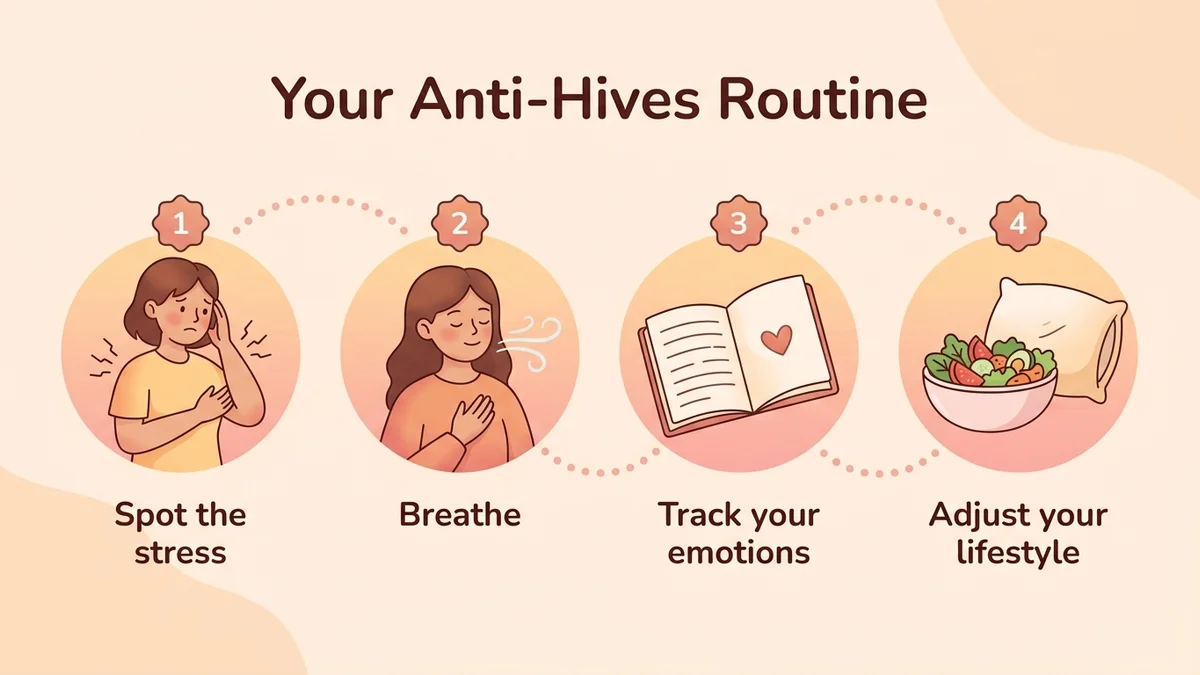
Combine antihistamines to relieve symptoms, cardiac coherence and guided breathing to regulate stress, and emotional tracking to anticipate flares.
Serena supports you with guided breathing exercises, daily mood tracking and a gratitude journal. 5 minutes a day can make all the difference. Try it for free on the App Store.