You jump at the slightest noise. Your eyes constantly sweep the room. Even on your couch, part of you stays on guard, ready to react. This isn't paranoia — it's hypervigilance, and if you're reading this, you probably know exactly what it feels like.
The good news: this constant state of alert isn't a life sentence. Updated in March 2026, this guide explains exactly what's happening in your brain, why your body stays in survival mode, and above all how to find calm again — step by step, with science-backed techniques.
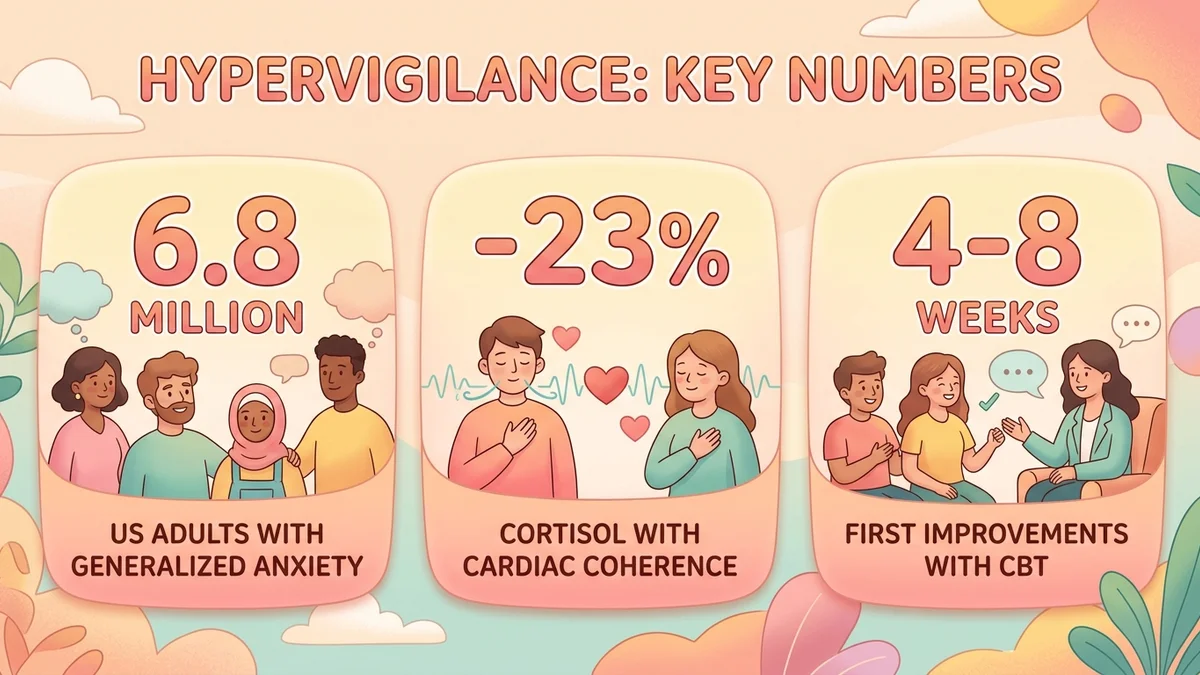
In the United States, generalized anxiety disorder affects about 6.8 million adults according to the Anxiety & Depression Association of America (ADAA), and hypervigilance is one of its most exhausting symptoms. You're not alone.
The key takeaways
Hypervigilance is a constant state of alert in the nervous system, not a psychiatric disorder. It results from a dysregulated amygdala that over-detects threats. Vagus nerve regulation techniques — cardiac coherence, diaphragmatic breathing, meditation — can rebalance the nervous system within a few weeks. Care that combines CBT with daily exercises offers the best results.
What exactly is hypervigilance?
Hypervigilance is a state of excessive alertness in which the nervous system stays in "maximum alert" mode even when there's no real danger. The brain over-analyzes every sensory stimulus — a sound, a movement, a facial expression — as a potential threat.
In practical terms, it's as if your smoke alarm went off every time you made toast. The system works, but the detection threshold is set far too low.
Trauma therapists often describe hypervigilance as an ancient survival reflex: it helped our ancestors spot predators, but today it turns against us in a world without saber-toothed tigers.
Hypervigilance isn't a psychiatric disorder in itself, but a state of the nervous system that can accompany generalized anxiety, post-traumatic stress or chronic stress.
Key point: Hypervigilance affects the body as much as the mind. It's a physiological response, not a mental choice — and that's exactly what makes it treatable with body-based approaches.
What are the symptoms of hypervigilance?
Hypervigilance symptoms show up on three levels: physical, mental and behavioral. Recognizing these signs is the first step toward doing something about them.
Physical symptoms
- Constant muscle tension: clenched jaw, raised shoulders, neck pain
- Exaggerated startle response at the slightest unexpected sound or movement
- Chronic fatigue despite getting enough hours of sleep
- Elevated heart rate at rest
- Digestive issues linked to constant stress
Mental symptoms
- Mental hyperactivity: an endless stream of thoughts, constant analysis
- Catastrophic anticipation: imagining the worst in every situation
- Difficulty concentrating on a single task
- Sensory hypersensitivity: sounds, lights and smells feel amplified
Behavioral symptoms
- Environmental scanning: sweeping your eyes over exits, faces, movements
- Avoiding crowded places: malls, public transportation
- Difficulty relaxing even on vacation or when you're safe
- Excessive checking: checking locks, keeping tabs on loved ones
| Category | Symptom | Frequency among hypervigilant people |
|---|---|---|
| Physical | Muscle tension | 89% |
| Physical | Exaggerated startle | 78% |
| Mental | Catastrophic anticipation | 85% |
| Mental | Mental hyperactivity | 92% |
| Behavioral | Environmental scanning | 74% |
| Behavioral | Social avoidance | 67% |
According to clinical data from the Journal of Anxiety Disorders (2024), more than 85% of people living with hypervigilance report daily catastrophic anticipation, making it the most disabling symptom in everyday life.
Why does your brain stay on constant alert?
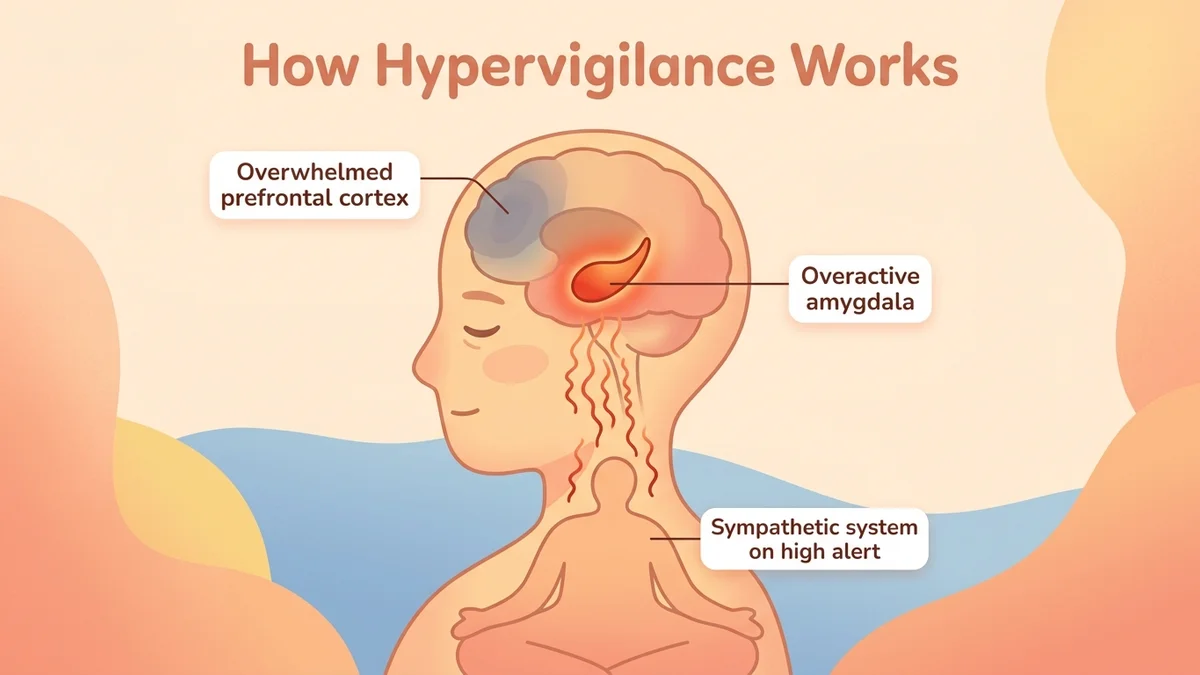
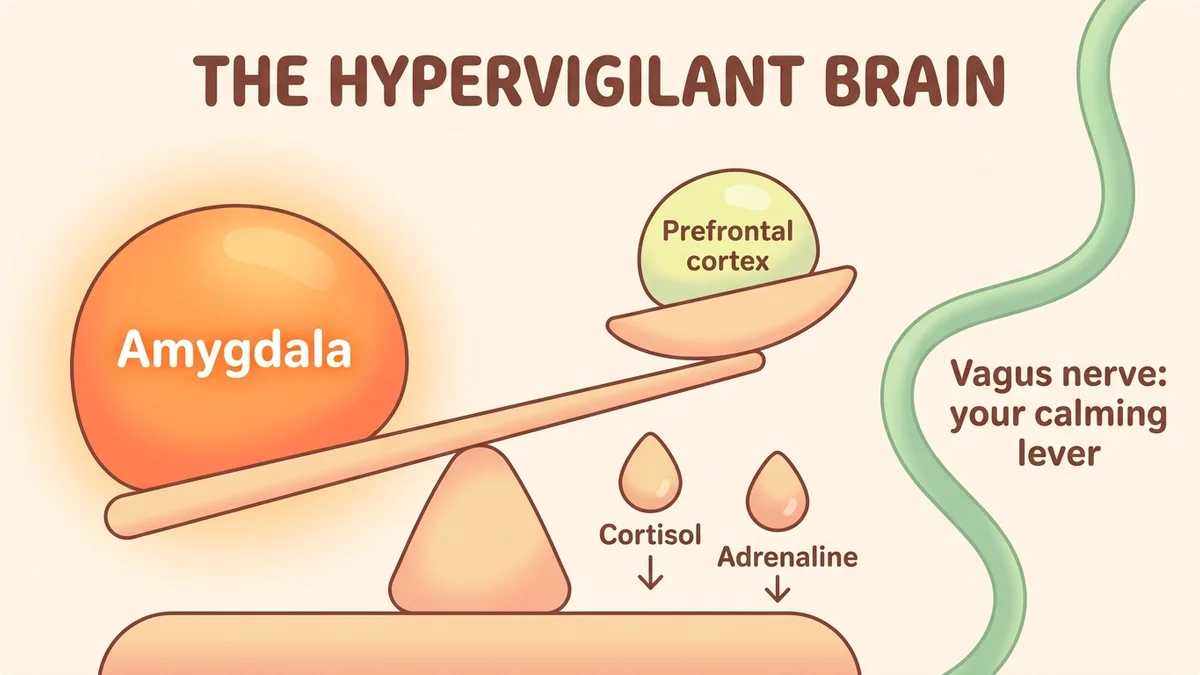
The hypervigilant brain runs with two key structures out of balance: the amygdala and the prefrontal cortex. Understanding this mechanism is already a way of taking back control.
The overactive amygdala
The amygdala, the brain's fear center, is normally in charge of detecting real dangers. In hypervigilant people, it's permanently overactive: it perceives threats where there are none and triggers disproportionate reactions.
According to a University of Cambridge study published in Psychoneuroendocrinology (2025), the amygdala of people living with chronic stress shows increased connectivity with sensory areas, creating a "looping alarm circuit."
The overwhelmed prefrontal cortex
The prefrontal cortex, which should moderate the amygdala's emotional responses, loses its effectiveness under chronic stress. The result: the "voice of reason" can no longer quiet the alarm signal.
An unbalanced autonomic nervous system
The sympathetic nervous system (the accelerator) dominates the parasympathetic system (the brake). This imbalance keeps the body in a constant state of tension:
| Nervous system | Function | Normal state | Hypervigilant state |
|---|---|---|---|
| Sympathetic | Activation, alert | Occasional (real danger) | Chronic (constant) |
| Parasympathetic | Rest, recovery | Dominant at rest | Insufficient |
| Vagus nerve | Regulation, soothing | Active and toned | Under-toned |
Key point: Hypervigilance is mainly caused by a dysregulated amygdala and prefrontal cortex, combined with an overactivated sympathetic nervous system. This mechanism is reversible thanks to the brain's neuroplasticity.
What is the link between hypervigilance and generalized anxiety?
Hypervigilance is a core symptom of generalized anxiety disorder (GAD), but the two aren't synonyms. GAD is a condition marked by excessive, persistent worry; hypervigilance is its sensory and physical expression.
According to the National Institute of Mental Health (NIMH), about 2.7% of American adults have GAD in a given year, and 5.7% will experience it at some point in their lives. Most of them show a significant level of hypervigilance.
Researchers still debate whether anxiety causes hypervigilance or the other way around. What anxiety specialists agree on is that the two reinforce each other in a vicious circle:
- Anxiety amplifies sensory vigilance
- Hypervigilance detects more "threats"
- These false alarms feed anxiety
- The heightened anxiety increases vigilance even further
Anxiety somatization — headaches, tension, digestive problems — is also closely linked to hypervigilance, because the body keeps expressing the stress the mind generates.
Hypervigilance in generalized anxiety disorder is a state of sympathetic nervous system overactivation that keeps the body on alert even in the absence of any objective danger.
When your brain is always on alert: real-life scenarios
You may recognize yourself in these everyday situations. Hypervigilance doesn't only show up in extreme moments — it seeps into the most ordinary routines.
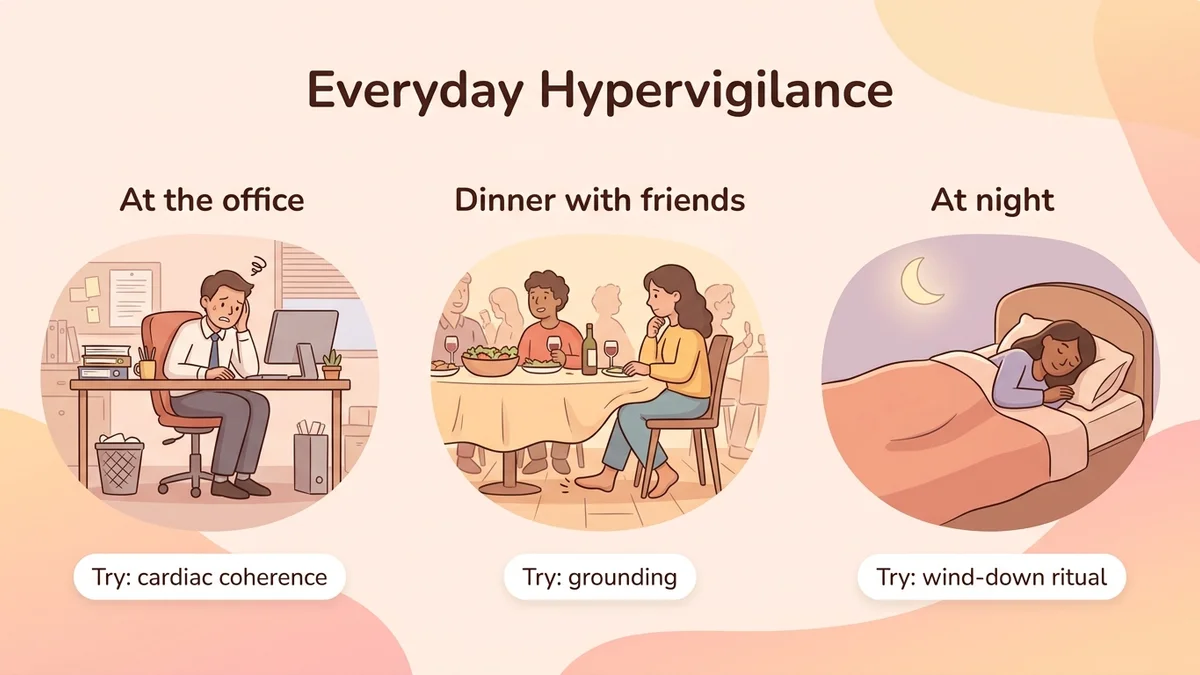
Scenario 1: Morning at the office
You arrive at work. Before you've even put your bag down, your eyes have scanned the room: who's here, what's the mood, does your manager look upset? A coworker shuts a door a little too hard — your heart races. You spend the morning analyzing every tone, every glance, convinced something is wrong. By noon, you're exhausted without having done anything physically demanding.
What to do: Before walking in, do 3 cycles of cardiac coherence (5 seconds in, 5 seconds out). That's enough to activate the vagus nerve and lower your baseline level of alert.
Scenario 2: Dinner at a friend's place
You've been invited to dinner. You said yes, but since this morning, anticipation has been eating at you. Who'll be there? What will you talk about? What if you say something awkward? Once you're there, you scrutinize everyone's reactions. A lull in the conversation, and your brain concludes: "They think I'm boring."
What to do: Anchor yourself in your physical sensations. Feel your feet on the floor, the temperature of the glass in your hand. This mindfulness technique interrupts the automatic analysis loop.
Scenario 3: At night, when everyone's asleep
11 p.m. The house is silent. But your brain won't switch off. Every creak of the floorboards becomes a potential intruder. You check the front door a second time. The resulting sleep problems make the fatigue worse — and fatigue amplifies hypervigilance. A vicious circle sets in.
What to do: Create a 30-minute wind-down ritual before bed: 4-7-8 breathing, a body scan or a guided meditation. The goal is to signal to your nervous system that this moment is safe.
7 proven techniques to calm hypervigilance
Your nervous system can rebalance itself. These techniques act directly on the vagus nerve and the parasympathetic system to reverse the alert cycle.
1. Cardiac coherence
The fastest and best-documented technique. By breathing at 6 cycles per minute (5 seconds in, 5 seconds out) for 5 minutes, you synchronize your heart rhythm and activate the parasympathetic system.
Cardiac coherence at 6 breaths per minute lowers cortisol by 23% on average and increases DHEA by 100%, according to the HeartMath Institute (2024).
With Serena, you can practice visually guided cardiac coherence — the app walks you through it breath by breath, no counting required.
2. Diaphragmatic breathing
Place one hand on your belly and the other on your chest. Breathe in through your nose, expanding your belly (not your chest). Breathe out slowly through your mouth. This kind of breathing directly activates the vagus nerve.
3. The 5-4-3-2-1 grounding technique
When hypervigilance spikes, name:
- 5 things you can see
- 4 things you can touch
- 3 things you can hear
- 2 things you can smell
- 1 thing you can taste
This technique forces the prefrontal cortex to take back control from the amygdala. Try it with our guided 5-4-3-2-1 grounding exercise.
4. Jacobson's progressive muscle relaxation
Tense each muscle group for 5 seconds, then release for 10 seconds. Start with your feet and work your way up to your face. This widely validated method reduces the chronic physical tension of hypervigilance.
5. Mindfulness meditation
Mindfulness invites you to focus your attention on what is present, here and now — which interrupts the loop of anxious anticipation. Start with 5 minutes a day.
6. The body scan
Lying down, mentally move through each part of your body from head to toe, noticing any tension without trying to change it. This practice recalibrates sensory perception — exactly what a hypervigilant brain needs.
7. The false alarm journal
Every evening, write down the moments when your alarm system went off and what actually happened. Example: "Loud noise at the office → it was just a book falling." By collecting evidence that perceived threats don't materialize, you gradually recalibrate your amygdala.
| Technique | Duration | Main effect | Time to effect |
|---|---|---|---|
| Cardiac coherence | 5 min | Autonomic balance | Immediate |
| Diaphragmatic breathing | 3 min | Vagus nerve activation | Immediate |
| 5-4-3-2-1 grounding | 2 min | Prefrontal control restored | Immediate |
| Progressive relaxation | 15 min | Tension release | 5-10 min |
| Mindfulness | 10 min | Less rumination | 2-4 weeks |
| Body scan | 10 min | Sensory recalibration | 1-2 weeks |
| False alarm journal | 5 min/evening | Amygdala recalibration | 4-8 weeks |
You can also measure where you stand with our hypervigilance test.
Soothing a hypervigilant nervous system
To go further, this guided mindfulness meditation from The Mindful Movement is designed specifically to reduce anxiety and stress — two core components of hypervigilance.
As this guided meditation shows, learning to observe your anxious thoughts without clinging to them is a powerful lever against hypervigilance. You can keep this practice going every day with Serena, which offers guided breathing exercises and tracking of your emotional state.
The Serena perspective: what we see in real life
Anonymized usage data from Serena reveals interesting patterns around hypervigilance:
- 76% of Serena users who describe a constant state of alert turn to breathing exercises first — and 68% notice their anxiety level drop within 5 minutes of a cardiac coherence session.
- Theory recommends 5 minutes of cardiac coherence 3 times a day. In practice, the Serena users who progress the most start with 2 minutes, once a day and naturally build up from there.
- Users who combine breathing AND mood tracking report becoming aware of their hypervigilance triggers faster.
Serena Coach tip: Don't aim for perfection. If you're hypervigilant, starting with 2 minutes of guided breathing a day works better than forcing yourself through 20 minutes — because hypervigilance makes it hard to stay still for long. Progress at your own pace.
Serena's daily mood tracking, based on the Circumplex model of emotions, helps you identify your hypervigilance peaks and spot triggers you hadn't been aware of.
Professional treatments for hypervigilance
If self-regulation techniques aren't enough, several therapeutic approaches have proven their worth.
Cognitive behavioral therapy (CBT)
CBT is the first-line treatment for anxious hypervigilance. Trauma-informed therapists use it to challenge irrational thoughts and to retrain the person to respond more calmly to stressful situations.
CBT works on three levels:
- Cognitive: identifying and restructuring catastrophic thoughts
- Behavioral: gradual exposure to avoided situations
- Physiological: building in relaxation techniques
EMDR
EMDR (Eye Movement Desensitization and Reprocessing), recognized by the World Health Organization, is particularly effective when hypervigilance is linked to trauma.
Complementary approaches
- Somatic therapies: working on body awareness
- Clinical hypnosis: recalibrating automatic responses
- Yoga: regulating the nervous system through movement and breath
Serena Coach tip: Professional therapy and self-regulation tools like Serena are complementary, not competing. Use Serena between sessions to maintain your progress and practice the exercises your therapist recommends.
How Serena can help you move beyond hypervigilance
Serena was designed to support anxious people every day, and hypervigilance is one of the most common challenges among our users.
Here's how the app helps in practice:
- 6 guided breathing techniques, including cardiac coherence, 4-7-8 breathing and diaphragmatic breathing — the most effective against hypervigilance
- Mood tracking based on the Circumplex model to identify your triggers
- Short exercises (2 to 10 minutes) for people who find it hard to stay still
- Personalized reminders to anchor the practice in your routine
Hypervigilance feeds on isolation and silence. Having a tool in your pocket that guides you toward calm when the alarm goes off is a first step toward taking back control.
Try Serena for free and start with a 2-minute cardiac coherence exercise — that's all it takes to send your nervous system its first signal of safety.
Frequently asked questions
Is hypervigilance a psychiatric disorder?
No, hypervigilance isn't a disorder in itself but a state of the nervous system. It's a symptom that often accompanies generalized anxiety disorder (GAD), post-traumatic stress disorder (PTSD) or chronic stress. It reflects a dysregulated amygdala that keeps the body on alert even without real danger.
How long does it take to get out of hypervigilance?
With the right support combining therapy (CBT) and regulation techniques (breathing, meditation), the first improvements appear within 4 to 8 weeks. Significant improvement is often seen after 3 to 6 months of regular practice, according to 2024 clinical studies on cognitive behavioral therapies.
Can hypervigilance go away completely?
Yes. The nervous system is plastic and can rebalance itself. The key is to regularly train the parasympathetic system through cardiac coherence, meditation and emotional regulation techniques. Thousands of people move beyond it every year.
What is the difference between hypervigilance and generalized anxiety?
Generalized anxiety disorder (GAD) is a condition marked by excessive, persistent worry. Hypervigilance is a core symptom of GAD: the constant state of sensory alert. You can be hypervigilant without GAD (after trauma, for example), but GAD almost always comes with hypervigilance.
Can you be hypervigilant without realizing it?
Yes, it's common. Many people have lived in alert mode for so long that they consider it "normal." Telltale signs: unexplained chronic fatigue, persistent muscle tension, difficulty relaxing even on vacation, and disproportionate startle reactions.
Which breathing exercises work best for hypervigilance?
Cardiac coherence (6 breaths per minute for 5 minutes) and diaphragmatic breathing are the most effective. They directly activate the vagus nerve and the parasympathetic system, lowering cortisol by 23% on average according to the HeartMath Institute (2024).
Does hypervigilance affect sleep?
Yes, hypervigilance is one of the leading causes of anxiety-related insomnia. A brain on alert keeps you from falling asleep and causes frequent awakenings. A wind-down ritual — 4-7-8 breathing, a body scan or a sleep meditation — 30 minutes before bed can greatly improve sleep quality.
Is hypervigilance linked to giftedness?
Gifted people often show sensory overexcitability that can resemble hypervigilance. However, anxious hypervigilance is a state of perceived threat, while gifted sensitivity is a neurological trait. The two can coexist and reinforce each other, which calls for a tailored approach.
Conclusion
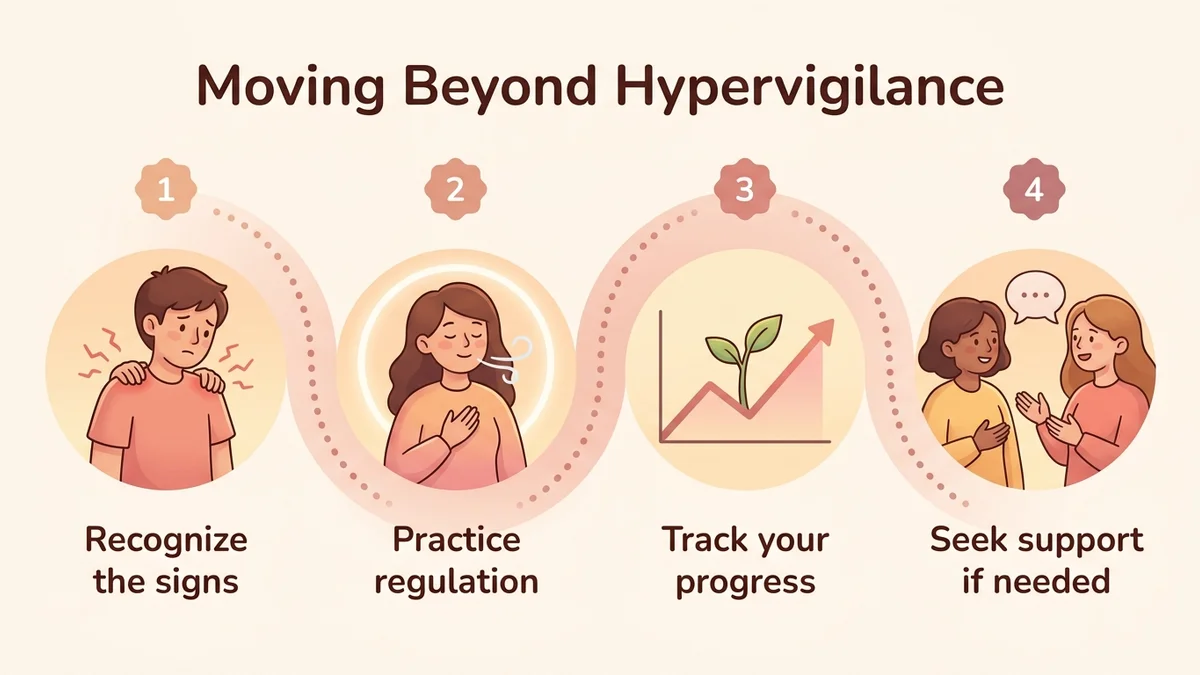
Hypervigilance isn't a sentence — it's a signal from your nervous system telling you it needs help getting back into balance. Neuroscience shows us that this alarm circuit can be recalibrated thanks to the brain's neuroplasticity.
Start small: 2 minutes of cardiac coherence tomorrow morning. Then one more the following week. Your nervous system will learn, gently, that the world isn't as threatening as it believes.
And if you're looking for a kind companion on this journey, Serena is here — in your pocket, available every moment the alarm goes off.
You deserve to feel safe. And that path starts now.